Kremlin Media Warns of Ukraine’s Long-Range Strikes
Russian state television is amplifying warnings about Ukraine's potential to strike deep into Russian territory with newly supplied long-range weapons. Prominent figures voice concerns over targeting key Russian sites, while historical narratives are selectively used to criticize European nations, particularly Germany. The media aims to foster domestic unity by framing dissent as treason and emphasizing perceived external threats from NATO.

Kremlin Media Warns of Ukraine’s Long-Range Strikes
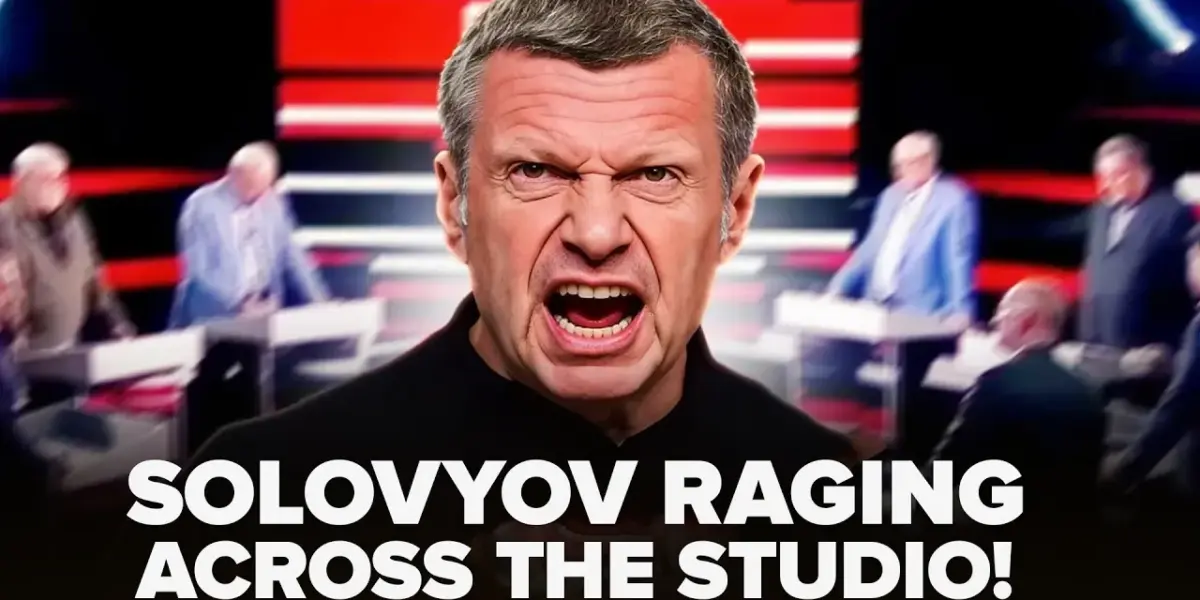
Russian state television is amplifying concerns over Ukraine’s potential to strike deep into Russian territory, particularly following the expected delivery of new long-range ballistic systems. Prominent figures on Russian media channels, like Vladimir Solovyov, have voiced strong opinions, suggesting that such weapons could be used to target significant military and political sites within Russia, including symbolic locations like the Kremlin and the Hermitage Museum in St. Petersburg. This narrative aims to portray Ukraine’s actions as direct threats to Russia’s core identity, with the implicit suggestion that Western support enables these potential strikes. The rhetoric also seeks to position Russia as a victim of aggression, despite its ongoing military actions in Ukraine. This framing is a consistent theme in Russian media, which often criticizes European nations for supporting Ukraine and for questioning Russian foreign policy, while simultaneously defending President Putin’s regime.
Historical Echoes and Media Narratives
During a recent broadcast, Solovyov reportedly engaged in heated exchanges, particularly targeting Germany. He questioned Germany’s moral authority to criticize Russia, referencing World War II and the immense human cost it inflicted on the Soviet Union. The argument presented on Russian TV often omits or downplays historical events that complicate this narrative, such as the Molotov-Ribbentrop Pact. This agreement, signed between Nazi Germany and the Soviet Union in 1939, led to the joint partition of Poland and the division of Eastern Europe into spheres of influence. By focusing on Germany’s wartime actions while ignoring Soviet complicity in the early stages of the conflict, Russian media crafts a selective historical account to bolster its current political stance. This selective memory serves to reinforce the idea of a unified historical grievance against Germany, used to justify present-day tensions.
Shifting Blame and Internal Dissent
The narrative on Russian state media suggests that Europe, rather than Russia, desires a prolonged conflict in Ukraine. This perspective, echoed by Kremlin spokesperson Dmitry Peskov, portrays Europe as being in a difficult position, struggling with energy costs and international relations. Russian media often frames Europe’s support for Ukraine as a form of blackmail, even suggesting a hypothetical scenario where Europe might try to leverage aid to former U.S. President Donald Trump in exchange for increased assistance to Ukraine. However, the reality presented from Ukraine’s perspective is starkly different. Reports from Kyiv detail ongoing missile and drone attacks on civilian infrastructure, resulting in casualties and destruction. This directly contradicts the Russian media’s portrayal, highlighting Moscow’s role as the aggressor.
Concerns Over Western Weaponry
Solovyov’s commentary also revealed anxieties regarding the potential impact of advanced Western weaponry reaching Ukraine. He expressed concerns that these systems could enable Ukraine to conduct strikes on sensitive Russian targets. He noted that while such facilities have not been designated as legitimate targets by Russia, the potential for retaliation exists. The implication is that Russia may not be adequately prepared to counter these advanced threats, especially if American involvement in European defense diminishes. Solovyov also stressed the need for increased domestic propaganda to highlight perceived threats from the West, suggesting that Russian society is not sufficiently aware of the dangers it faces. This call for more war-related messaging aims to rally public support and justify significant defense spending by emphasizing an external enemy.
Propaganda and Societal Control
Russian state media continues to promote a narrative that portrays Russia as being under constant threat from NATO and its allies. This narrative is used to justify aggressive military actions and to consolidate domestic support. Any form of dissent or criticism of the authorities is framed as treason, particularly during wartime. The media promotes a strict expectation of loyalty, urging citizens to either actively support the government, remain silent, or join the military. Those who deviate from this prescribed path are labeled as traitors. This approach aims to control public discourse and suppress opposition, ensuring a unified front in support of the government’s objectives. The media also showcases supposed victories, such as staged visits to damaged areas in Ukraine, to project an image of success and control, even amidst widespread destruction.
Strategic Implications
The rhetoric on Russian state television highlights several key strategic concerns. Firstly, the amplified warnings about Ukrainian long-range strike capabilities serve to justify Russia’s own military actions and to prepare its domestic audience for potential retaliatory strikes. Secondly, the consistent criticism of Europe and its support for Ukraine aims to sow division within the Western alliance and to undermine international solidarity. Thirdly, the emphasis on internal dissent being equivalent to treason underscores the Kremlin’s focus on maintaining tight control over its population and preventing any organized opposition to the war effort. The media’s efforts to portray Russia as a victim of external aggression, while simultaneously preparing its citizens for potential escalation, represent a core element of its wartime information strategy.
Source: 😱Total chaos in Kremlin studio! Solovyov lashes out at Germany. Guests are terrified (YouTube)

Related Articles
Iran Strikes Target Infrastructure: Gulf States Fear Escalation
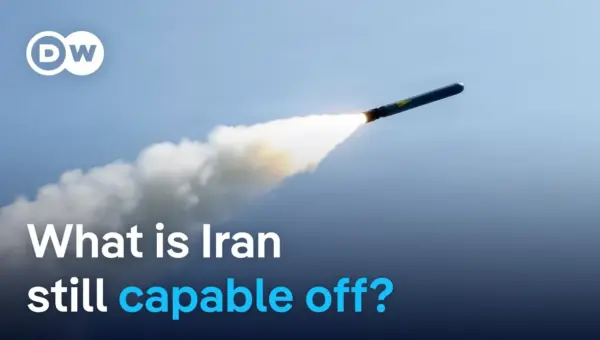
Iran's retaliatory strikes on critical infrastructure, including a Kuwaiti desalination plant, have heightened fears across Gulf states. Expert Kaman Matin explains Iran's strategy of targeting civilian and economic assets in response to attacks, while Gulf nations brace for potential escalation. The situation remains tense, with diplomatic efforts struggling to find a path to de-escalation.
Iran Downs US Jet, Exposing Global Power Shifts
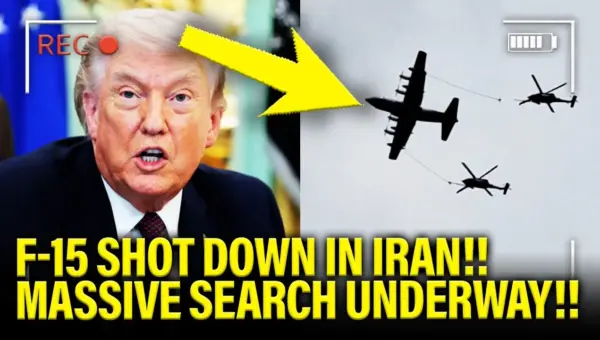
An F-15E jet shot down over Iran sparks a rescue mission and highlights global power shifts. Allies question U.S. predictability while domestic debates rage over military spending. This incident underscores complex regional tensions and evolving international dynamics.
US Jet Downed in Iran: One Pilot Rescued, Search Continues
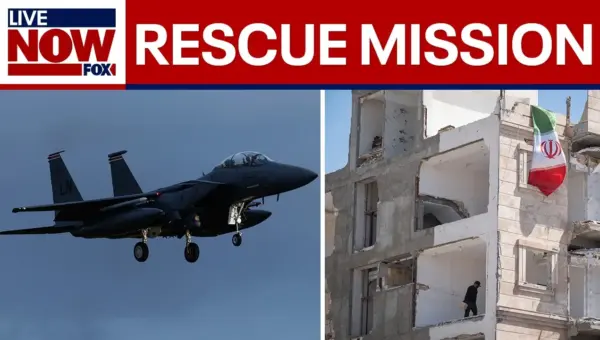
A US F-15 fighter jet has crashed in Iran, leading to a large-scale rescue operation. One pilot has been rescued, but an intense search continues for a second crew member. The incident occurred in a challenging mountainous region, and the cause of the crash is still under investigation.