Iran Downs US Jet, Exposing Global Power Shifts
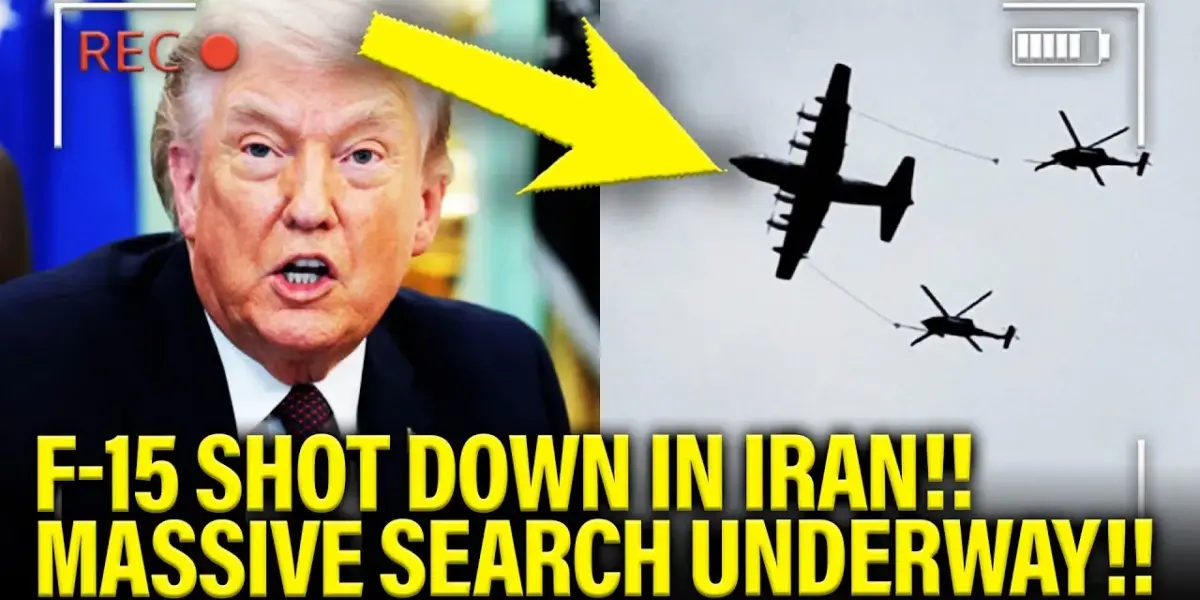
An F-15E jet shot down over Iran sparks a rescue mission and highlights global power shifts. Allies question U.S. predictability while domestic debates rage over military spending. This incident underscores complex regional tensions and evolving international dynamics.

Iran Downs US Jet, Exposing Global Power Shifts
A United States F-15E fighter jet was shot down over Iran, sparking a frantic search and rescue mission for its two crew members. The incident highlights a complex international situation, with Iran’s social media reacting with both defiance and mockery. This event also comes as global leaders question the role and predictability of the United States on the world stage.
Search and Rescue Underway Amidst Tensions
Following the F-15E’s downing, the U.S. Air Force launched an immediate search and rescue operation. Footage showed F-35 jets and MQ9 drones assisting U.S. helicopters in the effort over Iranian territory. This mission took place amidst a backdrop of escalating rhetoric. The leader of the Iranian parliament, MB Galabaf, posted remarks suggesting a shift in focus from regime change to pilot recovery. This was interpreted by some as a jab at the U.S. strategy, turning a potential military victory into a humanitarian search.
Meanwhile, Donald Trump made several social media posts. One post suggested easily opening the Strait of Hormuz to take oil, calling it a “gusher for the world.” This statement was met with ridicule on Iranian social media, which responded with memes and cartoons. Some depicted Trump alongside Ronald Reagan, with Reagan claiming to have destroyed the Soviet Union and Trump responding that he destroyed the United States. Other memes, including AI-generated images, humorously depicted the search for the pilot.
Iran’s Response and International Reactions
Iranian state media initially released images of debris, resembling an ejection seat, from the downed F-15E. The state-run Mehr News Agency even called on Iranian civilians to help capture the pilot and weapons officer. Israel’s Channel 14 reported that Israel would not be assisting in the U.S. rescue attempts, likely to avoid escalating regional tensions.
Good news emerged as U.S. special forces located and rescued one of the downed crew members alive in southern Iran. However, efforts continued for the second crew member. In response to the incident, Israel canceled additional planned strikes in Iran to avoid hindering the ongoing search and rescue operations. This delicate balance highlights the complex geopolitical considerations at play.
Global Alliances and US Predictability Questioned
The incident occurs at a time when international perceptions of the United States are shifting. French President Emmanuel Macron, speaking in South Korea, articulated a desire for Europe not to be dependent on either China or the United States. He described the world as potentially dominated by two powers, China and the U.S., and expressed a wish for greater European autonomy. Macron stated, “We don’t want to depend on the dominance of China and we don’t want to be too much exposed to the unpredictability of the United States.”
Macron also spoke about building new cooperation between countries like France, South Korea, Japan, India, Brazil, and Australia. This suggests a move towards a “third way,” an alliance for nations that wish to avoid dependency on China or automatic alignment with the U.S. He also commented on Iran, calling it a “very bad regime” but questioning the effectiveness of military operations, citing past interventions in Iraq, Afghanistan, and Libya. Macron emphasized respecting national sovereignty and suggested that regime change should arise from within a country, not be imposed from the outside.
Domestic Policy and Military Spending Debates
Domestically, the discussion around military strategy and spending continues. Donald Trump proposed a $1.5 trillion military budget for 2027. This represents a significant increase from the 2024 defense budget of $841 billion. Critics argue this budget would divert funds from essential social programs like Medicare and Medicaid, as well as hospitals, to bolster the military-industrial complex. The proposed budget also includes a $152 million allocation to rebuild Alcatraz as a high-security prison.
Concerns have been raised about the Trump administration’s approach to military leadership. One commentator noted a pattern of firing top generals and admirals, drawing comparisons to historical authoritarian regimes that purged perceived disloyal or overly independent military figures. This is framed as a potential sign of malignant narcissism and self-destructiveness within leadership.
Economic Outlook and Job Market Nuances
Economically, there is a mixed outlook. An advisor to Donald Trump suggested that recent events would cause only a minor, temporary disruption to oil supply and prices. This assessment contrasts with the potential impact of geopolitical instability. However, recent jobs numbers presented a more complex picture.
While the U.S. economy added 178,000 jobs in March, exceeding expectations, revisions to previous months revealed a different story. February’s job growth was revised downward significantly, showing substantial job losses. Analysts suggest that when these revisions are considered, there have been few net job gains for the year. This raises questions about the overall health of the job market despite positive headline figures.
Why This Matters
The downing of the F-15E in Iran is more than just a military incident; it’s a flashpoint illuminating broader global trends. It underscores the persistent regional tensions in the Middle East and the U.S. commitment to projecting power. Simultaneously, it highlights the growing assertiveness of nations like Iran, which are using social media and information warfare to shape narratives. The international response, particularly from European allies like France, signals a desire for strategic independence and a questioning of U.S. foreign policy predictability. This could lead to a more multipolar world order where alliances are reconfigured and nations seek diverse partnerships. Domestically, the debate over military spending versus social programs reflects ongoing ideological divides. The economic data, while showing some positive signs, also reveals underlying weaknesses, suggesting that simplistic narratives about economic strength may not tell the full story. Understanding these interconnected events provides crucial insight into the evolving global landscape and the challenges facing international relations and domestic policy.
Implications, Trends, and Future Outlook
This incident and the surrounding commentary point to several key trends. Firstly, the increasing use of social media and meme warfare by state and non-state actors is a significant development in information operations. Secondly, the questioning of U.S. leadership and predictability by allies like France suggests a potential weakening of traditional U.S.-led alliances and a rise in independent foreign policy initiatives. This could foster the development of alternative blocs or a more fragmented global order. Thirdly, the tension between increased military spending and domestic social needs will likely continue to be a major point of contention in U.S. politics. The future outlook suggests a more complex and potentially less stable international environment, where regional conflicts can have global repercussions and where established power structures are being challenged by both state actors and shifting global perceptions.
Historical Context and Background
The U.S. military’s presence in the Middle East has a long and complex history, marked by interventions and strategic alliances aimed at securing oil supplies and regional stability. The downing of a sophisticated fighter jet like the F-15E over Iran is not an isolated event but occurs within a context of ongoing friction between the two nations, including disputes over Iran’s nuclear program and regional influence. The U.S. military’s technological superiority has historically been a cornerstone of its foreign policy, but incidents like this challenge that narrative. Furthermore, the current global political climate, with rising nationalism and challenges to established international norms, provides a backdrop for shifting alliances and increased geopolitical maneuvering, as exemplified by Macron’s comments about a “third way” in international relations.
Source: Trump PANICS as F-15 SHOT DOWN IN WAR!! (YouTube)

Related Articles
US Jet Downed in Iran: One Pilot Rescued, Search Continues
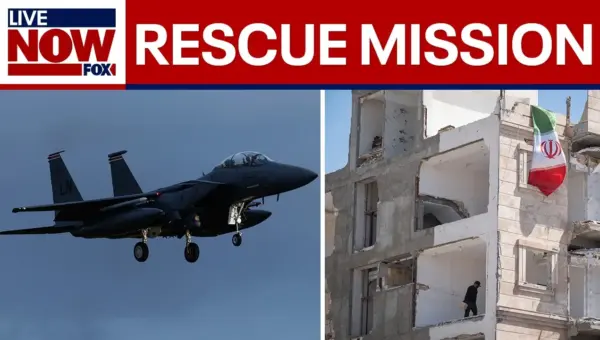
A US F-15 fighter jet has crashed in Iran, leading to a large-scale rescue operation. One pilot has been rescued, but an intense search continues for a second crew member. The incident occurred in a challenging mountainous region, and the cause of the crash is still under investigation.


Trump Fires AG Bondi, Iran Tensions Rise, Artemis II Heads to Moon
Attorney General Pam Bondi has been fired by President Trump, with Deputy AG Todd Blanche stepping in as acting AG. Amidst rising oil prices and escalating tensions, the U.S. warns Iran as the Artemis II mission successfully heads towards the Moon. Golfer Tiger Woods was arrested for DUI and is stepping away for treatment.

China’s Global Reach Faces Setbacks Amidst Internal Turmoil
China's international influence is facing growing opposition and internal challenges. From strategic island disputes and diplomatic overtures towards Taiwan to domestic unrest and technological failures, Beijing's global ambitions are encountering significant setbacks. These events signal a complex geopolitical landscape where China's power is being tested on multiple fronts.