Moon Missions Spark New Space Race: Fuel & Power
Renewed moon missions are fueling a new space race, driven by the potential for rocket fuel production and strategic control. However, concerns about space weaponization and the lack of clear property rights in this lawless frontier add a complex geopolitical layer to lunar ambitions.


New Era of Lunar Exploration Dawns Amidst Space Weaponization Concerns
The recent excitement surrounding moon missions, particularly the Artemis program, signals a potential new chapter in space exploration. However, this renewed focus on lunar activity is taking place against a backdrop of growing concerns about the weaponization of space and a scramble for control over celestial assets. The implications are vast, touching upon economic opportunities, geopolitical power, and the very definition of property rights beyond Earth.
From Apollo’s Dreams to Artemis’s Ambitions
Reflecting on the historic Apollo missions, science journalist Tom Whipple noted the stark contrast in presidential messages. While Richard Nixon’s 1972 farewell to the Apollo 17 astronauts spoke of humanity’s destiny to dream the impossible, Donald Trump’s recent message emphasized American dominance, stating, “We are winning in space on Earth and everywhere in between economically militarily and now beyond the stars.” This shift highlights a changing motivation for lunar endeavors, moving beyond pure exploration to strategic advantage.
Nixon’s poignant, yet ultimately inaccurate, prediction that it might be the last time humans walked on the moon in that century underscores the long pause in crewed lunar missions. Whipple suggests that the intervening decades have seen a dramatic increase in activity in Earth’s orbit, with thousands of satellites now present compared to the handful during the Apollo era. This proliferation is directly linked to the growing commercial interest in space.
The Moon’s True Value: Rocket Fuel and Refueling Stations
While past discussions about lunar resources often focused on rare earths or asteroid mining, Whipple points to a more immediate and transformative resource: water ice. The potential to extract water from lunar ice and convert it into rocket fuel is a key driver for current interest. This is due to a fundamental challenge in rocketry known as the “tyranny of the rocket equation.” Simply put, rockets must carry not only their payload but also the fuel to propel that payload, and then additional fuel to propel the fuel itself. This creates a compounding weight problem that severely limits mission range and capability.
“The problem with a rocket is it has to carry the fuel to get it up, but then it has to carry the fuel to propel the fuel that it’s carrying.”
Having a source of fuel on the moon changes this equation dramatically. It could serve as a vital refueling station, enabling less fuel-intensive launches from the lunar surface. This would open doors for a host of new activities, including orbital manufacturing and easier satellite deployment and maintenance. Whipple likens the moon’s strategic position to controlling the mouth of a river, offering significant influence over traffic and activity.
Navigating the Lawless Frontier: Property Rights in Space
The question of who owns what on the moon and in space is becoming increasingly urgent. While the Outer Space Treaty of 1967 theoretically prohibits national appropriation of celestial bodies, Whipple explains that the reality is more complex. The development of the Artemis Accords, which establish “zones of interest,” is seen by some as a de facto form of property rights.
The prevailing sentiment is that control over space assets will likely be determined by presence and action, rather than formal legal agreements. “In brutal reality, this is going to be whoever’s there first planting their flag, creating facts on the ground,” Whipple stated. He acknowledges that space is currently a lawless environment and is likely to remain so for some time, mirroring historical patterns of territorial acquisition on Earth.
Geopolitical Stakes and the Weaponization of Space
The strategic importance of the moon extends beyond potential economic benefits. Controlling the moon offers significant geopolitical advantages, particularly concerning Earth’s orbit. Nations that establish a strong presence on the moon could gain influence over the launch and operation of satellites, a critical component of modern communication, navigation, and intelligence gathering.
Whipple emphasizes the growing concern that space is being weaponized. The ability to control assets in orbit and potentially along trajectories to and from the moon presents a new dimension of military and strategic power. This dual-use nature of space technology means that civilian exploration and commercial ventures are intertwined with national security interests, creating a complex and potentially volatile environment.
Looking Ahead: A New Space Race?
The current surge in lunar ambitions, driven by both scientific curiosity and strategic imperatives, suggests that the era of human exploration beyond Earth orbit is far from over. The development of lunar infrastructure, particularly for fuel production, could unlock unprecedented opportunities. However, the unresolved issues of governance, property rights, and the potential for conflict in space remain significant challenges. As nations and private entities continue to pursue their interests on the moon, the question of how this new frontier will be managed will become increasingly critical.
Source: ‘Space Is Being Weaponised’ | Tom Whipple (YouTube)

Related Articles

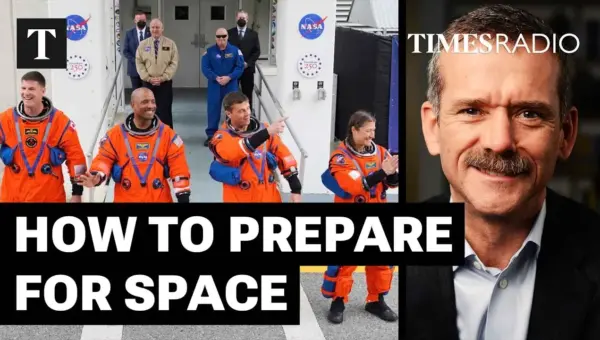
Astronaut Chris Hadfield on Artemis Prep & Space’s Human Heart
Former astronaut Chris Hadfield emphasizes that space exploration's greatest challenge is mental, not physical. He discusses the intense preparation required for missions like Artemis and reflects on the deeply human emotions involved in spaceflight, comparing it to our innate drive to explore.


Humans Return to Moon Orbit After 52 Years
Humans are heading back to the moon for the first time in over 50 years with the Artemis II mission. The four-astronaut crew will orbit the moon, marking a historic return to deep space exploration. Meanwhile, political developments include President Trump's warnings of further strikes against Iran and a leadership change at the Justice Department.

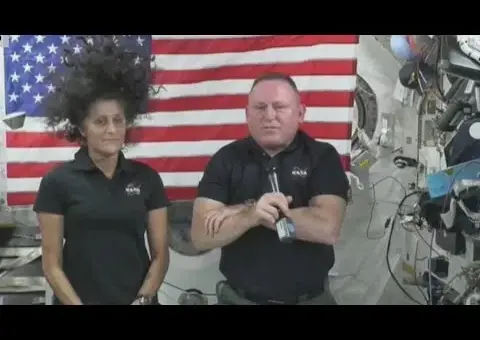
Artemis II Fuels New Space Race Era
NASA's Artemis II mission, sending astronauts beyond the Moon for the first time in 50 years, signals a new era of space exploration. Astronaut Butch Wilmore's insights from past challenges and the mission's pristine progress highlight renewed ambition amidst global space competition. This journey is poised to reshape international relations and technological leadership.