US Adds 178,000 Jobs in March, But Revisions Show Market Flux
The U.S. economy added 178,000 jobs in March, exceeding expert forecasts. However, significant revisions to previous months' job numbers reveal ongoing volatility in the labor market. Key sectors like healthcare and hospitality drove much of the growth, while concerns remain about discouraged workers.


US Adds 178,000 Jobs in March, But Revisions Show Market Flux
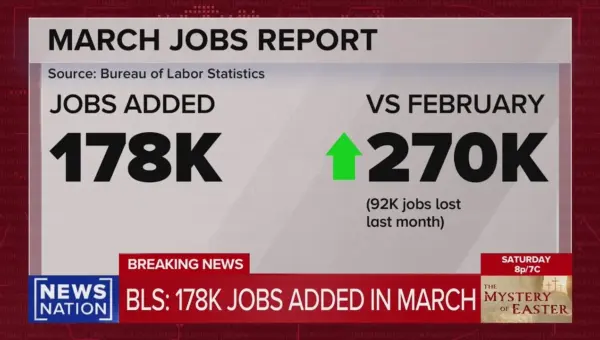
The United States economy showed signs of strength in March, adding 178,000 jobs. This figure surpassed economists’ expectations, which had predicted around 60,000 new jobs. However, the latest jobs report also revealed significant revisions to previous months, indicating a less stable labor market than the headline number suggests. The unemployment rate remained largely unchanged from February.
Understanding the Numbers: March Gains and Past Revisions
The March jobs report, released this morning, showed a total of 178,000 jobs added to the U.S. economy. This number significantly exceeded the 60,000 jobs that experts had forecasted. Brian Cheung, NBC News Business Correspondent, highlighted these figures, noting that the March number was a welcome surprise.
However, the report also brought important updates to data from January and February. The Bureau of Labor Statistics (BLS), responsible for collecting this data, regularly revises previous month’s figures as more information becomes available. In February, the BLS initially reported a loss of 92,000 jobs. This number was later revised downward to a loss of 133,000 jobs, indicating a more significant contraction than first thought.
Conversely, the data for January saw an upward revision. The BLS had initially estimated 130,000 jobs added in January. This figure was then adjusted to 160,000 jobs. These back-and-forth adjustments paint a picture of a labor market that is still finding its footing, experiencing ups and downs from month to month.
Expert Reactions: Stability Amidst Fluctuations
Caleb Silva, Editor-in-Chief of Investopedia and Chief Business Editor of People Inc., described the month-to-month fluctuations as “not normal.” He pointed to potential influences like a partial government shutdown and a significant healthcare worker strike that may have affected the data. Silva suggested that when these events are accounted for, the labor environment shows a pattern of low, high, and then low activity.
Silva also drew attention to two concerning trends within the workforce. First, the number of people marginally attached to the workforce—those who haven’t actively looked for a job in the last four months—has increased by 325,000. This suggests a growing group of individuals who are not actively seeking employment. Second, the number of discouraged workers, who believe no jobs are available for them, rose by 144,000. This brings the total number of discouraged workers to over half a million, indicating a lack of confidence in the job market among a significant portion of the population.
Industry Breakdown: Where Jobs Are Growing
Looking at specific industries, the healthcare sector showed strong growth in March, adding 76,000 jobs. This sector has been a consistent driver of job creation. The leisure and hospitality industry, which includes jobs in restaurants and bars, also saw a notable increase, adding 44,000 jobs.
Manufacturing jobs presented a positive sign, with 15,000 jobs added. While this number might seem small, it is significant because manufacturing has experienced job losses over the past year. Any positive gain in this sector is seen as a welcome development. The transportation and warehousing sector added a modest 6,500 jobs. This area is being closely watched due to potential impacts from global events, such as the war in Iran, which could lead to increased costs and affect employment in this industry.
Broader Economic Context and Future Outlook
The March jobs report offers a mixed but generally optimistic view of the U.S. labor market. The headline number of 178,000 jobs added is a positive indicator, especially when compared to economists’ lower expectations. However, the significant revisions to previous months’ data highlight the market’s ongoing volatility. Factors like government actions and labor strikes can cause temporary disruptions, making it important to look beyond the single monthly figure.
The increase in marginally attached and discouraged workers suggests underlying concerns about job availability and the overall health of the economy for certain groups. As the economy moves forward, attention will remain on how these trends evolve. Analysts will be watching for sustained job growth across various sectors and a decrease in those who feel unable to find work. The impact of global events on key industries like transportation will also be a crucial factor to monitor in the coming months.
Source: U.S. economy added 178,000 jobs in March (YouTube)

Related Articles
US Jobs Surge Defies War Fears, Shows Economic Strength
The U.S. economy added 178,000 jobs in March, far exceeding expectations and showing resilience despite the start of the Iran conflict. Key sectors like healthcare and transportation drove growth, while the unemployment rate dipped to 4.3%. This performance suggests the labor market is strong, even amid global uncertainties.


NY Fed Warns Oil Shock May Boost Inflation, Slow Economy
New York Fed President John Williams warned that rising oil prices, fueled by the Iran conflict, could increase inflation and slow economic growth. While jobless claims fell, the Fed is watching for broader economic impacts and maintaining its 2% inflation target.


Shrink the Fed: AI and Smarter Data Can Boost Efficiency
Economist Paul Mueller proposes downsizing the Federal Reserve, arguing that AI and real-time data analysis can boost efficiency. He suggests cutting non-core programs and reducing staff to improve focus and cost control.