Canada Hits NATO’s 2% Defense Spending Target
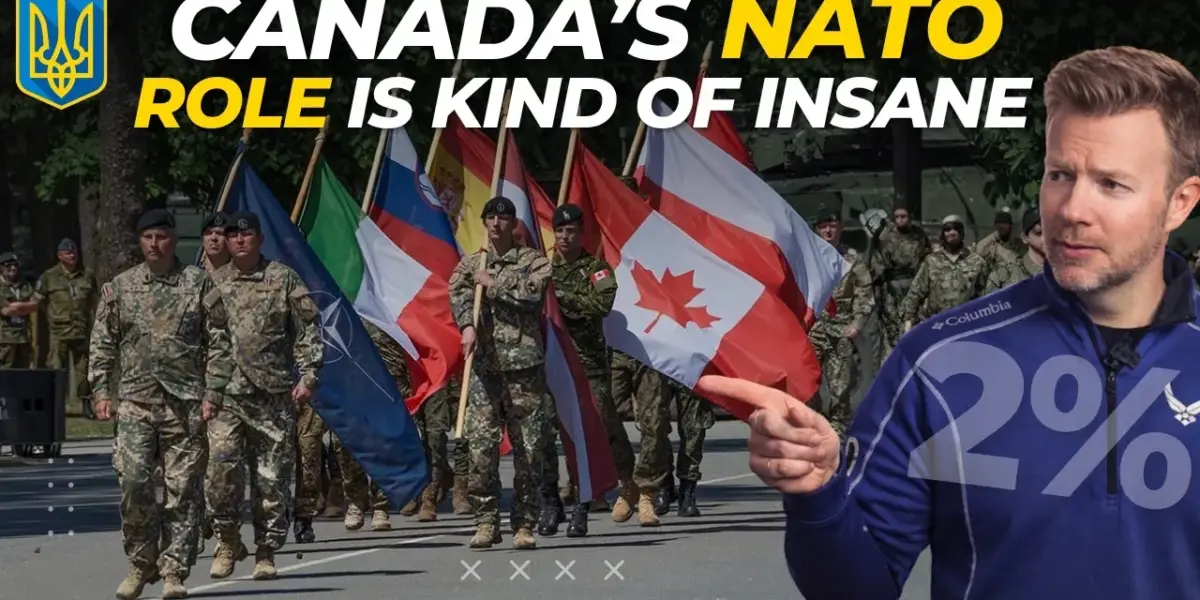
Canada has finally met NATO's 2% of GDP defense spending target, a goal set in 2014. However, the country's actual military contributions and aid to Ukraine have been significant for years, often exceeding what the spending percentage reflects. Analysts emphasize that actual capabilities and strategic actions matter more than a simple financial benchmark.

Canada Reaches NATO’s 2% Defense Spending Goal
Canada has officially met NATO’s defense spending target of 2% of its Gross Domestic Product (GDP). This marks the first time the country has achieved this benchmark since 1990. NATO’s 2025 annual report confirmed that Canada spent just over 63 billion dollars on defense last year, equating to 2.01% of its GDP. This target was originally set at the 2014 Wales Summit.
While this achievement fulfills a long-standing commitment, it comes after significant political discussion. Former Prime Minister Justin Trudeau had previously indicated that Canada would likely not meet this target. However, Prime Minister Mark Carney’s government allocated an additional 9.3 billion dollars to the defense budget last June, ensuring the target was met.
The 2% Target: A Political Benchmark, Not a Strategy
The significance of the 2% GDP spending target is often debated. Experts argue that the percentage alone does not fully represent a nation’s actual contribution to collective security or its military capabilities. The target, created in 1974 and revived in 2014, serves as a political benchmark to encourage member states to invest more in defense, especially following Russia’s increased assertiveness.
“2% is a number. It’s not a strategy. It’s not a capability,” explains one analyst. “It’s a political benchmark that NATO invented in 1974… and then resurrected in 2014 when Russia reminded everyone that maybe Western Europe shouldn’t have spent the post-Cold War years hollowing out its militaries.” The analogy is drawn to personal finances: spending 2% of income on groceries doesn’t reveal if one is eating well or poorly.
Canada’s Substantive Contributions Beyond the Numbers
Despite the focus on the 2% figure, Canada has been actively engaged in significant military operations and support initiatives. These contributions often go unnoticed by the public but represent substantial real-world contributions to security.
Operation Unifer: Training Ukraine’s Forces
Since 2015, Canada has been involved in Operation Unifer, a mission to train Ukrainian military and security personnel. This operation began at Ukraine’s request before Russia’s full-scale invasion in 2022. To date, Canadian Armed Forces have trained over 47,000 Ukrainian soldiers in battlefield tactics and advanced military skills. This long-term training effort has equipped Ukrainian forces with vital experience and readiness.
Operation Reassurance: NATO’s Eastern Flank
Operation Reassurance, Canada’s largest overseas military operation since 2014, focuses on enhancing NATO’s presence in Eastern Europe. Canada serves as the framework nation for the NATO enhanced Forward Presence in Latvia. This means Canada leads the multinational battle group and commands its operations. Following Russia’s 2022 invasion, NATO expanded its forces from battle groups to brigades. Canada is currently leading a multinational brigade in Latvia with 2,200 troops, involving personnel from numerous NATO member states. This commitment was recently extended through 2029.
As part of this operation, Canada is constructing a large maintenance facility at Camp Adazi in Latvia. This 17,000 square meter facility, backed by $58 million, is the largest Canadian infrastructure project abroad in decades. The operation involves over 3,000 Canadian military personnel deployed throughout the year.
Extensive Aid to Ukraine
Since February 2022, Canada has committed approximately $22 billion in total aid to Ukraine. This includes $6.5 billion in direct military assistance. Notably, Canada has provided $12.4 billion in direct financial support, making it the largest per capita financial backer of Ukraine among G7 nations.
The hardware provided by Canada includes:
- Leopard 2 main battle tanks
- M7 howitzers
- NASAMS air defense systems with munitions
- Armored combat support vehicles
- Rheinmetall-built vehicles
- Hundreds of thousands of rounds of ammunition
- High-resolution drone cameras
- 900 Sky Ranger drones
- Winter gear, body armor, small arms, and anti-tank weapons
The Royal Canadian Air Force has also played a crucial logistical role, airlifting over 24 million pounds of military aid into the region. This includes aid not only from Canada but also from other allies and partners.
Diplomatic and International Engagement
Beyond military aid, Canada has engaged diplomatically. In February 2024, Canada signed a bilateral security cooperation agreement with Ukraine. The country also co-chairs the International Coalition for the Return of Ukrainian Children and participates in G7 initiatives using frozen Russian assets for Ukraine’s reconstruction. Canada stepped in to fill aid gaps when other nations temporarily reduced their support.
Strategic Implications and Future Outlook
Canada’s attainment of the 2% GDP target is a positive development for NATO, especially given the current security environment. However, the alliance’s focus is already shifting towards higher spending benchmarks, with discussions moving towards a 5% target. Canada will need to adapt to these evolving expectations.
The decade-long involvement in operations like Unifer and Reassurance has built significant institutional capacity and experience within the Canadian military. This includes real-world deployments, training relationships, and equipment readiness. These established capabilities provide a solid foundation for future contributions.
A significant challenge for Canada remains its defense procurement system, which has historically struggled with efficiency and speed. The Parliamentary Budget Officer has previously warned that Canada faces difficulties in spending its defense allocations effectively. Therefore, focusing on the type of equipment and capabilities acquired is as crucial as the total amount spent.
While the 2% target has been met after 12 years, a diplomatic scandal, and a budget injection, Canada’s actual contributions to security have been substantial throughout this period. The real measure of Canada’s contribution lies not just in a percentage of GDP, but in its active role in leading NATO missions, training allies, and providing critical aid to Ukraine. As NATO considers new spending goals, Canada’s demonstrated commitment and established capabilities will be key to its future role within the alliance.
Source: Canada's 2% NATO Spending Target Hides the Real Story (YouTube)

Related Articles

US Policy Shift Stuns Allies, Weakens Global Security
US policy shifts regarding Ukraine, the Strait of Hormuz, and NATO are raising concerns among allies and creating global instability. Critics point to a lack of strategic planning and diplomatic consultation, potentially emboldening adversaries and undermining international security.


Trump’s NATO Insults Spark Global Outrage, Allies Push Back
Former U.S. President Donald Trump's leaked private remarks, filled with insults aimed at NATO allies, have sparked international outrage and calls for European self-reliance. The comments highlight growing concerns about U.S. reliability and the potential for a long-term split in transatlantic relations. The discussion also touched upon domestic UK issues, including NHS strikes and political shifts, alongside a unique debate on marmalade regulations.

Trump’s Policies Fuel Global Instability, Empower Rivals
Critics argue Donald Trump's policies are weakening NATO, benefiting Russia, and escalating conflicts, particularly in the Middle East. These actions are reportedly causing global instability, impacting markets, and shifting geopolitical power dynamics.