Russian Soldiers Reportedly Killed by Own Forces While Surrendering Amidst Intensified Information Warfare
A distressing incident reveals Russian soldiers were allegedly killed by their own forces while attempting to surrender to Ukrainian units near Chasar. This event, reportedly not isolated, highlights Russia's alleged efforts to prevent surrenders, contrasting with Ukraine's strategic interest in capturing prisoners for exchange. Simultaneously, conflicting battlefield reports from Zaporizhzhia and Russia's tightening grip on communication channels like Telegram further complicate the understanding of the conflict's true dynamics, potentially severing the link between official narratives and ground realities.

Russian Soldiers Reportedly Killed by Own Forces While Surrendering Amidst Intensified Information Warfare
A disturbing incident has once again brought to light the grim realities faced by Russian soldiers on the front lines, with reports emerging of troops being deliberately targeted and killed by their own forces while attempting to surrender to Ukrainian units. This alleged fratricide unfolds against a backdrop of conflicting battlefield narratives in the Zaporizhzhia region and a tightening grip on information flow within Russia, significantly impacting the understanding of the ongoing conflict.
Fratricide on the Front Lines: A Recurring Tragedy
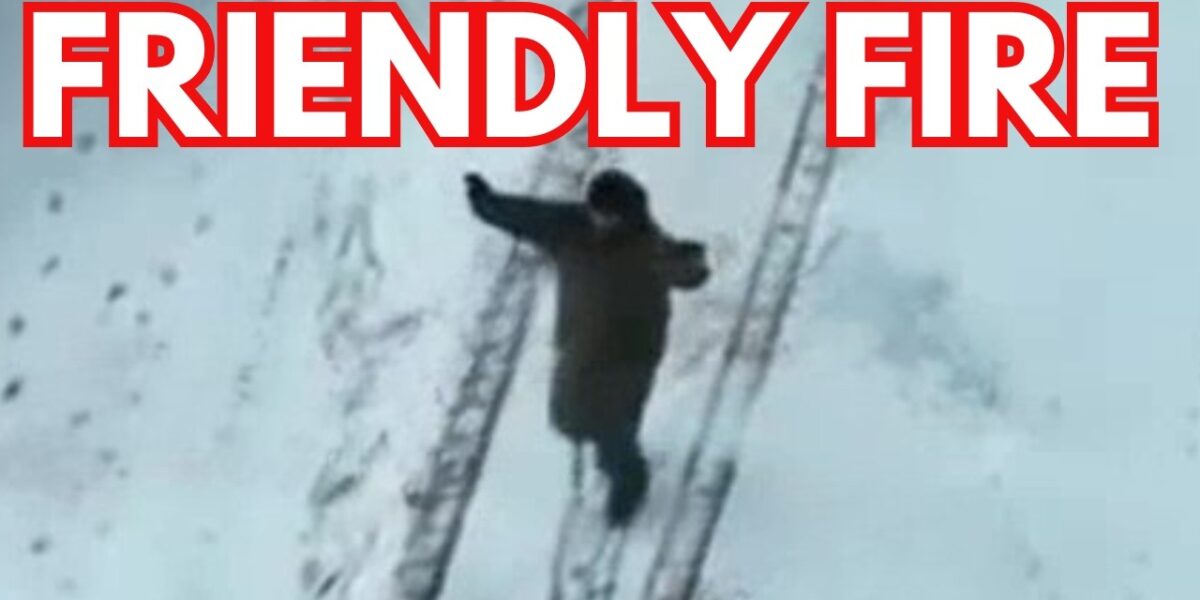
The latest incident, highlighted by Ukraine’s ‘I Want to Live’ project, details how two Russian assault troopers attempted to surrender to fighters of the 24th Separate Mechanized Brigade near Chasar. According to reports, as the soldiers walked towards Ukrainian positions, escorted by a drone and with hands raised in a clear gesture of surrender, they were attacked by their own side. An FPV (First Person View) drone, allegedly operated by Russian forces, was used to kill one of the surrendering men. The second soldier, remarkably, managed to reach Ukrainian lines unharmed.
This event, if confirmed, is not an isolated case. Ukrainian intelligence and various open-source reports have repeatedly documented instances where Russian forces have allegedly used small arms fire, artillery, and now drones, to prevent their own soldiers from surrendering or retreating. Such actions echo historical military doctrines where ‘blocking detachments’ or ‘barrier troops’ were employed to maintain discipline and prevent desertion, underscoring a ruthless command structure.
Why Would Russia Target Its Own Surrendering Troops?
The motivation behind such extreme measures is multi-faceted. One key argument put forth by Ukrainian sources and military analysts is the strategic value of prisoners of war (POWs). Ukraine has consistently prioritized capturing Russian soldiers alive, not merely to reduce enemy numbers, but primarily for prisoner exchanges. As articulated by Ukrainian units, “one more dead Russian soldier doesn’t change the course of the war, but one more captured Russian means one more Ukrainian [POW] that’s coming home in these one-to-one exchanges.” From this perspective, it makes little sense for Ukrainian forces to expend valuable FPV drones on killing a surrendering Russian soldier who is just yards away from their lines.
Conversely, for Russian forces, preventing surrender could be seen as a way to maintain unit cohesion, instill fear, and deter others from attempting to defect. The transcript also highlights a tactical explanation for the timing of such an attack: electronic warfare (EW) and counter-drone measures. Ukrainian positions near the front line are often fortified with various mechanisms – from EW jammers to shotguns and netting – designed to prevent or mitigate the effect of drone strikes. If Russian forces were to wait until their surrendering soldiers reached Ukrainian lines, their drone strike might be ineffective, failing to hit either their own soldier or the Ukrainian positions.
The lack of coverage of this incident on pro-Russian channels further strengthens the argument for Russian culpability. Were it a Ukrainian drone killing a surrendering Russian soldier, it would undoubtedly be amplified across Russian media as a propaganda victory. The absence of such a narrative suggests the incident is inconvenient for the official Russian line.
Conflicting Narratives in Zaporizhzhia: A Battle of Information
Adding to the complexity of the battlefield situation are the starkly contrasting reports emanating from the Zaporizhzhia direction, where a localized Ukrainian counterattack appears to be underway. Russian military bloggers, such as Rybar, have acknowledged a “series of large-scale counterattacks” since late January and early February, with Ukrainian forces launching a “local counteroffensive” and managing to “penetrate relatively deeply into Russian armed forces control zones in some areas.” Rybar attributed difficulties to problems with Starlink terminals and adverse weather conditions, suggesting an enemy buildup and anticipating intensified fighting.
However, the official Russian Ministry of Defense (MoD) presented a vastly different picture. They claimed Russian forces were actually on the offensive in Zaporizhzhia, asserting gains of “more than 18 square kilometers” and reporting significant Ukrainian losses, including 15 combat armored vehicles and pickups, over 20 heavy drones, and four ground-based robotic complexes destroyed. The MoD declared the front had moved west of Hulyaipole, expanding a bridgehead for further offensive operations.
Exaggeration and Information Management
This discrepancy between milblogger accounts and official MoD statements is not new. The Institute for the Study of War (ISW) offered an assessment, suggesting that Russian forces are likely “falsely claiming the Ukrainian forces are conducting a counteroffensive near the Dnipro-Zaporizhzhia Oblast administrative border to rectify earlier false reports about alleged Russian advances in the area.” Colonel Veosian, spokesperson for the Ukrainian Southern Defense Forces, corroborated this, stating that Ukrainian forces are conducting reconnaissance and search missions, not a counteroffensive, and noted Russia’s history of inflating their advances.
This pattern, often referred to as “flag planting operations,” involves Russian soldiers being filmed with flags in settlements, leading to immediate claims of significant territorial gains on Russian maps. However, the reality on the ground often involves isolated advances by individual soldiers who may be killed shortly after, leaving vast, unheld territory between their position and actual Russian control. The refusal to update maps backwards creates a bind, forcing continuous exaggeration to maintain a narrative of constant forward momentum.
While some suggest Russia might be hyping the size of the Ukrainian attack to later claim a major victory, the more plausible explanation, supported by ground footage and Ukrainian statements, is that these are localized Ukrainian actions, larger than their recent defensive operations (involving three to four armored vehicles at a time), but not a major counteroffensive. They appear to be exploiting pockets where Russian forces have overextended themselves, effectively “cleaning up” these vulnerable areas.
The Tightening Grip: Russia’s Communication Crackdown
Further complicating the information landscape and potentially impacting military operations is Russia’s ongoing crackdown on communication channels. Following the reported loss of Starlink access for Russian forces about a week prior, Telegram, a widely used secure messaging app, is now facing a slowdown or potential shutdown across Russia. Russia’s state censorship and communications watchdog, Roskomnadzor, has accused Telegram of being used for “subversive and terrorist activities,” “fraud and extortion,” and has begun efforts to restrict its traffic nationwide.
Telegram has been a critical communication tool for many, including Russian soldiers and military bloggers, operating in the war zone. Its suppression means a significant loss of a relatively independent information source. While other state-run messaging apps exist, many milbloggers are deeply skeptical, fearing direct interception by Russian intelligence. This move, coupled with the Starlink issues, effectively severs primary and secondary means of communication for many on the front lines.
The potential consequences are dire. As one Russian milblogger, Romanov, sarcastically quipped, the blocking of Telegram would immediately lead to military successes across the front, with no friendly fire incidents and abundant supplies. He then starkly concluded, “It will only get worse for the fighters, but no public outcry means no problem.” This sentiment underscores the fear that consolidating information flow into official, state-controlled channels will further detach the Kremlin’s narrative from the grim realities faced by soldiers on the ground, potentially leading to operational failures and increased human cost, all while suppressing public dissent.
Conclusion: A War of Attrition and Information
The confluence of these events – alleged fratricide, conflicting battle reports, and a severe communication crackdown – paints a picture of a conflict where the information war is as fierce as the ground battles. For Russian soldiers, the threat of being targeted by their own side adds another layer of terror to an already brutal war. For external observers, discerning the truth becomes increasingly challenging as independent information sources are suppressed. As Russia tightens its control over the narrative, the gap between official pronouncements and the lived experiences of those on the front lines is set to widen, with potentially profound implications for the conflict’s future trajectory.
Source: No Surrender: Russia Targets Their Own (YouTube)

Related Articles

Hungary Ousts Putin Ally, Shifting EU-Russia Dynamics
Hungary has elected a new prime minister, signaling a significant geopolitical shift away from its close ties with Moscow. The departure of Viktor Orbán's pro-Russian government is seen as a major setback for Russian influence in Europe. The new leadership is expected to align more closely with EU and NATO policies concerning Russia and Ukraine.

Iran’s AI Trolls Outsmart Trump’s Online War
Iran has turned to AI-generated videos and a relentless online trolling campaign to counter Donald Trump following failed negotiations. This strategy highlights a new form of asymmetrical warfare in the digital age, raising questions about the future of international relations and information control.
Ukraine Warns of Retaliation; Russia Shifts Zaporizhzhia Focus
Ukraine has warned of a reciprocal response to any Easter ceasefire violations while Russia reportedly shifts its offensive focus to the Zaporizhzhia region. Meanwhile, the U.S. is considering extending sanctions relief on Russian oil, a move drawing criticism. Former President Trump endorsed Hungary's Viktor Orban amidst protests and elections.