Artemis II Fuels New Space Race Era
NASA's Artemis II mission, sending astronauts beyond the Moon for the first time in 50 years, signals a new era of space exploration. Astronaut Butch Wilmore's insights from past challenges and the mission's pristine progress highlight renewed ambition amidst global space competition. This journey is poised to reshape international relations and technological leadership.

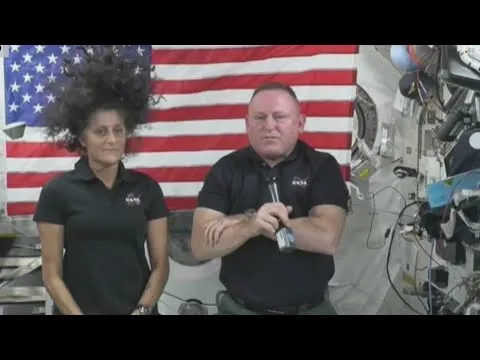
Artemis II Fuels New Space Race Era
The recent launch of NASA’s Artemis II mission marks a significant moment, sending astronauts further into space than humans have traveled in over 50 years. This historic journey, with its crew on a trajectory towards the Moon, signals a renewed ambition in space exploration. It also highlights the increasing competition and technological advancements shaping the global space domain.
A Journey to the Moon
Artemis II is a 10-day mission designed to test critical systems for future lunar landings. Astronauts Barry “Butch” Wilmore and Suni Williams are part of this pioneering crew. Their spacecraft successfully launched with immense power, reaching speeds of nearly 25,000 miles per hour. This speed is necessary for their journey to the Moon. The mission aims to gather valuable data as the crew performs various tasks, including testing the Orion spacecraft’s capabilities. This is a crucial step towards NASA’s larger goal of returning humans to the lunar surface and eventually venturing to Mars.
Lessons from Past Ordeals
Astronaut Barry “Butch” Wilmore brings unique experience to this mission. He recently co-authored a book, “Stuck in Space,” detailing a harrowing 9-month ordeal aboard the Starliner spacecraft. What was planned as an 8-day mission turned into an unexpected, extended stay in orbit. Wilmore described the situation as a “near-death experience” when they faced critical issues with the spacecraft’s thrusters. The uncertainty of their return to Earth created immense pressure. Writing parts of the book while in space helped him process the experience. This ordeal underscores the inherent risks and challenges of human spaceflight, even as new missions are launched.
A Renewed Sense of Excitement
Despite past challenges, Wilmore emphasizes that his excitement for human space exploration remains strong. He describes the Artemis II launch as “spectacular.” The sheer power of the rocket, generating 1.8 million pounds of thrust, is awe-inspiring. He notes that the mission has proceeded “pristine” so far, with all systems performing as expected. The prospect of venturing beyond where humans have been for half a century fuels a deep sense of wonder. Wilmore imagines the crew gazing out the window, taking in the breathtaking views of Earth and the cosmos.
Global Space Competition Heats Up
While the Artemis II mission focuses on NASA’s objectives, the international space landscape is becoming increasingly competitive. Several nations and private companies are investing heavily in space technology. China, for instance, has ambitious plans for lunar exploration and a space station. Private companies like SpaceX are launching their own missions and developing new spacecraft. This competition drives innovation but also raises questions about resource allocation and international cooperation in space. The race to establish a sustained presence on the Moon and beyond is intensifying, creating a new era of space exploration.
Historical Context of Lunar Ambition
The current push for lunar exploration is reminiscent of the Cold War space race between the United States and the Soviet Union. That era saw rapid advancements driven by national prestige and technological superiority. Today, the motivations are broader, encompassing scientific discovery, economic opportunities, and establishing a foothold for future deep-space missions. The Artemis program aims to build on the legacy of the Apollo missions, but with a focus on long-term sustainability and international partnerships. This historical context shows that lunar exploration has always been a high-stakes endeavor, reflecting the geopolitical priorities of the time.
Economic and Strategic Implications
Space exploration is no longer just about scientific curiosity. It has significant economic and strategic implications. The development of new technologies for space travel can lead to innovations on Earth. Furthermore, control over lunar resources and strategic locations in orbit could become increasingly important. Nations are investing billions of dollars in their space programs, recognizing their potential to boost national economies and enhance security. The successful execution of missions like Artemis II demonstrates technological prowess, which can translate into diplomatic influence and economic advantage on the global stage.
Future Scenarios
The future of space exploration holds several possibilities. One scenario involves continued international cooperation, with multiple nations pooling resources and expertise for ambitious projects. Another involves increased competition, where nations pursue their goals independently, potentially leading to duplication of effort or even conflict over space resources. Private sector involvement will likely grow, driving down costs and opening up new commercial opportunities. The success of Artemis II and subsequent missions will play a crucial role in shaping which of these scenarios becomes reality.
Why This Reshapes the World Order
The Artemis II mission is more than just a space flight; it’s a symbol of renewed human ambition and a testament to technological progress. It signifies a global power play in the new frontier of space. As nations and private entities push the boundaries of exploration, the balance of power and influence may shift. The ability to operate effectively in space, from Earth orbit to the Moon and beyond, will likely become a key determinant of global leadership in the 21st century. This era of space exploration promises to redefine international relations and unlock new possibilities for humanity.
Source: NASA astronaut Butch Wilmore calls Artemis II mission ‘pristine’ | Morning in America (YouTube)

Related Articles
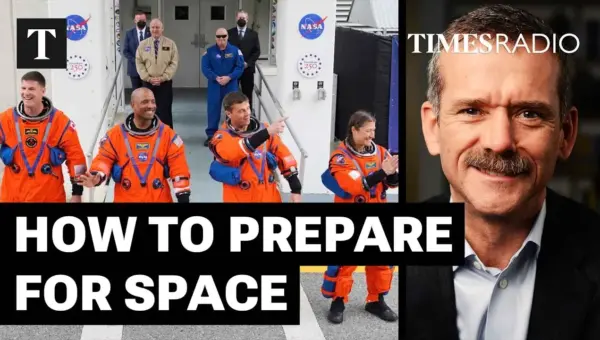
Astronaut Chris Hadfield on Artemis Prep & Space’s Human Heart
Former astronaut Chris Hadfield emphasizes that space exploration's greatest challenge is mental, not physical. He discusses the intense preparation required for missions like Artemis and reflects on the deeply human emotions involved in spaceflight, comparing it to our innate drive to explore.


US Pilot Feared Lost in Iran; Search Underway
The U.S. military is conducting a search operation inside Iran for an American pilot whose fighter jet may have been downed. Details are limited, with uncertainty over whether the plane was shot down or suffered mechanical failure. The operation highlights the complexities of rescue missions in hostile territory and occurs amid heightened regional tensions.


US Policy Shift Stuns Allies, Weakens Global Security
US policy shifts regarding Ukraine, the Strait of Hormuz, and NATO are raising concerns among allies and creating global instability. Critics point to a lack of strategic planning and diplomatic consultation, potentially emboldening adversaries and undermining international security.