US Jobs Surge Defies War Fears, Shows Economic Strength
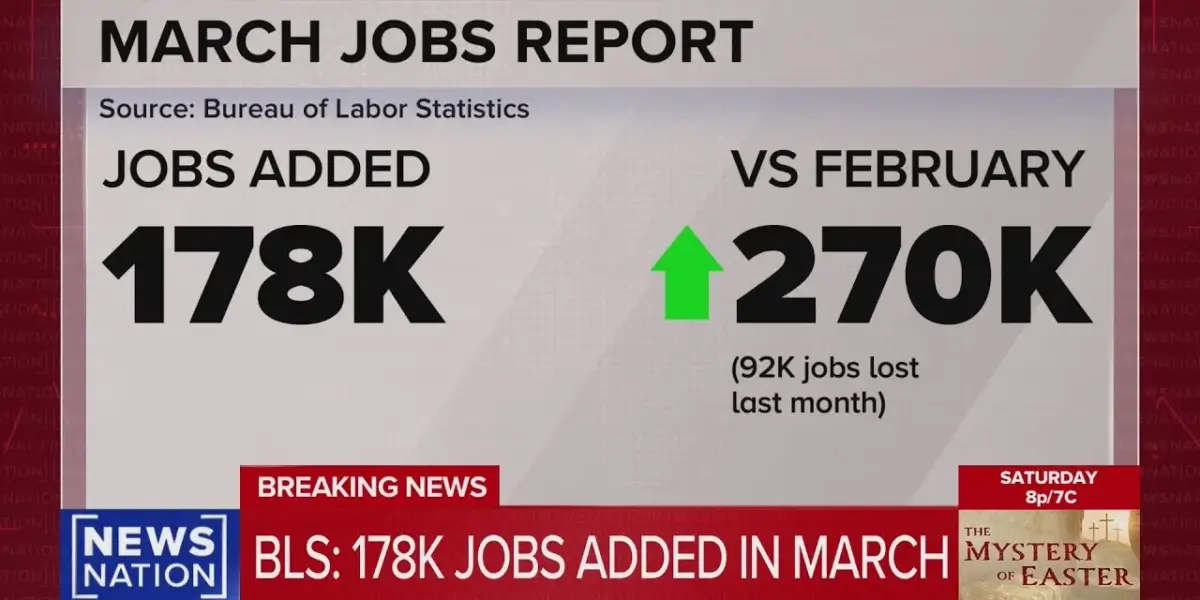
The U.S. economy added 178,000 jobs in March, far exceeding expectations and showing resilience despite the start of the Iran conflict. Key sectors like healthcare and transportation drove growth, while the unemployment rate dipped to 4.3%. This performance suggests the labor market is strong, even amid global uncertainties.

US Jobs Surge Defies War Fears, Shows Economic Strength
The United States economy showed surprising strength in March, adding far more jobs than experts predicted. This happened even as a conflict in Iran began, causing gas prices to jump. The jobs report, released by the Bureau of Labor Statistics, offered good news for workers and businesses. It suggests the American labor market is holding up well against global challenges.
March Jobs Report Beats Expectations
In March, employers added 178,000 new jobs. This number was much higher than the roughly 60,000 jobs economists had expected. It’s a significant rebound from February, when job numbers were revised to show a loss of 133,000 jobs. The unemployment rate also fell slightly to 4.3%, down from 4.4% the month before.
Key Sectors Drive Job Growth
Several industries were major contributors to this job growth. Healthcare saw the biggest gains, adding 76,000 jobs. This is a positive sign, especially after healthcare lost 28,000 jobs in February. The construction industry also added 26,000 jobs. Transportation and warehousing added 21,000 jobs.
Transportation Sector Remains Strong Amidst Rising Fuel Costs
The growth in transportation and warehousing is particularly noteworthy. This sector continued to hire workers even though conflict in Iran caused gas prices to spike. Higher fuel costs usually make it more expensive for transportation companies to operate. The fact that they kept adding staff shows resilience. This sector did not shed workers despite the increased cost of fuel.
Federal Workforce Sees Losses
Not all sectors saw job gains. The federal government workforce lost 15,000 jobs in March. This follows a loss of 10,000 federal jobs in February.
Wages and Labor Force Participation Improve
Workers saw a modest increase in wages. Average hourly earnings rose by about 9 cents. This was a bit lower than the 15-cent increase seen in February. More importantly, the labor force participation rate increased to 61.9% from 61.0%. This means more people are actively looking for work and have opportunities to find jobs. A higher participation rate is generally seen as a healthy sign for the economy.
Looking Ahead: The Impact of the Iran Conflict
The March jobs report only covers the first two weeks of the conflict in Iran. Experts say the next jobs report will give a clearer picture of how the ongoing war affects the economy. Wars can sometimes disrupt hiring, but so far, the U.S. labor market has shown it can withstand these pressures. Analysts are watching closely to see if the war will lead to more job losses or if the economy can continue its upward trend.
Global Impact: Economic Resilience in Uncertain Times
This strong jobs report comes at a critical time. The world is facing geopolitical tensions, including the conflict in Iran. Despite these global worries, the U.S. economy is proving to be resilient. This suggests that domestic economic factors are currently stronger than external shocks. It also shows that the U.S. labor market is capable of absorbing challenges. This resilience can provide stability in a world that often feels unpredictable. The ability of U.S. businesses to continue hiring can also boost consumer confidence and spending.
Historical Context: War and Economic Performance
Historically, major conflicts often bring economic uncertainty. Wars can disrupt trade routes, increase the cost of raw materials, and divert resources. However, the U.S. has also seen periods where its economy adapted and even thrived during wartime. For instance, World War II led to a massive increase in industrial production and job creation within the United States. While the current situation is different, the March report suggests that the U.S. economy is not immediately buckling under the pressure of the new conflict. It shows a capacity to absorb disruptions and continue creating jobs, a sign of underlying economic health.
Economic Leverage and Future Scenarios
The report highlights how interconnected global events are with domestic economies. The spike in gas prices due to the Iran conflict directly impacts consumers and businesses, especially those in transportation. However, the U.S. economy’s ability to absorb this shock without widespread job losses is a positive sign. Future scenarios depend heavily on the duration and intensity of the Iran conflict. If the conflict escalates and oil prices remain high, it could put more pressure on businesses and consumers. This might slow job growth in upcoming reports. Conversely, if the conflict de-escalates or is resolved quickly, the U.S. economy may continue on its current path of steady job creation and falling unemployment.
Source: March jobs report: US employers rebound with 178,000 new jobs | Morning in America (YouTube)

Related Articles


US Pilot Feared Lost in Iran; Search Underway
The U.S. military is conducting a search operation inside Iran for an American pilot whose fighter jet may have been downed. Details are limited, with uncertainty over whether the plane was shot down or suffered mechanical failure. The operation highlights the complexities of rescue missions in hostile territory and occurs amid heightened regional tensions.


US Policy Shift Stuns Allies, Weakens Global Security
US policy shifts regarding Ukraine, the Strait of Hormuz, and NATO are raising concerns among allies and creating global instability. Critics point to a lack of strategic planning and diplomatic consultation, potentially emboldening adversaries and undermining international security.


Strait of Hormuz Tensions Risk Wider Middle East War
Efforts to secure the vital Strait of Hormuz risk triggering a wider Middle East war, according to UN warnings and security analysts. The narrow waterway is crucial for global trade, and forcing it open against Iran's objections could escalate regional tensions dramatically. Experts highlight the complex geography, Iran's remaining military capabilities, and the involvement of regional players as key factors in the volatile situation.