Toyota Prius: Haters Silenced, Hybrid King Lives On
The Toyota Prius, once a symbol of environmentalism and later a target of criticism, has evolved into a sophisticated hybrid. Toyota's long-term investment in hybrid technology has made the Prius and its brethren reliable and affordable, solidifying their place in the market.

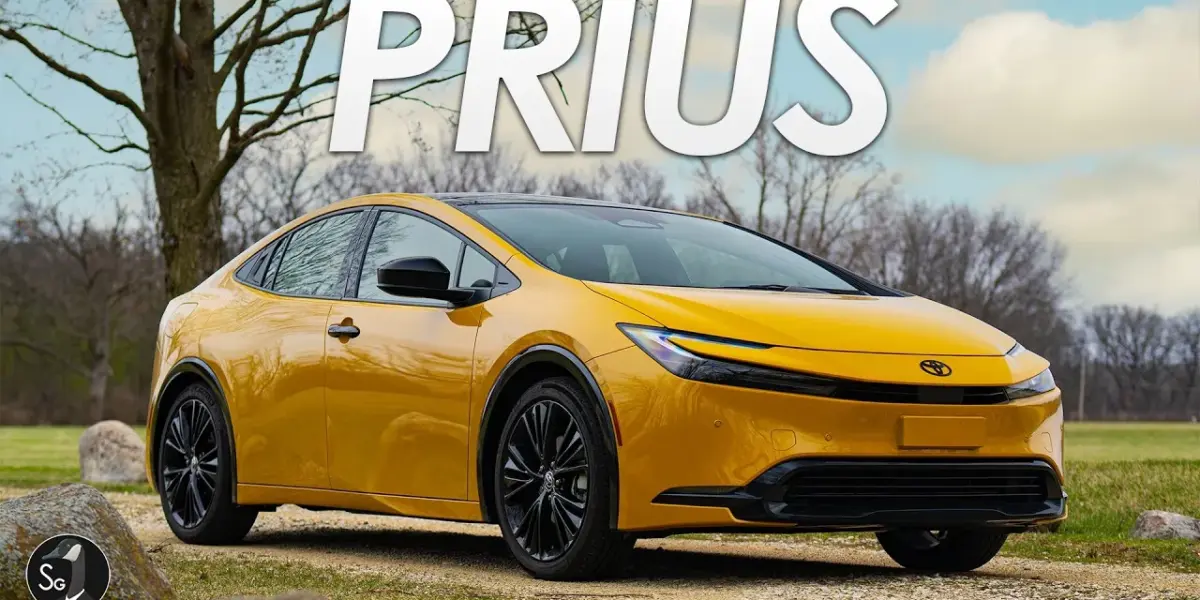
Toyota Prius: The Hybrid That Conquered and Evolved
The Toyota Prius. It’s a nameplate that has seen more than its fair share of controversy and, frankly, a lot of hate. But for decades, this car has quietly pioneered hybrid technology, proving that efficiency and practicality can win over even the most cynical critics. Toyota’s genius lies in taking a new idea, perfecting it for mass production, and making it affordable. The Prius was the perfect example of this strategy, especially in the early 2000s when big, gas-guzzling SUVs were falling out of favor. Think about it: the Ford Excursion was discontinued, and the Hummer brand eventually faded away around 2010. Into this gap, the Prius surged, becoming a symbol for those who wanted to save the planet. For a while, it even carried a reputation for being a bit smug, but that didn’t stop it from selling incredibly well, peaking at around 240,000 units a year in 2012.
Today, sales have dropped significantly, making the Prius more of a niche vehicle. This shift happened because the hybrid SUV took over, almost the opposite of what the Prius was originally meant to be. But it’s never been the car’s fault; it’s usually how people use products, making them bigger and more about making a statement. We’ve seen this play out in the electric vehicle (EV) market too, where the initial idea of being green and saving the planet has become more complex. Now, Toyota is looking to the future, and the latest Prius represents a significant evolution.
Toyota’s Strategic Shift
Toyota, like many global automakers, has faced economic challenges, partly due to tariffs and a cooling EV market after some companies over-invested. The new CEO, Kent Khan, is focused on finding savings by streamlining the supply chain and making internal changes. Unlike many American brands that focus heavily on short-term profits, Toyota takes a very long-term view. They avoid making rash, reactive decisions and are doubling down on what has proven to be a winning strategy: traditional hybrids.
The company is investing over $11 billion to expand its battery plants and hybrid production facilities. The goal is to offer a hybrid option on every single model. While it’s hard to say if this will be the ultimate winning strategy in 20 years, it has certainly helped Toyota avoid the problems some other companies, like Honda with its canceled EV projects, are facing right now. This commitment to hybridization has kept Toyota steady.
The Fifth Generation Prius: Power and Efficiency
The current, fifth-generation Prius uses Toyota’s latest hybrid technology, moving from nickel-metal hydride batteries to more efficient lithium-ion packs. Toyota has also split the Prius line into two distinct models. There’s the standard Prius, a traditional hybrid with a small lithium-ion battery. It’s available with front-wheel drive or all-wheel drive, producing either 194 or 196 horsepower. For 2025, the plug-in hybrid, formerly known as the Prius Prime, is now simply called the Plug-in Hybrid. Both models use an electronic continuously variable transmission (eCVT).
While it might not be the most cutting-edge EV setup available, the Prius offers proven technology that works exceptionally well. Toyota has done a fantastic job of making the hybrid system nearly seamless to the driver, which is a huge achievement for a car at this price point. It truly feels like a normal car to drive, with no jarring transitions or awkward noises.
Performance and Driving Experience
The latest Prius is the most powerful ever. The plug-in hybrid version can hit 0-60 mph in the mid-six-second range, which is competitive with many sporty cars. While the handling is more focused on comfort than sharp cornering, it’s a significant improvement over older models. The steering is light and predictable, making it an easy car to drive in any situation. Toyota has worked hard to improve the driving dynamics, giving the Prius a bit more character than the simple, efficient appliance it once was. Even the styling has become more aggressive and appealing, moving away from the quirky designs of the past.
However, visibility in this generation isn’t the best, which is a trade-off for the sleeker design. But the focus of the Prius has always been its powertrain and efficiency, not its ultimate sportiness. The fact that Toyota has managed to make a hybrid system that feels so natural and integrated is a testament to their engineering prowess.
Value and Target Buyer
The biggest change for the Prius is its position within Toyota’s lineup. As Toyota has made hybrid technology available across almost its entire range, the Prius has become more of a niche product. Previously, it was the go-to choice for a dedicated hybrid compact car. Now, you can get a hybrid RAV4 or Camry, which might offer more space and practicality without the compromises of the Prius. This has led to a significant drop in sales, an unintended consequence of Toyota’s success in hybridizing its whole lineup.
The Prius, in some ways, became a martyr for Toyota’s hybrid mission, paving the way for other models. It also helped kick off the political and social statement aspect of owning a hybrid, a role now largely filled by EVs. While the future political and infrastructural landscape for EVs remains uncertain, Toyota is betting heavily on hybridization in the US. China, the world’s largest auto market, is fully committed to EVs, and their manufacturers are leaders in the affordable EV space. However, in the US, Toyota’s continued investment in hybrid battery plants and production facilities positions them strongly for the next 5-10 years. The more hybrids they build, the cheaper they become due to economies of scale.
This brings us back to the core of the Prius’s original mission: industrializing technology for the masses. While it might not always be the most cutting-edge, Toyota ensures it’s reliable, affordable, and repairable. Unlike some complex EVs or other hybrids, most Toyota hybrids can be serviced at any shop, and major repairs, like battery replacements, are far less costly than they used to be. This reliability is what Toyota buyers expect and what keeps these cars relevant for years, even decades.
The Verdict
The Toyota Prius has survived decades of criticism and evolving automotive trends. It was once the symbol of environmental consciousness, then a target of mockery, and now it’s a refined, powerful, and efficient hybrid that’s become a niche, almost enthusiast product within Toyota’s own diverse hybrid lineup. Toyota’s long-term vision and willingness to invest in hybrid technology have paid off, allowing them to offer reliable, fuel-efficient, and increasingly refined vehicles at competitive prices. While the automotive world debates the future of EVs, Toyota’s hybrid strategy, spearheaded by the enduring Prius, continues to offer a sensible and practical solution for a vast number of drivers. It’s a testament to Toyota’s engineering and business strategy that the Prius, despite its changing image, remains a relevant and respected vehicle in the automotive landscape.
Source: Toyota Prius | It Survived Haters and Smugness (YouTube)

Related Articles


Nvidia’s Self-Driving Tech Powers LA Test Drive
Nvidia's L2++ autonomous driving platform was tested in a real-world LA drive, showcasing its sensor fusion and decision-making capabilities. The company plans a nationwide rollout and Level 4 robo-taxi services, signaling strong progress in the autonomous vehicle market.

Modern Cars Lose Soul to Tech, Simulators Feel Real
Modern cars are becoming so advanced with technology that they are losing their authentic driving feel. Engineers are working with complex electromechanical systems and software, making cars safer but often less engaging. Surprisingly, professional driving simulators are now better at replicating the real-world driving sensation than many new vehicles.

BMW iX3: The Electric Future BMW Wants You to Embrace
The BMW iX3 is a crucial testbed for the brand's electric future, influencing upcoming models with its design and tech. While it offers impressive performance and a modern interior, its polarizing styling and high price tag are points to consider.