House Delays DHS Funding Vote, Faces Recess
The House of Representatives has delayed a critical vote to fund the Department of Homeland Security, pushing the decision past a two-week congressional recess. The Senate previously passed a funding bill that excludes some immigration enforcement measures, but the House has yet to take it up. This stalemate leaves DHS partially unfunded and highlights deep divisions within the Republican party.


House Postpones Crucial DHS Funding Vote Amidst Political Stalemate
The U.S. House of Representatives has postponed a key vote to fund the Department of Homeland Security (DHS), leaving the agency without guaranteed financial support until at least after the upcoming two-week congressional recess. This delay means the department will remain partially shut down for the foreseeable future, highlighting a deep division within the Republican party and a complex negotiation process with the Senate.
Senate Passes Funding Bill, House Balks
Earlier this week, the Senate moved to approve a funding measure for most of DHS. However, this bill notably excludes funding for Immigration and Customs Enforcement (ICE) and some parts of Customs and Border Protection. The House, led by Speaker Mike Johnson, chose not to consider the Senate’s legislation. This decision effectively pushes a resolution further out of reach and leaves the agency’s funding in limbo until Congress reconvenes later this month.
Speaker Johnson Faces Internal Pressure
During a private conference call with House Republicans, Speaker Mike Johnson signaled that he has no intention of calling lawmakers back to Washington early. He also did not commit to a clear strategy for moving forward on the DHS funding issue. This stance comes after Johnson himself had previously called the Senate’s proposed deal “a joke.” Despite his earlier objections, he reportedly informed Republicans that they had few other options besides accepting the Senate’s bill.
Democrats Ready to Support Funding Bill
House Democrats have stated their willingness to support the Senate’s legislation, indicating it would pass the chamber easily if Speaker Johnson brings it to a vote. This offers a potential path forward, but it relies on Republican leadership allowing the vote to occur. The situation remains tense, with differing priorities on border security and enforcement creating significant hurdles.
Lawmakers Express Frustration Over ICE Funding
Democratic Congresswoman Mike Quigley of Illinois, in a recent interview, expressed concern about the lack of progress on reforming ICE. “The bottom line is the Republicans are going to do anything to avoid reforming ICE,” Quigley stated. He emphasized that reforming ICE was a crucial issue for many Americans and questioned the effectiveness of the current approach. Quigley noted that while the Senate bill might pass, it doesn’t address the core concerns about ICE’s operations, suggesting that Democrats would have supported a deal that included such reforms.
Political Analysts Weigh In on Republican Divisions
Former Senior Adviser for Political Engagement to President Biden, John McCarthy, and former Republican Congressman Charlie Dent discussed the internal struggles within the House Republican Conference. Dent observed that in politics, one should “never say what you will never do, because you may end up doing it someday.” He explained that when the Senate passes a bill unanimously, the House typically has to accept it. Dent acknowledged the frustration among House Republicans, who felt forced to vote for something contrary to their stated positions, especially since the bill doesn’t fully fund ICE and border protection as some desired.
The Reality of Senate Bills in the House
Dent further elaborated on the political dynamics, stating, “When the Senate passes a bill, a contentious bill under unanimous consent… that the House is going to eat it every single time.” He described the Republican reaction as a “fit” or “tantrum” but stressed that it doesn’t change the inevitability of the bill being considered. Speaker Johnson, he believes, was “forced to cave” because he lacked better options.
Self-Preservation Drives Republican Actions
John McCarthy suggested that many Republicans, especially those in competitive districts, are motivated by self-preservation as the November elections approach. He believes they see the same polling data as Democrats and feel their “backs are up against a wall.” This leads to an expectation that rank-and-file Republicans will increasingly distance themselves from former President Trump, not out of a change of heart, but to increase their chances of re-election.
Divergence from Presidential Politics
Charlie Dent agreed with McCarthy’s assessment, noting that Republicans in swing districts need votes from independents and some Democrats to win. Since former President Trump is “toxic” with these voters, members in competitive seats must “separate” from him. Dent anticipates this divergence will become more apparent on various issues, including foreign policy, tariffs, and immigration, as survival becomes the primary goal.
Analysis of Presidential Addresses and Foreign Policy
The conversation also touched upon President Trump’s national addresses, which John McCarthy described as rare and powerful moments. However, he felt that a recent address on Iran lacked tangible outcomes for voters and failed to provide clarity on the mission, timeline, or funding. McCarthy argued that the President is losing political support on this issue because he hasn’t offered a clear strategy. Charlie Dent added that the administration has strategically put itself in a difficult position regarding Iran. He pointed out that while U.S. forces have degraded Iran’s military capabilities, the Strait of Hormuz remains closed, oil prices are up, and allies are angered. Dent questioned the administration’s exit strategy and what has been accomplished, noting that the Iranians feel they have leverage.
Loyalty and Political Survival
Regarding personnel changes within the administration, John McCarthy stated that Donald Trump demands absolute loyalty, and once that loyalty is perceived to waver, he is “done with you.” He advised Republicans to recognize that Trump may not have their back, even as he demands loyalty from them. This dynamic highlights the transactional nature of political alliances within the current administration.
Looking Ahead: What’s Next for DHS Funding?
With Congress now in recess, the immediate future of DHS funding remains uncertain. The House is expected to address the issue upon its return, but divisions within the Republican party and ongoing negotiations with the Senate will likely shape the eventual outcome. The pressure to secure funding while also addressing ideological differences on border security and immigration policy will continue to define the legislative agenda.
Source: House waits on holding vote to fund DHS (YouTube)

Related Articles


Lawmaker Warns DHS Funding Delay Is “Incredibly Risky”
A GOP lawmaker warns that delays in funding the Department of Homeland Security are "incredibly risky." The House and Senate are locked in a dispute over funding for ICE and CBP, with concerns rising over potential constitutional and operational impacts.


Birthright Citizenship: Is the 14th Amendment Outdated?
The 14th Amendment's guarantee of birthright citizenship is under intense debate. Panel guests discuss whether the long-standing interpretation is outdated and explore the practical challenges and historical context surrounding this core American principle.

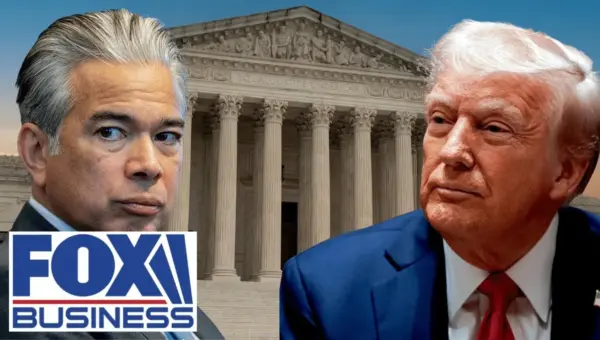
AG Battles Attorney Over Trump SCOTUS Visit Impact
A Supreme Court case on birthright citizenship is sparking debate. Legal experts clash over former President Trump's attendance at oral arguments and California AG Rob Bonta's criticisms. The ruling, expected by June, could impact immigration policy and labor markets.