UK Approves New North Sea Gas Field After Policy Shift
The UK government is reportedly set to approve the Jackdaw gas field in the North Sea, signaling a significant policy shift. Experts believe this move is driven by energy security concerns and can help fund the transition to renewables. While welcomed, some argue the decision comes too late.


UK Reverses Stance on North Sea Drilling
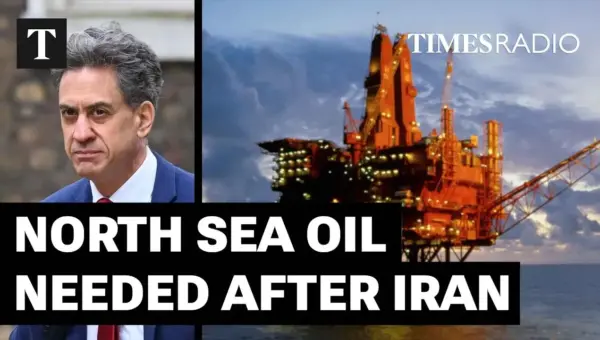
The UK government appears to be shifting its policy on North Sea oil and gas exploration. Energy Secretary Ed Miliband is reportedly set to approve the Jackdaw gas field, located about 150 miles off the coast of Aberdeen. This decision comes just six months after Miliband stated he had no intention of approving new exploration licenses in the North Sea, aiming instead to focus on homegrown clean power sources.
Reasons Behind the Policy Change
Experts suggest that recent global events have highlighted the critical link between energy security and national security. Professor Paul Dau, Director of the Energy Transition Institute at Robert Gordon University, explained that the world has changed, and people are realizing the importance of having strategic energy resources nearby.
“Having strategic energy on your doorstep in the North Sea is truly critical. And Jackdaw is a classic example. This is a gas field that can be on stream this winter adding and meeting 6% of the demand in the UK. So providing gas to customers literally almost immediately.”
Dau also noted that approving fields like Jackdaw can provide a necessary bridge to a lower-carbon future. He emphasized that gas and oil, alongside renewables, will be needed for decades to come.
Funding the Energy Transition
A key argument for continued North Sea drilling is its potential to fund the transition to renewable energy. Professor Dau explained that the same companies and workforce involved in oil and gas can pivot to developing wind infrastructure. He described the energy sector as an integrated system where revenue from current resources can help build the new, greener energy system.
“So this is an energy industry, an integrated ecosystem, and we can use that to build a new energy system for the UK,” Dau stated.
Net Zero Goals and Global Comparisons
The UK’s commitment to achieving net-zero emissions by 2050 remains a legal target. However, Dau argued that it is not a choice between oil and gas or renewables, but rather a need to use all available energy sources. He pointed out that over 70% of the UK’s current energy use relies on oil and gas, making a rapid shift to renewables challenging.
Dau highlighted that other European countries like France, Portugal, and Spain are making progress and offer templates for the transition. He believes the UK has been an outlier in its previous policy, contrasting with neighbors like the Netherlands, Norway, and Denmark, which are actively developing or extending licenses for gas fields.
The Rosebank Field Debate
The discussion also touched upon the Rosebank Field, which predominantly contains oil reserves and remains a point of opposition for Ed Miliband. Dau argued that developing national resources like those in the North Sea is crucial for energy resilience. He noted that the UK has lost a third of its refineries in the last 18 months, making domestic production vital for providing energy security to Northwest Europe.
“So actually, it’s a strategic investment to make sure we have the energy resources in Northwest Europe on the doorstep. So we don’t rely on imports from all places around the world,” he said.
Market Reaction and Economic Benefits
Ian King, a business columnist for The Times, suggested that while the approval is welcome, it is “too little too late” and should have happened months ago. He agreed that it will boost near-term self-sufficiency for the UK.
“Whilst it is very true to say that this doesn’t exactly move the dial in terms of overall energy supplies, it will certainly make the UK rather more self-sufficient in the near term.”
King also pointed out the economic benefits, stating that domestic production creates jobs and is preferable to paying overseas suppliers, especially from a balance of payments perspective. He mentioned that investment in the North Sea has fallen significantly, but there are still significant reserves that could be accessed with sufficient price incentives and technological advancements.
Addressing Skepticism on Renewables
Regarding listener skepticism about the viability of renewables like heat pumps in cooler climates, Professor Dau addressed concerns about heat pumps working in Scotland. He cited Norway, a cold country, as an example where heat pumps are widely used for heating homes.
“So they will absolutely work in cold countries. Norway is a cold country. So is it possible? Absolutely. But it’s a way of the transition,” Dau explained. He stressed that transitioning from gas boilers to heat pumps is a significant and costly change that takes time, necessitating continued oil and gas use as a bridge.
Looking Ahead
The apparent shift in government policy signals a potential recalibration of the UK’s energy strategy, balancing climate goals with immediate energy security needs. As the UK navigates the complexities of transitioning to net zero, continued investment and policy decisions regarding North Sea resources will be closely watched, especially in light of global energy market volatility and the ongoing development of renewable technologies.
Source: Oil And Gas Licenses Should Have Been Granted Months Ago | Ian King (YouTube)

Related Articles
UK Approves New North Sea Gas Field Amid Energy Security Concerns
The UK government is set to approve the Jackdaw gas field in the North Sea, marking the first major project of its kind in nearly a decade. This decision prioritizes energy security amid global instability. The program also discussed ongoing NHS strikes and rising retail crime.


Labour Eyes North Sea Gas Approval Amid Energy Security Fears
Energy Secretary Ed Miliband is reportedly set to approve the Jackdaw gas field in the North Sea, a notable shift in Labour's energy policy. This decision is driven by concerns over energy security, job protection in the region, and the current geopolitical climate. The move comes as the government faces pressure to ensure a stable domestic energy supply.


40 Nations Target Iran’s Oil Grip
A coalition of 40 nations has launched a plan to secure the Strait of Hormuz, challenging Iran's control over global oil shipping. This move comes amid rising oil prices attributed to Iranian aggression, while U.S. energy production provides a stable economic backdrop.