Oil Prices Skyrocket After Trump’s Speech on Iran Conflict
Oil prices surged past $108 a barrel following President Trump's speech on the Iran conflict, sending shockwaves through global energy markets. Experts warn that the disruption of the vital Strait of Hormuz shipping lane is now entering a critical phase, with significant impacts expected worldwide.

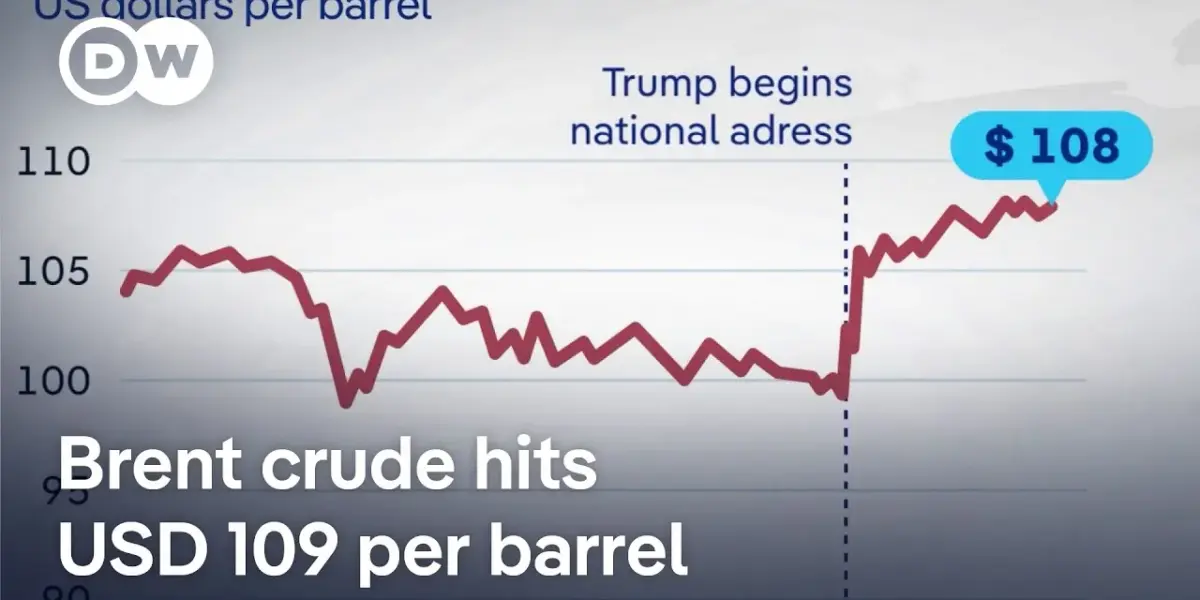
Global Markets Jittery as Oil Prices Surge Past $108
Global energy markets experienced a sharp jolt following a speech by U.S. President Donald Trump regarding the conflict in Iran. Brent crude, the international standard for oil pricing, jumped over $10 in a single day, climbing past $108 a barrel. This surge came after weeks of easing prices, fueled by hopes that military action might soon conclude.
Market Spooked by Unclear Signals on Conflict End
Ben Cahill, Director for Energy Markets and Policy at the University of Texas at Austin, explained that oil markets were seeking clearer answers about the conflict’s duration and resolution. “The market didn’t really see that in the speech,” Cahill stated, referring to the lack of definitive information on when or how the conflict would end. This uncertainty led to an immediate market reaction as trading opened in Asia.
Cahill highlighted that recent weeks had seen some market stability due to strategic oil reserve releases and a significant amount of oil already in transit before the conflict escalated. However, he warned that the market is now entering a critical phase, with these buffers diminishing. The disruption of oil flow through the Strait of Hormuz, a vital shipping lane, is now a significant concern for global supply chains.
Global Impact: Not Just a U.S. Concern
President Trump suggested that the events in the Strait of Hormuz were not a direct concern for the U.S. as it is a major oil producer. However, Cahill emphasized that this view overlooks the interconnected nature of the global energy market. “It’s a global market,” he said. “So in the United States, gasoline and diesel prices reflect global market conditions and therefore the Brent price.”
While the U.S. is a leading oil exporter, it still imports oil, particularly on its East and West coasts. The current disruptions are already affecting consumers worldwide, with South and Southeast Asia experiencing the most immediate impacts. These regions are facing fuel shortages, rationing, and government calls for people to work from home. Wealthier nations in Europe and the U.S. have been somewhat more insulated, but Cahill predicted that the global impact will become more widespread as the scale of the disruption becomes clearer.
International Efforts to Reopen Vital Shipping Lane
In response to the growing crisis, the United Kingdom convened a meeting with approximately 40 countries to discuss the situation in the Strait of Hormuz. The group called for the immediate and unconditional reopening of the strait. However, the effectiveness of such calls remains uncertain at this stage.
Cahill noted that the meeting itself signals the widespread concern, as the Strait of Hormuz is a critical chokepoint for global trade, with roughly 100 ships typically transiting daily before the conflict. Now, only a handful are passing through. Countries like Pakistan and China have reportedly engaged directly with Iran, proposing solutions to end the conflict or secure exemptions for shipping. This indicates a growing desire for dialogue and mediation.
Iran’s Leverage and the Search for Diplomatic Off-Ramps
The situation is described as an existential struggle for Iran, which appears to be using control of the Strait of Hormuz as its primary leverage. “Iran’s calculus here is to inflict maximum economic damage and chaos as long as it feels that existential threat,” Cahill explained. This strategy has included attacks on energy infrastructure and demands for direct payments from ships transiting the strait.
Many nations are actively seeking diplomatic solutions, or “off-ramps,” to de-escalate the conflict. This involves opening channels for dialogue between Washington and Tehran. The ultimate resolution, Cahill suggested, depends heavily on the ongoing course of the conflict in the coming weeks.
Market Fallout and Future Price Expectations
Market participants have been surprised by the limited upward price movement in crude oil until recently, given the severity of the disruptions. While prices neared $100-$110 per barrel, this figure doesn’t fully capture the market’s stress. Soaring jet fuel prices in Asia, fertilizer shortages, and broader impacts on global supply chains are accumulating. These issues are expected to affect stock markets and energy prices in the United States.
Analysts anticipate that the market impact will intensify this month as emergency measures and reserves are depleted. With over 10 million barrels of oil per day potentially disrupted through the Strait of Hormuz, the toll on energy prices is expected to continue growing. The situation highlights the delicate balance of global energy security and the far-reaching consequences of geopolitical conflict.
Source: Oil prices surge following Trump's speech | DW News (YouTube)

Related Articles


Trump Ousts AG Bondi, Eyes Zeldin as Successor
Pam Bondi is out as Attorney General after one year, with Deputy AG Todd Blanche serving as Acting AG. President Trump confirmed the departure, praising Bondi and hinting at a new private sector role. Lee Zeldin is reportedly being considered as Bondi's permanent replacement, amid ongoing speculation about other cabinet changes.


US Policy Shift Stuns Allies, Weakens Global Security
US policy shifts regarding Ukraine, the Strait of Hormuz, and NATO are raising concerns among allies and creating global instability. Critics point to a lack of strategic planning and diplomatic consultation, potentially emboldening adversaries and undermining international security.


Strait of Hormuz Tensions Risk Wider Middle East War
Efforts to secure the vital Strait of Hormuz risk triggering a wider Middle East war, according to UN warnings and security analysts. The narrow waterway is crucial for global trade, and forcing it open against Iran's objections could escalate regional tensions dramatically. Experts highlight the complex geography, Iran's remaining military capabilities, and the involvement of regional players as key factors in the volatile situation.