Tariffs Spark Trade Wars: Are They Helping America?
One year after President Trump enacted global tariffs, experts debate their effectiveness. While intended to boost American manufacturing and secure better trade deals, these taxes on imported goods have faced legal challenges and partisan divisions. The ongoing discussion weighs the potential benefits against the risks of trade disputes and economic uncertainty.


Tariffs Spark Trade Wars: Are They Helping America?
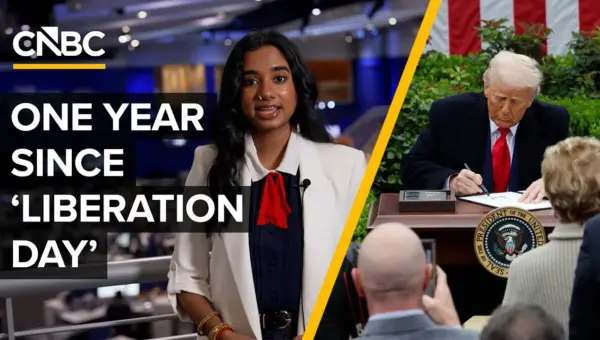
One year ago, President Trump put new tariffs on goods coming into the United States. Some called this “Liberation Day.” But one year later, people are still debating if these tariffs are a good idea for the country.
What Are Tariffs and Why Use Them?
Tariffs are basically taxes on imported goods. The idea is to make foreign products more expensive. This can encourage people to buy American-made products instead. It can also be used as a way to get other countries to agree to trade deals that benefit the U.S.
During a discussion, Tim Graham, Executive Editor of NewsBusters, noted that many news reports predicted these tariffs would cause big problems, like making prices go up a lot. However, he said that hasn’t really happened overall, though gas prices are high right now. Graham mentioned that sometimes tariffs can help create trade deals, but they can also cause confusion that makes businesses nervous.
Mixed Results and Legal Battles
Nicole Brenner Schmitz, a Democratic Strategist, agreed that tariffs can work if countries stick to certain rules. She pointed out that when the White House announced these tariffs, they seemed very tied to one political party. However, she believes tariffs can be something both Democrats and Republicans can agree on. Many labor unions, she said, talk about using tariffs to make sure goods are made in America and sold here.
Schmitz added that while tariffs can be used for fair trade, the effects haven’t been huge yet. A lot of this is because the tariffs often get stuck in court. Sometimes they are put on hold, and the dates are changed by the White House. She feels it would be better if there was more agreement between the two parties on this issue, so they could truly work together to put America first.
Tariffs as a National Security Tool
President Trump often said he was using tariffs as a national security tool. However, the Supreme Court ruled against this. This means the President has to find other, longer ways to put tariffs in place, which can take up to a year. Graham explained that the President and his team should have expected lawsuits. He said that any policy President Trump tries to enact usually faces legal challenges. Federal judges often get involved.
The main legal fight was about whether the President could set tariff policy without Congress. Tariffs are taxes, and some argued that only Congress has the power to create taxes. While there are still legal ways for the President to impose tariffs, he has to deal with the technical details. People who oppose the President will use these details against him.
Rethinking Globalization
Some people say the President has changed the global economy and that the world order is being reshaped. Schmitz asked if going back to embracing globalization would be a step backward. She explained that Democrats have long worked for fair trade agreements. She sees this as a point where Donald Trump and Bernie Sanders, who often disagree, found common ground.
Both Trump and Sanders were against deals like the Trans-Pacific Partnership (TPP) and NAFTA, while some moderate politicians supported them. Schmitz believes this is an area where both parties can come together. They can create trade agreements that not only protect American jobs but help them grow. She doesn’t want to see industries simply moved to other countries.
Schmitz gave an example: call centers. She believes these jobs should be in the U.S. so people can talk to someone in America when they call for help, instead of someone in another country. There are even bills being discussed that offer tax breaks to companies that keep call centers in America. There are also consequences if they move them. She stressed that both sides of the aisle need to see these kinds of ideas as good for Americans and the economy, and that they have support from both parties.
Border Funding and Political Standoffs
The discussion then shifted to funding for agencies like ICE (Immigration and Customs Enforcement) and CBP (Customs and Border Protection). Senate Majority Leader John Thune spoke about a plan that might involve using a process called reconciliation to fund these agencies.
Schmitz wasn’t sure if a budget reconciliation bill would prevent future shutdowns. She explained that Democrats have core principles regarding ICE, such as requiring warrants for some actions. She doesn’t think they will give up these principles when they have a chance to make a stand. She believes these fights over funding could happen again.
Graham discussed the media’s role in these political battles. He suggested that the news media doesn’t always hold Democrats accountable when they block funding. He used the example of long lines at airports due to TSA staffing issues. He argued that the media should point out that Democrats are willing to inconvenience Americans because of their commitment to certain immigration policies. He noted that when Republicans are seen as the party shutting down the government, the media often blames them heavily, but this hasn’t happened as much in this case, leading to what he called dysfunctional government.
Why This Matters
The debate over tariffs shows a major shift in how the U.S. approaches global trade. For years, the trend was towards more open trade and globalization. Now, there’s a growing focus on protecting American jobs and industries, even if it means using tools like tariffs. This approach can create economic benefits by boosting domestic production, but it also risks trade disputes and higher costs for consumers.
Implications and Future Outlook
The discussion highlights the challenges of using tariffs as a policy tool. Legal battles can slow down or weaken their impact. Furthermore, the partisan nature of these policies can make it hard to get broad support, which Schmitz believes is necessary for long-term success. The future likely holds continued debate over how to balance international trade with domestic economic interests. It also shows how deeply divided political parties can be on key economic issues, sometimes leading to government standoffs over funding.
Historical Context
Tariffs have been used throughout U.S. history, often to protect growing American industries. However, they have also been a source of international tension. The idea of using them as a national security or bargaining chip in trade negotiations is a more recent strategy. The current debate reflects a broader global conversation about the benefits and drawbacks of globalization and the role of government in shaping trade policy.
Source: Iranian Government Fighting Against Each Other, Rather Than US, Hinders Negotiations: Panel (YouTube)

Related Articles
Tariffs Cost Trillions: How Markets Recovered
Sweeping tariffs initially wiped out $2.4 trillion in market value, but a swift rebound followed. Companies now grapple with rising costs, with consumers ultimately bearing the brunt through higher prices.


Trump’s ‘Golden Age’ Claims Face Economic Reality Check
Donald Trump's claims of an $18 trillion economic boom fueled by tariffs are met with skepticism. While supporters cite job creation, many business owners report negative impacts like job cuts and slowed growth. The actual economic gains and the effectiveness of tariffs remain a subject of intense debate.

Trump’s Iran Speech Sparks Oil Spikes, Economic Fears Globally
President Trump's recent remarks on Iran have triggered an 11% spike in oil prices and rattled global markets. Experts warn of significant economic fallout, from rising consumer costs to potential disruptions in farming and travel. New tariffs on drugs and proposed changes to 401(k) investments add further layers of economic uncertainty.