NASA Relies on Private Firms for Moon, Mars Ambitions
NASA is increasingly relying on private companies and their funding to achieve ambitious space exploration goals, including returning astronauts to the Moon. This shift from government-led initiatives to public-private partnerships is reshaping the space industry and fostering innovation, though it also presents potential risks.

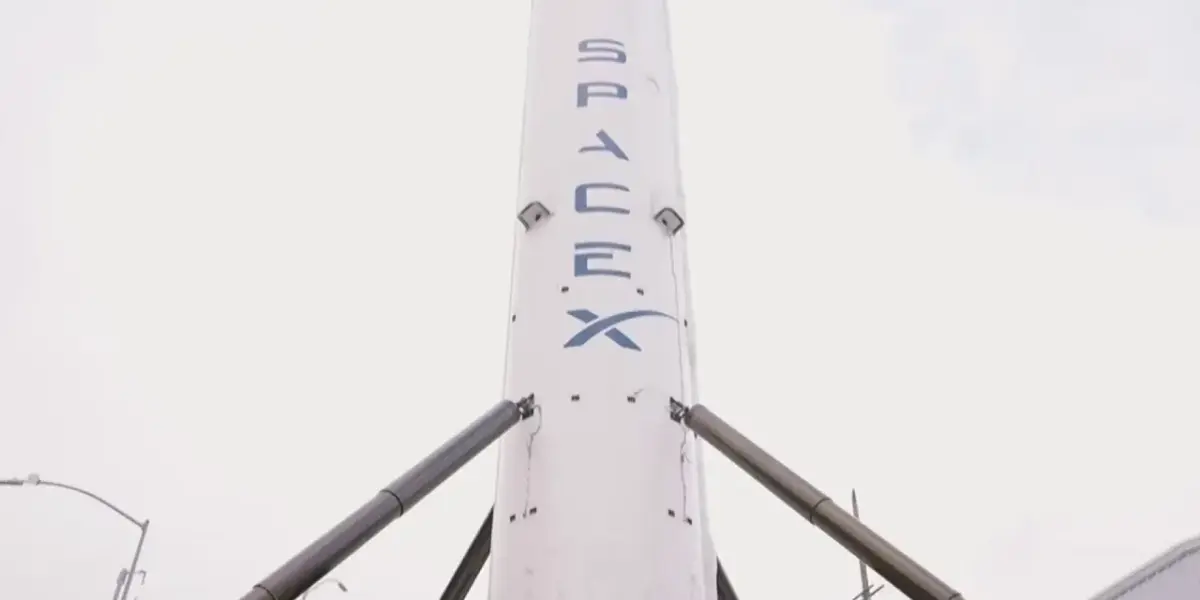
NASA Leverages Private Sector for Ambitious Space Goals
For the first time in over 50 years, NASA is sending astronauts back to the Moon. While the agency’s goals are expanding, its workforce and share of the federal budget are smaller than they were in the 1960s. A key change is NASA’s growing partnership with private companies, a shift that Administrator Jared Isaacman says is crucial for success.
“We’re still able to do incredible things because we have partners out there that are investing substantial amounts of their either personal resources or private capital into capabilities for the benefit of, certainly the competitiveness of the nation,” Isaacman explained. This reliance on private investment allows NASA to pursue ambitious missions that might otherwise be out of reach.
A New Era of Commercial Spaceflight
Space industry expert Carissa Christensen notes that this represents a new approach for NASA. “The way companies work with NASA has changed,” she stated. This evolution is fundamentally reshaping how space exploration is conducted.
Casey Dreyer, head of space policy at The Planetary Society, highlights that NASA is granting more responsibility for space technologies to private firms. This trend is evident in the U.S. launch sector, where SpaceX handled about 85% of all launches last year. “A lot of these commercial space companies are basically providing a service to NASA,” Dreyer said. “This is a radically new way to do it.”
Private Investment Fuels Innovation
This strategic shift is already bringing significant success. Venture capitalists and billionaire investors are funding launch capabilities that would likely not have been possible with government funding alone. Billionaires like Elon Musk of SpaceX and Jeff Bezos of Blue Origin are investing heavily in space technology.
However, this reliance on private funding also presents potential risks. “The taxpayer is funding individuals and funding companies to have capabilities previously only owned by national superpowers,” noted an observer. “If those individuals like Elon Musk and Jeff Bezos decide they don’t want to do this anymore, they can walk away, and we’re in a lot of trouble.”
Collaboration and Oversight in Space
NASA’s head of science, Dr. Nikki Fox, emphasizes the strong working relationship between the agency and its private partners. “We have a lot of oversight and insight into what is going on,” she said. “People are often embedded, working side-by-side with our industry partners.”
Dr. Fox believes this close collaboration is the best way to foster a robust space economy. “I think that’s the best way to grow a really strong space economy,” she added. This integrated approach ensures NASA maintains visibility and influence over critical space endeavors.
The Future of Space: A Trillion-Dollar Economy
Despite recent budget pressures on NASA, investment in the private space industry shows no signs of slowing. The World Economic Forum projects the global space economy will reach $1.8 trillion by 2035. SpaceX is reportedly preparing for a massive Initial Public Offering (IPO), with CNBC reporting a potential valuation of $1.75 trillion.
Furthermore, aerospace officials are discussing plans with Congress to replace the International Space Station with one or more privately run space stations. The question remains whether NASA can achieve its lunar and Martian goals without the private sector.
Competition Drives Lunar Lander Development
The consensus is that collaboration is essential. “No. I think it will take all of us,” stated one expert when asked if NASA could succeed alone. The pressure is on the private sector to develop critical technologies, such as lunar landers, which NASA needs for its 2028 landing target.
Currently, NASA does not have its own lunar lander. This has created a competitive environment, with Jeff Bezos’s Blue Origin and Elon Musk’s SpaceX vying to develop the necessary technology. This competition is seen as a driving force to meet NASA’s ambitious timelines for returning humans to the Moon.
Source: How private companies are powering NASA's ambitions (YouTube)

Related Articles


SpaceX, OpenAI IPOs Set to Ignite Markets Amid AI Boom
SpaceX and OpenAI are gearing up for major IPOs, potentially bringing record valuations to the market. While exciting for investors, these tech giants also face growing cybersecurity concerns, including AI risks and the looming threat of quantum computing breaking current encryption by 2029.

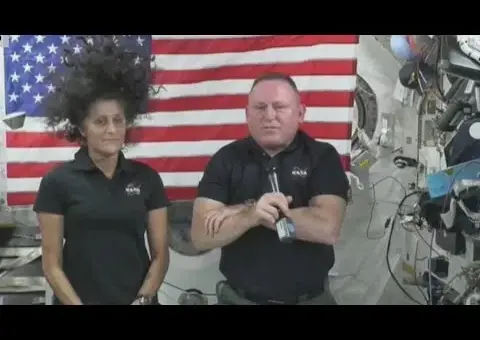
Artemis II Fuels New Space Race Era
NASA's Artemis II mission, sending astronauts beyond the Moon for the first time in 50 years, signals a new era of space exploration. Astronaut Butch Wilmore's insights from past challenges and the mission's pristine progress highlight renewed ambition amidst global space competition. This journey is poised to reshape international relations and technological leadership.


Humans Reach Deep Space Again After 50 Years
The Artemis II mission has successfully sent humans beyond Earth's orbit for the first time in over 50 years. The Orion spacecraft is now en route to the Moon after a crucial engine burn. The crew is conducting system checks and carrying a special plush toy with millions of names aboard.