Allies Must Reopen Strait of Hormuz, US Urges
The critical Strait of Hormuz remains closed, impacting global oil prices and trade. Allies are urged to help reopen the vital passage, but military intervention is complex. Experts discuss diplomatic, economic, and military strategies, highlighting the distinction between naval and sea power.

Global Trade Choke Point Remains Closed Amidst Rising Tensions
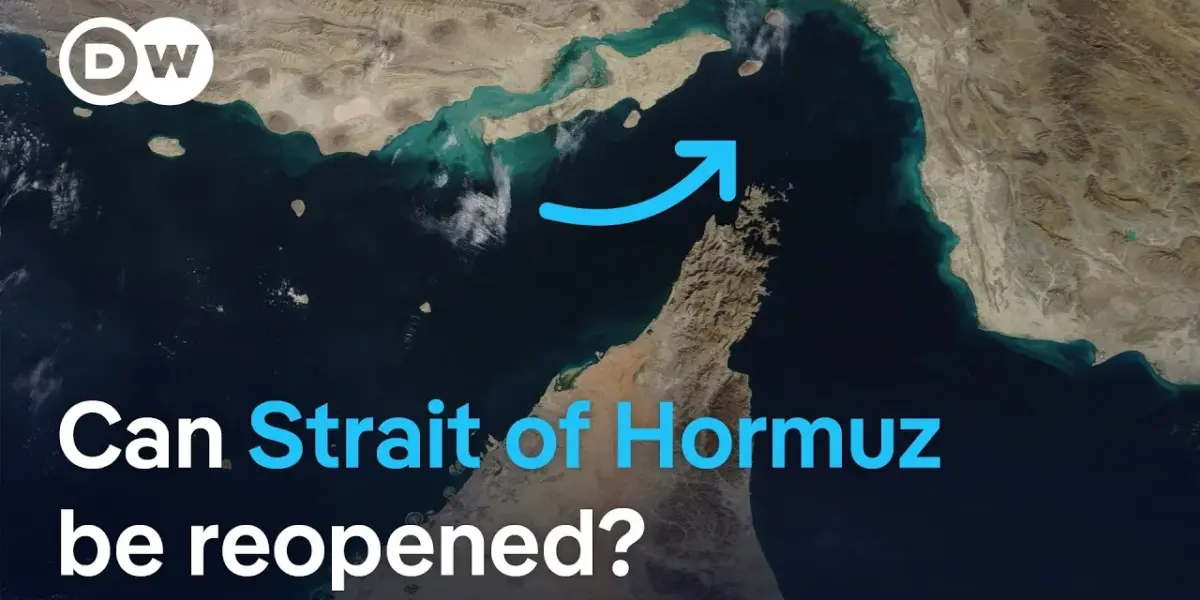
The vital Strait of Hormuz, a narrow waterway through which roughly a quarter of the world’s seaborne oil passes, remains closed one month into a conflict involving Israel and the United States against Iran. This continued closure is driving up energy prices and fueling global inflation, prompting calls for action from international allies.
U.S. President Donald Trump has urged allies to take the lead in securing the strait. The urgency stems from the significant impact on global trade and the potential for a dangerous precedent if such a critical passage can be blocked at will.
Why the Strait of Hormuz is Critical
Samuel Hellfont, a Middle East analyst and associate professor at the Naval Postgraduate School, emphasized the strait’s immense importance. “This is going to come down to mostly oil,” he stated, highlighting the direct impact on global energy prices. Beyond oil, the strait is also a crucial route for fertilizer shipments, essential for global food production and upcoming harvest seasons.
Hellfont also pointed to the principle of maintaining open sea passages. “If you can allow a state to close down international sea passages, then that sets a precedent that’s that’s bad for everybody all over the world,” he explained. The ongoing closure is seen as a dangerous precedent for international commerce.
Allies Convene, Demand Iran Reopen Strait
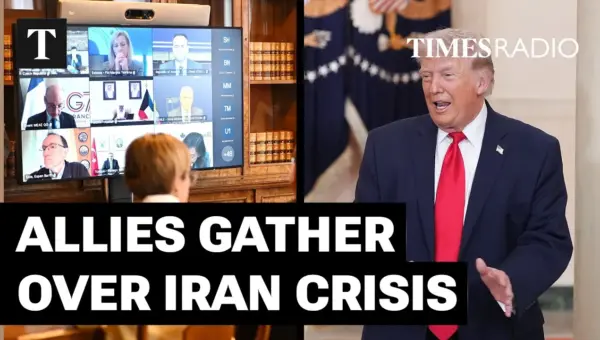
In response to the crisis, British Foreign Minister held a virtual meeting with approximately 40 countries. The group issued a joint call for Iran to “Immediately and unconditionally reopen the strait.” Some participating nations also expressed reservations about the initial U.S. military actions that led to the current conflict.
The British minister stated, “We’ve taken a different view from the U.S. from early on and we didn’t get drawn into offensive action in the Middle East because we thought that there were real concerns about escalation risks impact including on the economy and also the need for a proper plan.” However, the recent Iranian attacks on international shipping have unified global concern.
A Global Problem Requiring International Solutions
Hellfont viewed the international response as positive. “This is a global problem that this is not going to be… keeping this waterway open is a global issue. It’s not simply something that can be left for the United States,” he commented. He noted that European nations possess capabilities, such as mine clearing, that could complement U.S. efforts.
The strategy discussed involves a mix of diplomatic, economic, and military pressure. While the U.S. has signaled a willingness for military action, many allies, including those in the coalition, prefer to focus on diplomatic and economic pressure during the ongoing conflict. Military planning is reportedly focused on securing shipping for the long term, after the conflict concludes.
Limited Appetite for Direct Military Intervention
When asked about allies’ willingness to join a military operation, Hellfont expressed uncertainty. “It’s hard to say. People are keeping their cards pretty close to their chest,” he noted. While some Gulf states, like the UAE, have shown interest, significant military aid for an immediate reopening operation is unlikely.
Hellfont suggested that if the U.S. wishes to reopen the strait swiftly, it would likely require a U.S.-led operation, potentially with quiet support from select allies. “Right now, if the US wants to open the straight, it’s probably going to have to be a US-led operation, maybe with some minor help from our Gulf Arab allies or some European allies that are doing this quietly,” he said.
Naval Power vs. Sea Power: A Crucial Distinction
President Trump’s assertion that the U.S. can handle the situation alone, despite not importing oil through the strait, was met with a nuanced explanation from Hellfont. He distinguished between naval power and sea power. “Sea power is the ability to move goods, people, weapons, what have you to use the sea for your own benefit and to deny it to your adversaries,” he defined.
Navies can reduce risks for shipping, but they cannot force private companies to sail through dangerous waters. The U.S. has a limited merchant marine, meaning it can protect ships but cannot compel them to transit. “Because we only have one half of that equation, there’s only so much we’re going to be able to do to get that shipping going through the strait,” Hellfont explained.
Military Options and Coercion
A direct military operation to reopen the strait could involve bombing campaigns to eliminate threats, amphibious assaults on strategic islands, and escort vessels. However, Hellfont cautioned that eliminating all threats from Iran’s extensive coastline and inland capabilities would be impossible. “You’re never going to be able to eliminate all threats,” he stated.
An alternative approach is coercion, aimed at altering Iran’s decision-making. This could involve threatening key Iranian assets, such as its oil exports from Card Island. “This is why people have been speaking about Card Island where most of Iran’s oil is shipped out of,” Hellfont said. The goal would be to make Iran decide that exporting its own oil is more important than threatening international shipping.
Diplomacy and Short-Term Solutions
Some Asian countries are attempting to navigate the crisis by negotiating passage for their ships directly with Iran. Hellfont acknowledged this as a potentially viable short-term strategy, supported by diplomacy as a key component of sea power. However, he stressed that this approach sets a concerning precedent.
“I don’t think anybody wants to see states being able to just close off shipping to their adversaries at whatever whim that they want to,” he commented. These nations likely view these deals as temporary measures, not long-term solutions.
China’s Position and Strategic Interests
China, the largest importer of oil through the Strait of Hormuz, has called for de-escalation and blamed U.S. and Israeli actions for the obstruction. While outwardly advocating for the strait’s reopening, China has benefited from the situation by securing oil at below-market prices and by observing U.S. military operations in a real conflict zone.
“Anything that’s going to tie the Americans down, help Americans run through their some of their munitions, China can’t got to be looking at that and saying it’s not so bad,” Hellfont noted, suggesting China may see strategic advantages in the prolonged crisis.
An Uncertain Endgame
UN Secretary-General Antonio Guterres has called for an immediate ceasefire and for leaders to choose dialogue. However, Hellfont sees no clear endgame for the United States. “It doesn’t mean there’s not one, but from the outset, it looks like a very difficult problem,” he stated.
The situation is complicated by the need to ensure Iran is no longer a threat to its allies without risking a broader conflict or compromising American lives. “It’s a tricky diplomatic situation. It’s typical. It’s a tricky military situation,” Hellfont concluded. The future of the Strait of Hormuz and its role in global trade remains uncertain, with significant implications for regional and international stability.
Source: Can US allies reopen the Strait of Hormuz without military force, or US help? | DW News (YouTube)

Related Articles

US Policy Shift Stuns Allies, Weakens Global Security
US policy shifts regarding Ukraine, the Strait of Hormuz, and NATO are raising concerns among allies and creating global instability. Critics point to a lack of strategic planning and diplomatic consultation, potentially emboldening adversaries and undermining international security.
Strait of Hormuz Tensions Risk Wider Middle East War
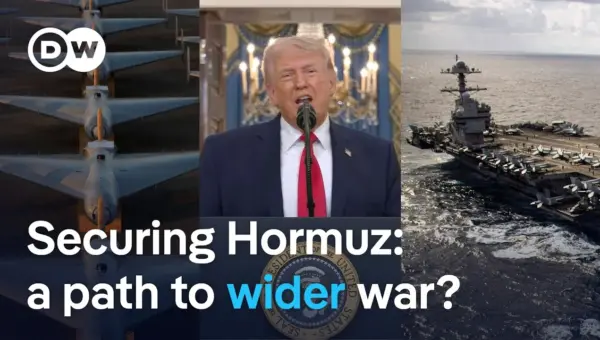
Efforts to secure the vital Strait of Hormuz risk triggering a wider Middle East war, according to UN warnings and security analysts. The narrow waterway is crucial for global trade, and forcing it open against Iran's objections could escalate regional tensions dramatically. Experts highlight the complex geography, Iran's remaining military capabilities, and the involvement of regional players as key factors in the volatile situation.
UK Leads Global Effort to Secure Strait of Hormuz
The UK has rallied over 40 countries to address the crisis in the Strait of Hormuz, a vital global energy route. The initiative seeks diplomatic and economic solutions amidst rising tensions and calls for a stronger European role. Experts suggest that negotiation, rather than military action, is key to securing the strait's passage.