US Army Leadership Shakeup Signals Strategic Uncertainty
U.S. Army Chief of Staff General Randy George has been asked to immediately step down by Secretary of the Army Pete Hegseth, citing a loss of trust. This unexpected leadership shakeup introduces uncertainty into the Army's command structure and could have implications for global security perceptions.

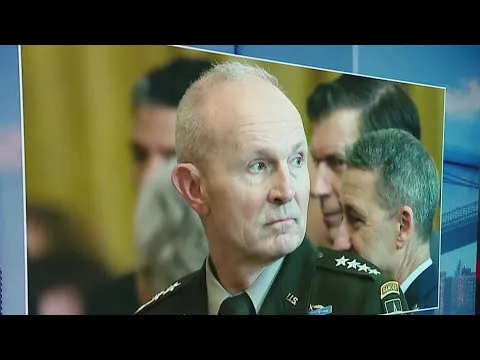
US Army Leadership Shakeup Signals Strategic Uncertainty
In a surprising development, Secretary of the Army Pete Hegseth has called for the immediate resignation of Army Chief of Staff General Randy George. This move, reported by a defense official to NewsNation, signals a significant disruption at the highest level of the U.S. Army. The official stated that Secretary Hegseth has lost trust and confidence in General George, believing a change in leadership is necessary.
General George, who has held the position of Chief of Staff since 2023, is now being asked to retire immediately. This rapid call for a change suggests deep disagreements or concerns regarding the Army’s direction and performance. The current Vice Chief of Staff is expected to be nominated to take over the top role.
Motivations and Interests at Play
The primary motivation behind Secretary Hegseth’s action appears to be a perceived need for new leadership to steer the Army. While specific reasons for the loss of confidence were not detailed, such high-level personnel changes often stem from disagreements over strategy, resource allocation, or readiness. Hegseth, as the civilian leader, has the ultimate authority to shape the Army’s priorities and personnel. His interest lies in ensuring the Army is prepared and effectively led to meet current and future security challenges.
General George’s interest, naturally, would be to continue serving and implementing his vision for the Army. However, facing a direct loss of confidence from his civilian superior, his ability to effectively lead would be severely compromised. The request for immediate retirement suggests a desire to avoid a protracted period of uncertainty or infighting within the military leadership.
The involvement of a defense official confirming the news highlights the gravity of the situation. These officials typically have deep insights into the workings of the Pentagon and the relationships between civilian and military leaders. Their confirmation lends weight to the assertion that this is not a minor personnel matter but a significant decision impacting the U.S. military’s command structure.
Historical Context and Precedents
While direct calls for the immediate resignation of a Chief of Staff are rare, the U.S. military has a history of leadership changes driven by strategic disagreements or perceived failures. The relationship between civilian leadership (like the Secretary of the Army) and the military chiefs is designed to ensure civilian control over the armed forces. This dynamic means that civilian leaders have the responsibility and the power to make tough personnel decisions when they believe it is in the best interest of national security.
Historically, such shakeups can occur during times of significant geopolitical stress or when a military is undergoing major modernization or strategic reorientation. Without more specific details on the reasons for the loss of confidence, it is difficult to draw direct parallels to past events. However, the principle of civilian oversight ensuring military effectiveness remains a constant theme in American defense policy.
Global Impact and Future Scenarios
The immediate impact of this leadership change is a period of uncertainty within the U.S. Army. This could potentially affect morale and the smooth execution of ongoing operations and strategic planning. For allies and adversaries alike, such a visible disruption at the top of a major military power can be interpreted in various ways. Allies might express concern about stability, while adversaries could see it as an opportunity to exploit perceived weaknesses.
One future scenario is that the new leadership, under the expected nominee, will quickly stabilize the situation and implement a clear strategic vision, potentially leading to renewed focus and effectiveness. Another scenario is that the disruption could linger, causing internal friction and slowing down critical modernization efforts or responses to global security threats. The speed at which the Vice Chief of Staff is nominated and confirmed will be a key indicator of how quickly stability is restored.
The U.S. Army is a critical component of American global power. Any significant change in its leadership, especially one prompted by a loss of confidence, warrants close attention from international observers. It underscores the complex and sometimes turbulent nature of managing a military force tasked with maintaining global security in a challenging geopolitical environment.
Why This Reshapes the World Order
The U.S. military, particularly its Army, plays a pivotal role in global security architecture. Changes in its top leadership can send ripples through international relations. Allies rely on the U.S. military’s strength and stability for their own security. Adversaries often gauge the readiness and direction of U.S. forces when making their own strategic calculations. A leadership vacuum or perceived instability at the Army’s helm could embolden rivals or cause allies to question the steadfastness of U.S. commitment and capability. This event, therefore, is not just an internal personnel matter; it is a development that could subtly influence global power dynamics and strategic decision-making worldwide.
Source: Pete Hegseth asks Army Chief of Staff Gen. Randy George to step down | NewsNation Live (YouTube)

Related Articles

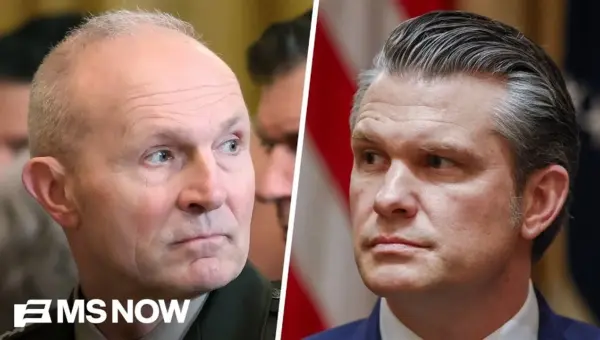
Pentagon Shake-Up: Top Army General Out Amid Iran Tensions
Defense Secretary Pete Hegseth has removed Army Chief of Staff Randy George and several other top generals in a significant shake-up at the Pentagon. These widespread leadership changes raise concerns about lost institutional knowledge and established networks during a critical time of escalating tensions with Iran.


China’s Global Reach Faces Setbacks Amidst Internal Turmoil
China's international influence is facing growing opposition and internal challenges. From strategic island disputes and diplomatic overtures towards Taiwan to domestic unrest and technological failures, Beijing's global ambitions are encountering significant setbacks. These events signal a complex geopolitical landscape where China's power is being tested on multiple fronts.

Iran Downs US Jet, Escalating Mideast Tensions
Iran has reportedly shot down a U.S. fighter jet, prompting immediate search and rescue operations for the downed airmen. This incident significantly escalates regional tensions and could alter ongoing U.S. military plans against Iran. The event highlights the volatile nature of the Middle East and the potential for miscalculation.