Solana Outshines Canton as Institutions Eye Public Chains
The debate over permissionless versus permissioned blockchains intensifies as institutions show growing interest in public networks like Solana over closed systems like Canton. Discussions highlight transparency, resilience, and cultural appeal as key factors driving this trend, challenging the dominance of traditional finance's approach.

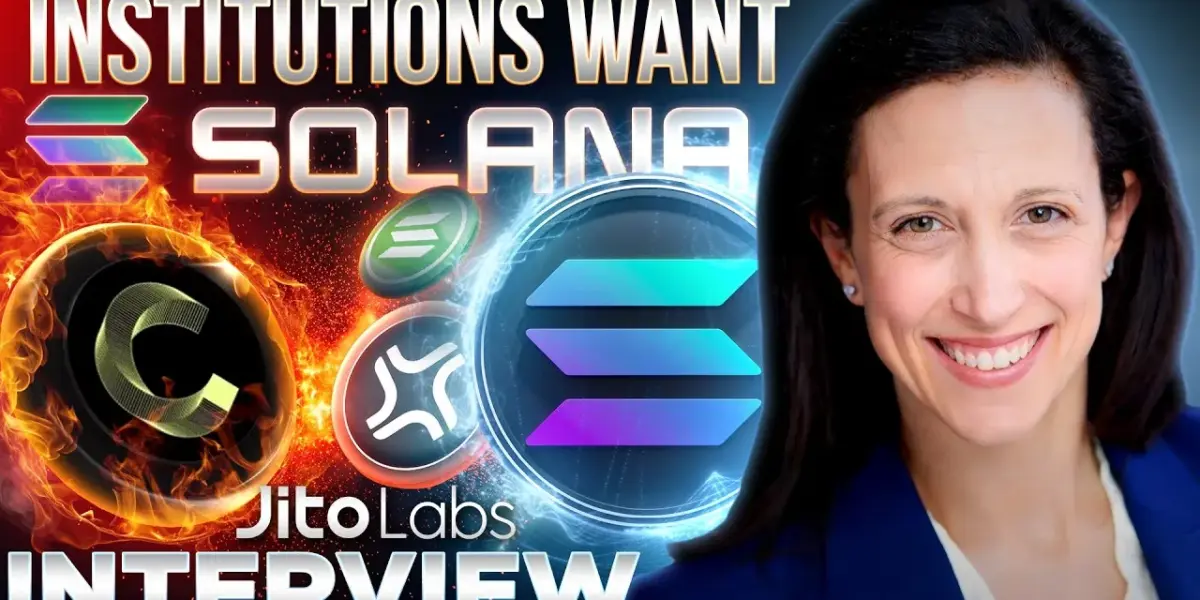
Solana vs. Canton: A Tale of Two Blockchain Visions
The cryptocurrency world is buzzing with debate over the future of blockchain technology, specifically the clash between permissionless, public chains like Solana and permissioned, institutional-focused networks such as Canton. Recent discussions, highlighted by an interview with Rebecca Rettig, Chief Legal Officer at Jito Labs, reveal a growing sentiment that while traditional finance giants are exploring blockchain, they are increasingly drawn to the transparency and accessibility of open networks, rather than closed, corporate-driven ones.
Canton’s Institutional Pitch Faces Scrutiny
Canton has positioned itself as the go-to blockchain for traditional Wall Street institutions. The network boasts backing from major players like HSBC, Goldman Sachs, Citadel, and NASDAQ. These partnerships suggest a move by established financial entities to integrate blockchain technology. However, questions have arisen about whether Canton truly represents the ‘old guard’ of Wall Street or a new breed of technology companies serving institutional needs. The presence of entities like Angel Hack, described as a startup from Asia, among Canton’s super validators adds a layer of complexity to its purely institutional narrative.
During a recent discussion, Yuvall from Canton described the network as an “institutional chain.” When pressed for specific examples of Wall Street banks acting as super validators, the response pointed to companies like Digital Asset, which has significant backing from major financial firms. This exchange highlights a key point of contention: the definition of “institutional” and whether it exclusively means traditional banks or encompasses a broader range of financial technology providers.
Solana and Ethereum Champion Transparency and Retail Access
In contrast, Solana and Ethereum are presented as champions of permissionless systems. Don Wilson, a proponent of both networks, expressed skepticism about institutional capital markets migrating to entirely closed systems. He argued that the complete transparency offered by public chains benefits regulators, financial institutions, and builders alike. This transparency, he suggested, is crucial for understanding market flows and volumes, which are vital for any financial system, including those involving institutional players.
Rebecca Rettig from Jito Labs echoed this sentiment, emphasizing the richness of data available on open, permissionless systems. She contrasted this with permissioned networks that may try to limit access, suggesting that institutions are increasingly recognizing the value of public blockchains. The ability to see all transactions on these networks, unlike the opaque nature of traditional finance’s dark pools, offers a level of information symmetry that is highly attractive.
MEV: A Misunderstood Concept?
A significant part of the debate revolves around concepts like Maximum Extractable Value (MEV). Originally referring to value extracted by miners, MEV has often been portrayed negatively in permissionless chains like Solana and Ethereum, associated with front-running and sandwich attacks where traders see your transaction before it settles, leading to unfavorable prices. Rettig proposed reframing MEV as “Transaction Ordering Value,” suggesting that institutions often pay extra fees for priority access and data feeds, which is a legitimate form of value extraction.
She argued that while negative aspects of MEV, like front-running, should be minimized, the concept itself isn’t inherently bad. The transparency of Solana, for instance, allows for tracking such activities. This contrasts with closed systems where such information might be hidden. The discussion around MEV also touches upon the broader implications of transaction ordering and its impact on market fairness and efficiency.
Regulatory Hurdles and Kill Switches
The conversation also delved into regulatory aspects and the concept of a “kill switch” – a mechanism to halt or reverse transactions in case of errors or hacks. While traditional finance, through entities like the DTCC, has explored such measures, their implementation in decentralized systems is contentious. SIFMA, DTCC, and NASDAQ have shown interest in kill switches, but critics argue that such features undermine the core principles of decentralization and immutability inherent in many blockchain networks.
Rettig suggested that while an institutional chain might incorporate a kill switch at the application layer, truly permissionless and autonomous systems like Uniswap v3 or v2, lacking an admin key, operate differently and have proven resilient. The debate highlights a fundamental difference in philosophy: control and safety versus openness and autonomy. The potential Clarity Act in the US, which aims to provide regulatory clarity, could significantly shape how these different blockchain models interact with traditional finance and regulators.
Solana’s Resilience and Cultural Appeal
The resilience of Solana’s decentralized finance (DeFi) infrastructure was underscored by its ability to handle massive events like the launch of a popular meme coin, “Trump coin.” This stress testing, according to Vivu from Solana, has made the network exceptionally robust. Furthermore, Solana’s vibrant culture, often expressed through meme coins and community engagement, has surprisingly attracted institutional interest, with many finding it humorous and engaging.
This cultural aspect, combined with technical advancements, positions Solana as a leader in building what could become internet-scale capital markets. The ability to stress-test systems through high-volume, sometimes chaotic, activity demonstrates a level of resilience that is attractive even to institutions looking for stability and innovation.
Cybersecurity in DeFi
The recent Drift hack, resulting in an estimated $200 million loss, brought cybersecurity to the forefront. Rettig noted that while smart contract hacks have decreased substantially, as indicated by a report commissioned by the European Union, many recent exploits stem from Web2 vulnerabilities and social engineering. This highlights the need for robust cybersecurity standards beyond just smart contract code, potentially drawing from frameworks like NIST.
Jito Labs: Decentralization in Practice
Concerns were raised about Jito Labs potentially becoming a dominant, centralized force on Solana, akin to Citadel in traditional finance. Rettig firmly disagreed, explaining that Jito Labs builds open-source, high-frequency trading infrastructure that anyone can access. They do not trade against users, hold custody of assets, or act as fiduciaries. Their role is purely as a software developer, promoting decentralization rather than control.
The discussion concluded with a forward-looking perspective. While Canton and similar networks aim for institutional adoption through controlled environments, Solana and Ethereum continue to push the boundaries of permissionless innovation. The efficiency gains and cultural resonance of public chains suggest they are well-positioned to attract both retail and institutional participants, making the future of blockchain a dynamic space to watch.
Source: Institutions & Retail Want Solana… not Canton🔥Jito FIRES BACK!🚨Rebecca Rettig INTERVIEW (YouTube)

Related Articles


Bitcoin Traders Chase Gains in Daily Challenge
Day 9 of the "Broke to Rich" Bitcoin trading challenge continues with Chento and Baxter guiding viewers through live trades. The series focuses on growing an initial $5,000 account through strategic planning and risk management. The goal is to demonstrate disciplined trading for potential profits without shortcuts.


Ethereum’s EZ Unveiled: Institutions Eye High Yields
Ethereum's recent ETHCC conference unveiled the Ethereum Economic Zone (EEZ), a major upgrade aiming to unify Layer 2 solutions and enable seamless cross-chain transactions. Institutions are showing increased interest in DeFi yields, while advancements in privacy and post-quantum security prepare Ethereum for the future. NASDAQ is also exploring on-chain tokenization, signaling a growing convergence between traditional and decentralized finance.


Wall Street Eyes DeFi: ETFs Trade Votes for Capital
Major asset managers are filing for billions in altcoin ETFs, promising huge capital inflows. However, this institutional adoption could lead to the concentration of voting power, potentially undermining the decentralized nature of these networks. The market celebrates the capital, but developers warn of a "centralization trap" that could lead to regulatory reclassification.