Trump’s Iran Strategy Risks Global Instability
Former Ambassador John Bolton criticizes President Trump's Iran strategy, citing contradictory statements and a lack of clear objectives. Bolton argues that without regime change, the U.S. faces a cycle of conflict, potentially leading to a major strategic defeat and empowering rivals like China and Russia.

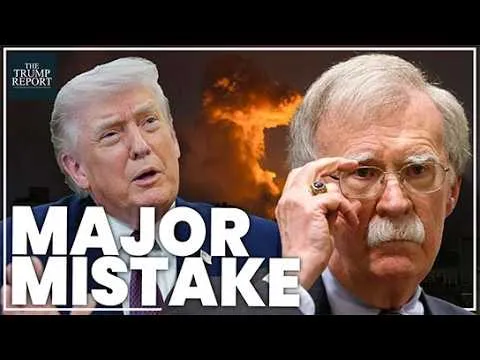
Trump’s Conflicting Messages on Iran Raise Alarms
Former U.S. Ambassador John Bolton recently shared his views on President Trump’s national address regarding the conflict with Iran. Bolton believes Trump’s speech offered little new information. While Trump didn’t criticize NATO, a positive sign, his core message remained consistent: Iran must open the Strait of Hormuz. If not, attacks would increase, but eventually, the U.S. might withdraw, leaving others to handle the situation.
Bolton found Trump’s stance on Iran’s nuclear program confusing. Trump claimed nuclear sites were heavily hit, but then downplayed Iran’s uranium stockpile, saying he wasn’t concerned because it was buried deep underground and could be monitored by satellites. This contradiction leaves many questioning the war’s objectives and its potential end.
Shifting Goals and Unclear Strategy
According to Bolton, Trump’s primary motivation seems to be preventing rising gas prices in the U.S. This suggests a focus on domestic political concerns rather than a clear, long-term strategy for the Middle East. Bolton argues that without the goal of regime change in Iran, the U.S. faces a cycle of dealing with threats repeatedly, a problem he calls ‘mowing the lawn.’ Allies like Saudi Arabia, the UAE, and Israel believe regime change is the only way to truly solve the issue.
The Iranians have successfully highlighted the threat of closing the Strait of Hormuz, a geographical reality that has been ignored for decades. Bolton sees this as a new, third major problem alongside Iran’s nuclear ambitions and support for terrorism. He believes Trump’s approach of managing the problem rather than solving it is misguided.
The Nuclear Question: Ambiguity Remains
Bolton attempted to explain Trump’s contradictory statements about Iran’s nuclear capabilities. He suggested Trump might be referring specifically to the Fordo site, which was hit by bunker-buster bombs and is now difficult to access. However, other key sites like Esfahan and Natanz may have been damaged but not destroyed. Bolton pointed out that even if all equipment is destroyed, Iran still possesses the scientific knowledge to rebuild its nuclear program.
This is why, Bolton argues, regime change is crucial. A new government in Iran would need to abandon the pursuit of nuclear weapons. He drew a parallel to Saddam Hussein, who, despite not having active centrifuges, had the scientists to restart a nuclear program. Bolton stressed that destroying the regime’s intention to acquire nuclear weapons is more important than just destroying physical assets.
Historical Context and Future Outlook
Bolton referenced past military actions, noting that George W. Bush waited until after midterm elections to invade Iraq. He questioned why Trump’s administration didn’t follow a similar political timeline. Bolton also criticized Trump’s comparison of the Iran situation to Venezuela, stating that Iran is far more complex and ideologically driven.
Winston Churchill’s quote about the ‘unteachability of mankind’ echoed Bolton’s concerns. He believes that acting early and easily is often avoided, only to face more difficult circumstances later. Leaving the Strait of Hormuz closed would be a major strategic defeat for the U.S., strengthening Iran’s regional influence and potentially allowing China and Russia to gain a stronger foothold in the Middle East.
Why This Matters
The U.S. faces a critical juncture in its foreign policy. Trump’s inconsistent messaging and seemingly short-term focus on domestic issues like gas prices could lead to a prolonged conflict or a significant strategic setback. The inability to resolve Iran’s nuclear ambitions and its regional destabilization efforts could have far-reaching consequences for global security and the U.S.’s standing in the world.
Bolton’s analysis suggests that a lasting solution requires more than military strikes; it necessitates a fundamental change in Iran’s leadership and its ideology. Without addressing the root causes of Iran’s actions, the U.S. risks a cycle of conflict and instability, potentially ceding influence to rivals like China and Russia.
Implications and Future Trends
The ongoing conflict with Iran highlights the challenges of managing international relations in a complex geopolitical environment. The rise of new threats, such as Iran’s drone and missile capabilities, requires careful consideration and a well-defined strategy. The potential for escalating tensions and the risk of wider regional conflict remain significant.
The situation also underscores the importance of clear communication and consistent policy. When leaders’ statements contradict each other, it creates uncertainty for allies and adversaries alike. This ambiguity can embolden adversaries and weaken international resolve, making diplomatic solutions harder to achieve.
Bolton’s call for supporting the Iranian opposition and potentially aiding a regime change points to a potential shift in U.S. strategy. However, such interventions are complex and carry their own risks. The long-term outcome will depend on the ability of leaders to develop and implement a coherent, sustainable strategy that addresses both immediate threats and underlying causes of instability.
Source: Trump about to make two fatal mistakes in Iran | John Bolton (YouTube)

Related Articles

Trump Ousts AG Pam Bondi Amid Epstein File Controversy
Attorney General Pam Bondi has been ousted from her position, with President Trump confirming her departure via Truth Social. The move comes amid controversy surrounding the Jeffrey Epstein files. Deputy Attorney General Todd Blanch has been appointed acting Attorney General, while reports suggest EPA administrator Lee Zeldon is a potential successor.

Trump Declares Iran Conflict ‘Done,’ But Doubts Linger
President Donald Trump has declared the conflict in Iran nearing its end, promising a swift conclusion within weeks. However, the administration's shifting justifications for the war and the potential for prolonged engagement are raising doubts among analysts and the public.

Abuse Accuser’s Story Gains Credibility Amidst Missing Files
A woman who accused Donald Trump of abuse has had more of her story confirmed by a newspaper, boosting her credibility. However, 30 pages of her testimony remain missing from public files, raising questions.