Trump Declares Iran Conflict ‘Done,’ But Doubts Linger
President Donald Trump has declared the conflict in Iran nearing its end, promising a swift conclusion within weeks. However, the administration's shifting justifications for the war and the potential for prolonged engagement are raising doubts among analysts and the public.

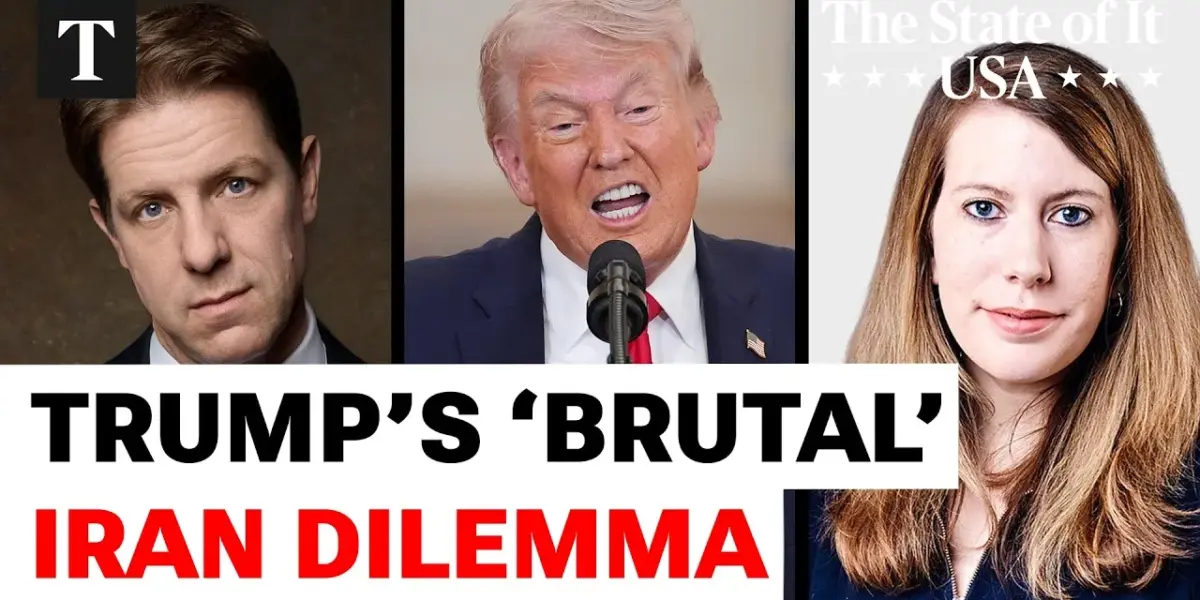
Trump Addresses Nation on Iran Conflict, Promises Swift End
In a rare formal address to the nation, President Donald Trump declared that the military objectives in the ongoing conflict with Iran are nearing completion. Speaking from the Oval Office, Trump stated that the “hard part is done” and predicted that the conflict would conclude within two to three weeks, leading to the reopening of vital shipping lanes and a subsequent drop in gas prices.
The speech, the first since the campaign began, aimed to set a clear narrative and reassure the American public, whose support for the war has been waning, according to recent polls. “We are on track to complete all of America’s military objectives shortly,” Trump announced. “We are going to hit them extremely hard over the next two to three weeks. We’re going to bring them back to the stone ages where they belong.”
Shifting Justifications for Military Action
President Trump emphasized that regime change in Iran was not the objective, attributing the shift in leadership to the deaths of original Iranian leaders. This stance marks a departure from earlier rhetoric, where he had encouraged the Iranian people to take over their government. “Regime change was not our goal. We never said regime change, but regime change has occurred because of all of their original leaders death,” he stated.
However, the administration’s justification for the conflict has faced scrutiny. While Trump claimed the action was a response to intelligence indicating Iran was amassing missiles and nearing the point of developing nuclear weapons, some officials have expressed differing views. Counterterrorism intelligence figure Joe Kent resigned, suggesting there was no imminent threat, and intelligence advisor Tulsi Gabbard offered a more reserved assessment of the intelligence presented.
This contrasts with previous statements made by Trump himself, who had declared Iran’s nuclear bases obliterated after a prior operation. The shifting explanations have led to confusion and questions about the precise threat posed by Iran and the administration’s evolving narrative.
Focus on ‘Regime Editing’ Over Regime Change
Analysts suggest that the Trump administration is moving towards a strategy of “regime editing” rather than outright regime change. Trump has recently described the new Iranian leadership as less radical and more reasonable, potentially paving the way for accepting them as a legitimate government. This approach mirrors a perceived model used in Venezuela, where the U.S. engaged with the Maduro regime on oil matters.
“He seems to be going out of his way recently to be saying how rational and reasonable the new regime is, therefore paving the way to basically accept them as the legitimate government of Iran,” noted one observer.
However, there are significant doubts about the applicability of the Venezuela model to Iran. The Iranian regime’s ideology, often characterized as “death to the west,” may make it less amenable to cooperation than the Venezuelan government. Furthermore, the exact nature of the new Iranian leadership remains unclear, and the U.S. administration is still working to identify trustworthy negotiating partners.
Domestic Pressure and International Implications
President Trump faces considerable domestic pressure to find a swift resolution to the conflict. Polls indicate that public opinion is largely against the war, and with midterm elections approaching, the administration needs to present a clear path toward de-escalation. The President’s personal polling also reflects dissatisfaction with the ongoing military engagement.
Internationally, Trump’s speech signals a potential shift in U.S. responsibility for maintaining security in the Strait of Hormuz. He suggested that European allies, including Britain, should take a greater role in policing the vital shipping route. This comes amid broader criticism of NATO allies for not contributing more to regional security.
“America is basically signaling that it’s going to get out of the business of keeping the police there and if we want to do it we’ll have to do it ourselves,” commented one analyst.
The conflicting messages emanating from the White House, partly by design to keep adversaries guessing, create an atmosphere of uncertainty. While the formal address to the nation is seen as a more consistent and reliable indicator of the administration’s intentions, the possibility of a prolonged or messier conflict remains a concern for European nations, who may be left to manage the fallout.
Uncertainty Clouds the Path Forward
Despite President Trump’s assurances of a swift conclusion, significant uncertainty surrounds the future of the conflict. The timeline for withdrawal remains fluid, dependent not only on U.S. actions but also on the responses of Iran and Israel. Skepticism persists in Washington that the conflict will be neatly resolved within the projected two to three weeks.
The potential for escalation, including the possibility of U.S. ground troops being deployed, continues to fuel concerns. If the conflict extends beyond the predicted timeframe or involves significant U.S. military presence on the ground, it could rival the duration of other major U.S. military engagements.
“While there might be the intention to get out completely, either it could be messier for other countries that have to get involved thereafter, or Trump might find it’s harder to exit than he thinks,” observers noted.
The coming weeks will be crucial in determining whether President Trump’s stated objectives are met and if a stable resolution can be achieved without further entanglement or unintended consequences.
Source: Trump Says Iran Is ‘Done’ But DC Isn’t Buying It | Katy Balls & Fraser Nelson (YouTube)

Related Articles

Trump Ousts AG Pam Bondi Amid Epstein File Controversy
Attorney General Pam Bondi has been ousted from her position, with President Trump confirming her departure via Truth Social. The move comes amid controversy surrounding the Jeffrey Epstein files. Deputy Attorney General Todd Blanch has been appointed acting Attorney General, while reports suggest EPA administrator Lee Zeldon is a potential successor.

Abuse Accuser’s Story Gains Credibility Amidst Missing Files
A woman who accused Donald Trump of abuse has had more of her story confirmed by a newspaper, boosting her credibility. However, 30 pages of her testimony remain missing from public files, raising questions.

Kirby: NATO Without US ‘Hard to Comprehend’
Retired U.S. Navy Rear Admiral John Kirby finds the concept of a NATO alliance without U.S. leadership difficult to imagine. He noted relief among allies following a presidential address that omitted criticism of NATO, despite past threats. Kirby also highlighted Secretary of State Marco Rubio's evolving public stance on the alliance.