UK Must Ignore Trump’s ‘Rent-Free’ Rhetoric on Iran Crisis
Analysts urge the UK to ignore President Trump's rhetoric on the Iran crisis and focus on defense and deterrence. Experts question the success of US military actions and warn of damage to American credibility and global stability. The piece stresses the need for European nations to bolster their own security.

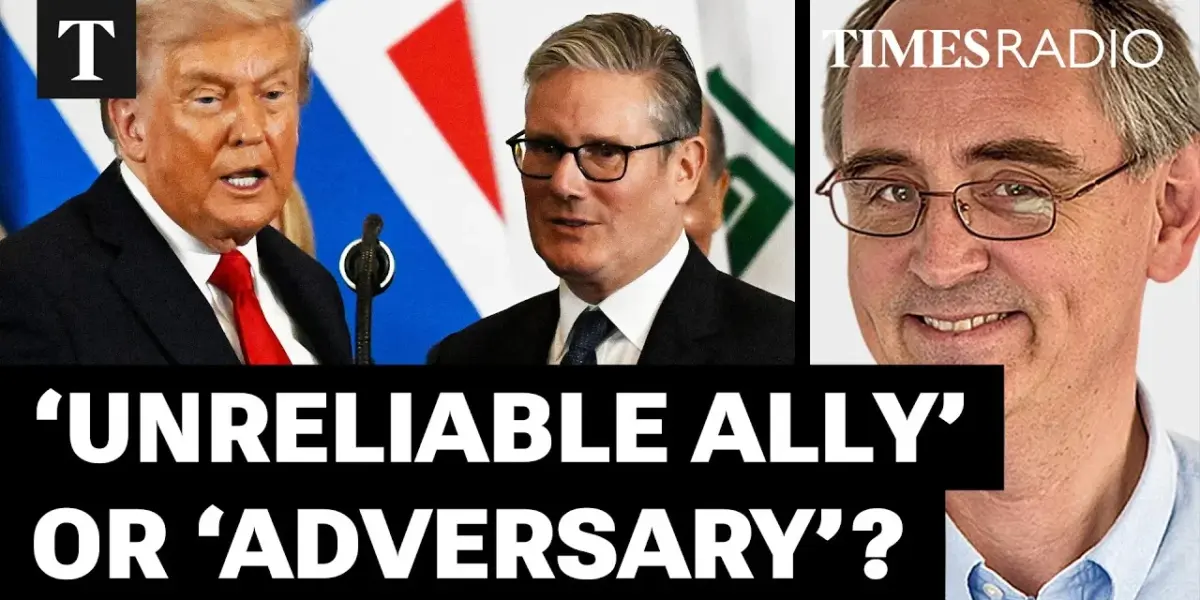
UK Urged to Dismiss Trump’s Iran Stance Amidst Global Turmoil
In the wake of escalating tensions in the Middle East and President Donald Trump’s assertive pronouncements on military operations in Iran, a prominent analyst is urging the United Kingdom to stop allowing the US President’s rhetoric to dominate its foreign policy thinking. Edward Lucas, an economist at The Times, argued that the UK and its allies must focus on practical defense and deterrence strategies rather than being consumed by Trump’s often unpredictable statements.
Trump Claims Victory, But Reality Paints Different Picture
President Trump recently addressed the nation regarding American military actions in Iran, declaring that the US was on track to complete its objectives and warning of severe consequences for Iran. “We’re going to hit them extremely hard over the next two to three weeks. We’re going to bring them back to the stone ages where they belong,” Trump stated. However, he also noted that regime change was not the goal, suggesting it had occurred naturally due to the death of original leaders.
Regarding the Strait of Hormuz, a critical chokepoint for global oil supply, Trump placed the onus on other nations to protect the passage. “The countries of the world that do receive oil through the Hormone Strait must take care of that passage. They must cherish it. They must grab it and cherish it,” he urged, suggesting they buy oil from the US and take matters into their own hands.
Experts Question Trump’s Claims of Success
Sir Peter Westmacott, former British ambassador to the United States, expressed skepticism about Trump’s claims of victory. “He thought the whole thing would be over in three days. So, to the extent that it’s not, and we’re now a month into it, and clearly the operation hasn’t finished, I think it’s hard to claim that it’s a victory,” Westmacott observed. He highlighted the significant damage caused by the conflict, both to the economies of Gulf states and globally, citing reports that the UK economy might be the worst hit among G7 nations.
Westmacott also pointed out that Trump’s approach to the Strait of Hormuz issue, akin to the “Pottery Barn rule” in reverse – where he breaks it and expects others to own it – has created a complex situation. “I think it’s pretty hard to argue that it is already a victory for President Trump,” he concluded.
US Credibility and Global Standing Under Scrutiny
Edward Lucas further elaborated on the impact of Trump’s actions on America’s global standing. He described the situation as a “bonfire of American credibility,” not only in its ability to plan operations but also in its stockpiles of advanced weaponry. “Both countries [China and Russia] are looking at this and saying let’s not interrupt our enemy while he’s making a mistake,” Lucas commented, suggesting that while the conflict is disruptive, it also provides strategic insights for adversaries.
The discussion also touched upon Trump’s threats regarding NATO. While a direct threat to abandon the alliance was not prominent in his recent address, echoes of such sentiments from allies like Marco Rubio raised concerns. Westmacott clarified that NATO is a defensive alliance, not an aggressive one, and criticized Trump’s apparent misunderstanding of its purpose. He warned that European members, and others like Canada, might not be able to rely on the US as they have in the past.
Europe Must Step Up Defense Efforts
The sentiment that European nations must take greater responsibility for their own security was a recurring theme. “We’ve got to get our act together, we’ve got to be more effective in looking after our own defenses. We’ve got to be more effective amongst Europeans, of developing our defense industries and not just buying everything off the shelf from the Americans,” Westmacott urged.
Lucas agreed, emphasizing the need for political will among European allies to address security interests independently. He noted that America’s focus might be shifting towards an “America First” policy, with Europe potentially becoming a lower security priority compared to the Cold War era. This shift necessitates a more proactive approach from European nations, including those outside the EU, to bolster their collective security.
Standing Up to Bullying and Unnecessary Conflict
The conversation also addressed the impact of Trump’s often insulting language towards allies. While leaders like French President Emmanuel Macron have responded with dignified distance, the question remains whether a firmer stance is needed. Westmacott suggested that while leaders like the UK Prime Minister have found ways to manage Trump’s comments, a stronger, more direct response, similar to how China has managed trade disputes, might be necessary.
“We are going to have to find more ways of standing up for ourselves. It’s important politically, but it’s also important to stand up to the bully. You can’t let them carry on doing this indefinitely,” Westmacott stated. He characterized Trump as a “cruel and rather unpleasant head of state” and advised living with the reality without taking his pronouncements too literally, especially given the potential for policy shifts.
The Unnecessary War and Future Outlook
Both analysts concurred that the conflict in Iran was an “unnecessary war of choice” that has caused significant damage to global trade, economies, and lives. With no clear end in sight, the hope is that a resolution will be reached soon. The core message for the UK and its allies is to shift focus from the distracting noise of Trump’s pronouncements to concrete actions in defense and deterrence, recognizing that reliance on the US may be increasingly uncertain.
“We should stop letting Trump um live rent free in our heads. Yes, this is this is background noise. And Peter’s absolutely right. The stuff we need to do right now on both defense and deterrence and we have to get on and do it,” Lucas concluded. The emphasis is now on European solidarity and strengthening independent defense capabilities to navigate a complex and uncertain global security environment.
Source: Middle East Crisis: UK Should Not Let Trump ‘Live Rent Free’ In Its Head | Edward Lucas (YouTube)

Related Articles

Trump’s Impossible Demands Reshape Justice Department
President Trump's demand for loyalty and action outside legal norms has reshaped the Justice Department. Recent departures, like Pam Bondi's, highlight the difficulty of fulfilling the President's "impossible tasks." The search for a new Attorney General continues amidst concerns about the DOJ's independence.

Trump’s Leadership: A Moral Vacuum for Young Learners?
Young people seek moral guidance from leaders, but what lessons does Donald Trump offer? Some argue his approach teaches negative behaviors like bullying and isolation, contrasting with traits like patience and gratitude seen in others. This raises questions about leadership character and its impact on societal values.

Trump’s Transparency: A Press Secretary’s Bold Claim
President Trump's press secretary, Sarah Huckabee Sanders, claims his public persona is identical to his private one. She states his directness eliminates guesswork, making her job easier by providing clear, unspun messages.