Trump’s Deleted Confession Exposes Broken Promises
A deleted White House video clip reveals Donald Trump's past statements on federal spending, highlighting a contrast with his administration's policies. The analysis discusses broken promises on economic issues and war funding, contrasting Republican and Democratic approaches to governance and public welfare.

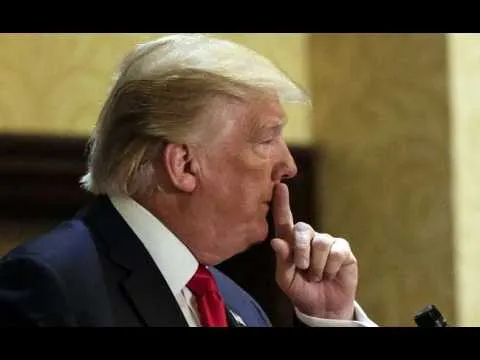
Trump’s Deleted Confession Exposes Broken Promises
A video clip, once proudly shared on White House social media, vanished. But in the digital age, deleted content often leaves a trace. This particular clip, featuring former President Donald Trump, is significant because it highlights a stark contrast between his campaign promises and his actions, especially concerning the economy and government spending.
Campaign Trail Rhetoric vs. Governing Reality
During his campaigns, Trump frequently spoke about high grocery prices and the rising cost of living. He even admitted that this issue was a key part of his strategy to win elections, using the word “groceries” often. He talked about how prices “went through the roof” and how he “campaigned on that.”
However, once in power, the actions of his administration and the Republican party seemed to contradict these concerns. The transcript points to significant cuts in programs that directly affect Americans. Republicans are noted for gutting Medicaid, affecting 17 million people, and reducing ACA subsidies for 24 million. They also cut food assistance for millions. Furthermore, trade policies and support for a war are cited as reasons for increased costs of everyday goods and oil prices.
This creates a disconnect: Trump exploited economic anxieties on the campaign trail but his administration’s policies, according to the analysis, worsened those very issues for many Americans. The transcript suggests a focus shifted away from helping everyday citizens to other priorities.
Shifting Priorities: From Domestic Needs to War Funding
The deleted video clip featured Trump stating that the U.S. cannot afford to fund things like daycare at the federal level. He argued that such responsibilities should fall to the states, which should raise their own taxes to pay for them. He suggested the federal government should only focus on one thing: military protection and guarding the country.
This viewpoint, as presented in the analysis, implies a federal government that should largely disengage from social programs and domestic welfare. The argument is that federal funds should be prioritized for defense, even if it means less support for programs like Medicare, Medicaid, and daycare. This approach is contrasted with the idea that the government should help regular Americans with their daily struggles.
The transcript highlights a specific concern: the request for $200 billion to fund a war. This is particularly striking because Trump had previously promised to stop wars and bring peace. The analysis points out that he swore he would “not start a war” and would instead “stop wars.” His campaign message was one of “prosperity and peace for all,” positioning himself as the “candidate of peace.” The apparent shift to seeking significant funding for a new conflict, while cutting domestic programs, is presented as a broken promise.
A Tale of Two Parties: Promises vs. Delivery
The analysis draws a clear distinction between the Republican approach, as exemplified by Trump, and the actions of Democrats. While Republicans are accused of focusing on public relations and marketing to gain power, Democrats are presented as actively working to address the concerns of ordinary people.
Examples are given of Democrats implementing policies that benefit their constituents. In New York, Mayor Eric Adams is working on making buses faster and free, and moving towards universal childcare. In Virginia, legislators passed bills focused on prescription drugs, healthcare, and affordable housing. These are presented as tangible results that directly impact people’s lives.
The core argument is that one party engages in rhetoric and promises, while the other party shows a willingness to deliver on those promises. This difference is crucial for voters, especially with elections approaching.
Why This Matters
This analysis is important because it scrutinizes the gap between political promises and policy outcomes. It suggests that voters are being offered a narrative that doesn’t always match the reality of governance. The deleted video, in this context, becomes a symbol of an administration trying to erase evidence of its own contradictions.
The focus on prioritizing war funding over domestic needs raises fundamental questions about a government’s role. Should federal resources be primarily directed towards defense, or should they also support the well-being of citizens through social programs? The analysis argues for the latter, suggesting that neglecting these programs exacerbates the cost-of-living crisis faced by many Americans.
Furthermore, the piece highlights the importance of accountability in politics. When politicians campaign on certain issues, like reducing costs for families, but then implement policies that increase those costs or cut support programs, it erodes public trust. The contrast between the parties suggests that voters have a clear choice between those who focus on campaign messaging and those who demonstrate a commitment to delivering on their promises.
Historical Context and Future Outlook
The debate over federal versus state responsibility for social programs has a long history in the United States. Since the New Deal era, there has been an ongoing tension between those who advocate for a strong federal role in providing a social safety net and those who believe in limiting federal power and emphasizing state or individual responsibility.
Trump’s comments echo a long-standing conservative argument for decentralization of power. However, the analysis frames this argument within the context of current economic hardship, suggesting that shifting these responsibilities to states without adequate federal support could leave many vulnerable.
The future outlook suggested by the analysis is one where voters will need to carefully consider which party and which candidates are more likely to address their daily concerns. The emphasis on Democrats delivering tangible results, like faster bus routes or childcare initiatives, points towards a potential trend of voters seeking concrete actions over broad promises. The effectiveness of such policies and the ability of parties to continue delivering will likely shape future elections.
The transcript also touches upon the idea of “sewer socialism,” a term associated with figures like Bernie Sanders, which emphasizes addressing the granular problems of daily life to build trust in government. This approach, which involves fixing potholes alongside pursuing larger policy goals, is presented as a model for effective governance that connects with the everyday experiences of citizens.
Ultimately, the analysis serves as a call to attention for voters, urging them to look beyond the rhetoric and examine the actual policies and their impact on their lives. The deleted video is a reminder that actions, and the evidence of those actions, often speak louder than words.
Source: Trump tries to DELETE his CONFESSION– but it was TOO LATE (YouTube)

Related Articles

Trump’s Impossible Demands Reshape Justice Department
President Trump's demand for loyalty and action outside legal norms has reshaped the Justice Department. Recent departures, like Pam Bondi's, highlight the difficulty of fulfilling the President's "impossible tasks." The search for a new Attorney General continues amidst concerns about the DOJ's independence.

Trump’s Leadership: A Moral Vacuum for Young Learners?
Young people seek moral guidance from leaders, but what lessons does Donald Trump offer? Some argue his approach teaches negative behaviors like bullying and isolation, contrasting with traits like patience and gratitude seen in others. This raises questions about leadership character and its impact on societal values.

Trump’s Transparency: A Press Secretary’s Bold Claim
President Trump's press secretary, Sarah Huckabee Sanders, claims his public persona is identical to his private one. She states his directness eliminates guesswork, making her job easier by providing clear, unspun messages.