US Military Readiness Questioned After Iran Actions
Recent U.S. military actions may have compromised its ability to deter China amid escalating tensions over Taiwan. Analysts question American readiness, while also examining Russia's enduring threat and potential funding solutions for defense.

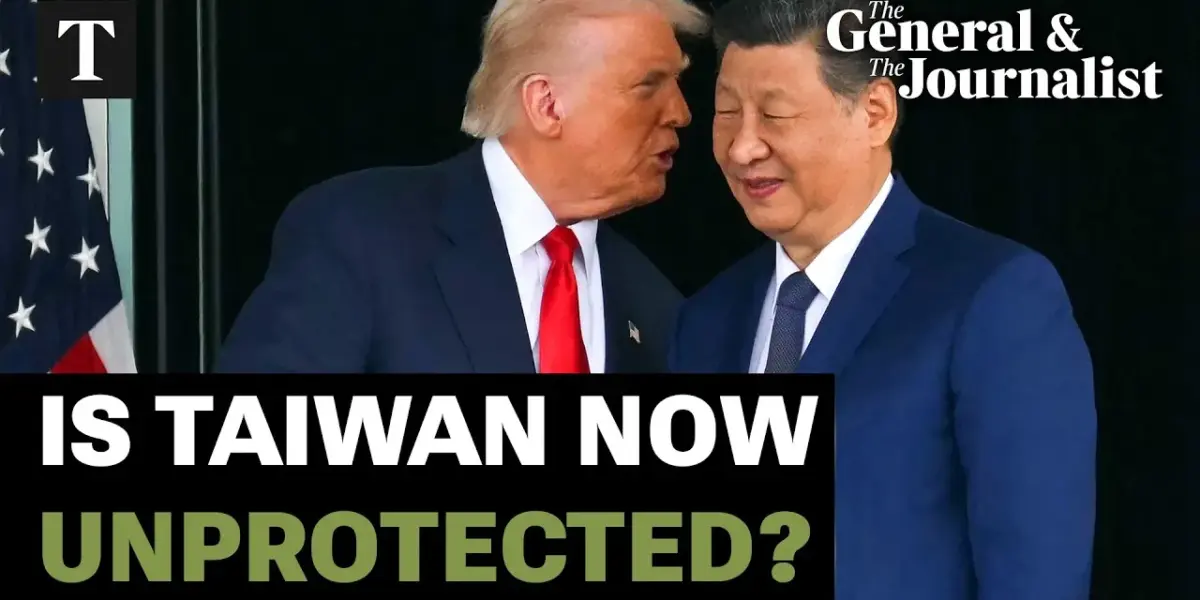
US Defense Capabilities Under Scrutiny
Recent military actions by the United States against Iran may have significantly weakened its ability to deter China and respond to a potential conflict over Taiwan. This assessment comes from analysts who suggest the prolonged engagement has depleted resources and attention, potentially setting back U.S. capacity by months or even years.
The situation highlights a broader geopolitical climate, which some liken to the unstable 1930s. This era is marked by a weakening global order, the rise of aggressive nations, and democracies struggling to match threats with preparedness. The “fog of war,” a term describing the confusion and uncertainty during fast-moving conflicts, is a constant challenge in understanding these complex events.
NATO and the Strait of Hormuz: A Test of Alliances
Questions have arisen regarding the role of NATO in potential conflicts, particularly concerning the Strait of Hormuz. Concerns were raised about former President Donald Trump’s threats to NATO allies if they did not support U.S. actions in the region. Some argue that European nations, while reliant on the U.S. for security, are finding their voice and are less likely to blindly follow U.S. directives.
French General Michel Yakov is quoted as saying that joining a U.S. war against Iran would be like buying “cheap tickets for the Titanic.” His analysis points out several reasons why NATO involvement might be problematic:
- NATO cannot join a unilateral campaign in a subordinate role; it would require taking command.
- There is a lack of clear strategic goals and agreement among member states.
- Modern military coordination cannot rely on social media.
- There is a significant trust issue, with doubts about U.S. commitment to alliances.
- Reinforcing failure, as seen in past air campaigns without ground forces, is strategically unsound.
Despite these concerns, the relationship with the U.S. will be a critical factor in navigating the coming months and years.
Lessons from the Balkans and Ukraine
The discussion also turned to historical military campaigns, specifically NATO’s air campaign in the Balkans in 1999 and the Dayton Peace Accord for Ukraine. The 1999 campaign, while achieving air superiority, struggled to counter dispersed ground forces, showing the limitations of air power in achieving regime change without ground support. The Dayton Accord, conversely, is criticized for imposing an agreement without fully considering long-term implications.
These historical examples raise questions about whether current strategies, particularly concerning Iran and Ukraine, have learned from past mistakes. The effectiveness of air campaigns is debated, especially when objectives are broad, like regime change, rather than limited and clearly defined.
Russia’s Enduring Threat: A Complex Equation
Despite Russia’s economic challenges, demographic issues, and aging leadership, its military remains a significant threat to Britain and Europe. Analysts suggest that Russia’s ability to sustain its war economy is bolstered by China, making its position more complex than it appears.
The threat from Russia is seen as a combination of capability and intent. President Putin’s goals include reducing Ukraine to a vassal state and dismantling the European security architecture. He doesn’t necessarily need overwhelming force to achieve this; testing NATO’s Article 5 and achieving limited objectives while relying on a nuclear umbrella is a viable strategy.
Russia still possesses significant forces not currently engaged in Ukraine, including troops in Belarus and airborne forces near the Baltic states. Furthermore, while Soviet-era equipment has suffered attrition, Russia’s more modern capabilities, such as the T-90M tank, have not been widely deployed, suggesting a capacity for secondary offensives.
From a political standpoint, ending the war presents its own set of risks for Putin. The Russian economy is heavily reliant on the war effort, and state payouts for military casualties also fuel the economy. Moreover, abandoning the war without achieving stated objectives could undermine his leadership. This dynamic suggests that continued military strife and confrontation with the West may be a political necessity for Putin.
Funding Defense: Challenges and Ideas
The discussion addressed the urgent need for increased defense spending. One suggestion proposed a one-off, ring-fenced defense tax, scaled by income bracket, to generate significant funds. While the math suggests this could raise tens of billions of pounds, the political reality is challenging. Governments would need to make a strong case for such a tax, as many individuals and families may struggle to afford additional payments without clear justification.
Another point raised was the cost of nuclear deterrence provided by the UK and France, which benefits all of Western Europe. While no government has directly asked other European nations to contribute to this protective umbrella, French President Emmanuel Macron has suggested widening the scope of French and British deterrence to a “European nuclear umbrella.” The next logical step, though unstated, would be for these nations to contribute financially.
Analysis suggests several options for increasing defense funding:
- Prioritizing public spending and making difficult decisions, as Germany and Poland have done.
- Stepping back from nuclear power to reinvest in conventional forces, a long-term solution.
- Focusing solely on nuclear power while conventional forces decline, a strategy deemed difficult given geography and lack of allied support.
- A “fudge,” where spending increases are nominal, failing to meet necessary requirements.
Ultimately, a significant event or confrontation could force a public awakening and a recalibration of priorities, leading to greater investment in national defense.
China, Taiwan, and the Risk of Miscalculation
Concerns are growing about the risk of miscalculation in China, particularly regarding Taiwan. President Xi Jinping’s purges of senior military leaders and his reliance on loyalists over experienced commanders raise questions about the People’s Liberation Army’s (PLA) true combat effectiveness.
This situation presents two perspectives: the purges may weaken the PLA, pushing back the timeline for potential military readiness. However, Xi now holds near-absolute power, potentially creating an echo chamber where dissent is suppressed, and loyalists confirm his views. This could lead to an underestimation of U.S. capabilities and a misjudgment of the speed and scale of a potential U.S.-led response.
The U.S. military’s recent actions in Iran are seen as potentially depleting its own resources and readiness, further complicating the deterrence of China. The need to protect oil supplies in the Strait of Hormuz also ties up a significant portion of the U.S. Navy, reducing its capacity elsewhere. A customs embargo on Taiwan, particularly concerning semiconductor exports, could be a highly effective “gray zone” tactic for China, testing U.S. resolve without direct military conflict.
However, there’s a counterargument: Xi may also recognize the formidable nature of the U.S. military, especially given its performance in Iran and Venezuela. With no senior Chinese generals having combat experience, Xi might hesitate to engage in a conflict against a potentially depleted but still highly capable U.S. force.
The Long View: Global Trends and Future Security
Looking ahead 10 to 30 years, global security is expected to undergo significant shifts. The Euro-Atlantic dominance of global history is likely to rebalance towards Central Asia and the East, with China poised to win influence over the Global South.
Despite the potential for chaos and peril, this period of disruption could also lead to a significant uplift in human capability. Advances in AI, biotechnology, robotics, and clean energy have the potential to improve global health, wealth, and connectivity. Great power competition, while risky, can also spur innovation, resilience, and strategic renewal in democracies.
The future security landscape will likely be shaped by a contest between the Global West, Global East, and Global South. Whoever gains the allegiance of the Global South will have a significant role in determining the future global order.
Source: Is the US Ability to Protect Taiwan Already Compromised? | Q&A (YouTube)

Related Articles


Trump’s Iran Claims Crumbled as Jets Fall from Sky
President Trump's claims about Iran's weakened air defenses were sharply contradicted when U.S. jets were shot down over Iranian territory and the Strait of Hormuz. This forced an emergency meeting, highlighting a dangerous gap between rhetoric and reality in a volatile region.
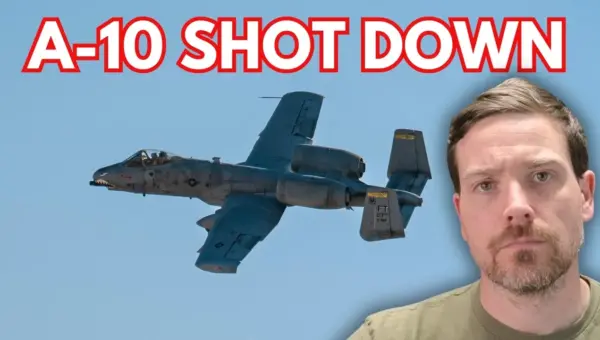
Iran Escalates: Jets Downed, Peace Talks Collapse
Two US jets were shot down by Iran as peace talks collapsed, pushing the conflict into a dangerous new phase. The loss of aircraft and failure of diplomacy signal a potential shift in military strategy, with harsher actions possibly on the horizon.


Iran’s Leaders Seek Leverage, Ignore U.S. for Decades
For 47 years, Iran's leadership has harbored a deep-seated animosity towards the United States, seeking to obliterate it and capture American personnel for leverage. This long-standing hostility, often ignored, is now being revealed through their actions and persistent agenda.