Britain Must Consider Life Without NATO’s Key Defense Pact
Controversial rhetoric from former President Trump has ignited debate about NATO's future and the reliability of its Article 5 defense pact. Commentators question if allies can still trust the U.S. to uphold its commitments, potentially weakening the alliance's deterrent power.

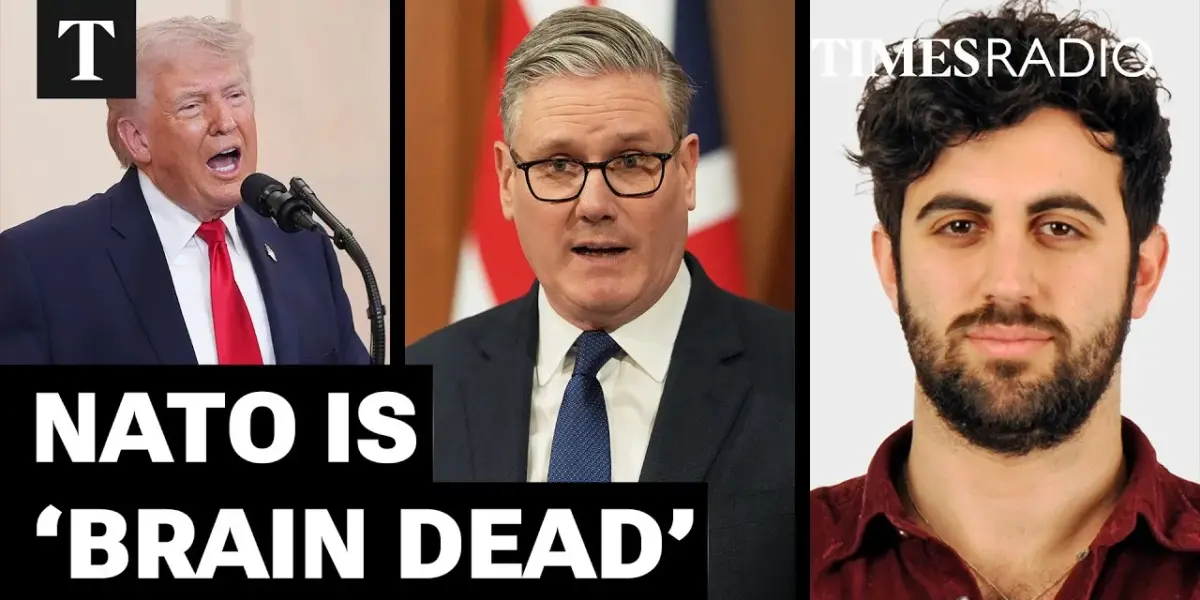
Trump’s Rhetoric Raises Doubts About NATO’s Future
In a recent discussion, commentators raised serious questions about the future of the NATO alliance, particularly concerning the reliability of its core defense agreement, Article 5. The debate was sparked by controversial statements made by former President Donald Trump regarding potential military action against Iran and his past comments about withdrawing the United States from NATO. These remarks have led to concerns about whether the alliance’s mutual defense guarantee still holds weight.
“Stone Age” Rhetoric Echoes Past Warnings
During a recent address, President Trump used strong language, stating the U.S. was on track to achieve its military objectives and would “bring them back to the stone ages where they belong.” This phrase carries historical weight, having been apocryphily attributed to General Curtis LeMay in 1965 regarding the Vietnam War. LeMay, who was responsible for the bombing of Japan during World War II, reportedly denied saying it, but the phrase haunted him. Even in Vietnam, years later, people spoke with horror about the possibility of such an action.
The use of this extreme language by a U.S. president, especially when referring to a country he had recently spoken of liberating, struck many as deeply alarming. The discussion highlighted how Trump’s language has become increasingly hyperbolic and perhaps less impactful over time. Unlike LeMay, whose words had lasting repercussions, Trump’s pronouncements may be quickly forgotten unless drastic actions follow. This suggests a shift in how such powerful language is perceived and its consequence, or lack thereof.
War Without Consequence? A New Approach to Conflict
The conversation also touched upon a perceived shift in how military actions are approached. While historical bombing campaigns, like those against Japan in World War II, involved immense risks and heavy casualties for American forces, the current approach seems different. Commentators noted a willingness to engage in military threats and actions while appearing to minimize the risk of significant U.S. casualties. The deployment of a relatively small number of Marines to an island was contrasted with the hundreds of thousands of troops sent to Iraq in 2003.
This has led to the idea that the U.S. might be pursuing a form of “war without consequence.” This extends not only to military actions but also to the use of rhetoric. The ability of a leader to repeatedly issue extreme statements without apparent repercussions was described as deeply depressing and exhausting. The lack of accountability for such language, especially when it targets certain groups and not others, was also pointed out as a concerning trend.
NATO’s Collective Defense: A Question of Trust
The discussion then turned to NATO and the implications of Trump’s past threats to withdraw. While formally NATO will continue, the underlying trust in its Article 5 mutual defense clause has been called into question. Article 5 states that an attack against one member is considered an attack against all.
Historically, when the U.S. was attacked on 9/11, more than 20 countries joined the fight in Afghanistan under Article 5. The question now is whether other NATO members would rally to the U.S.’s defense in the same way, especially given current geopolitical tensions involving countries like Iran. More critically, the panel debated whether European allies could truly rely on the U.S. to defend them if attacked, particularly in Eastern European nations like Estonia or Finland.
The Unsettling Future of Collective Security
Despite the structural hurdles to the U.S. leaving NATO, which would require a two-thirds majority in Congress, the possibility of a future where the alliance’s core guarantee is weakened is a serious concern. Even if Trump is not president, or if a different Republican or a Democrat takes office, the repeated questioning of America’s commitment has had an effect.
The conclusion drawn is that while NATO may not be finished, serious consideration must be given to life without its traditional deterrent power. A NATO that lacks the conviction that the United States will stand firm is a significantly less formidable alliance in the eyes of adversaries like Vladimir Putin and Xi Jinping. This uncertainty about U.S. commitment forces allies to re-evaluate their own security strategies, potentially leading to a less stable global environment.
The future of NATO hinges on whether its members, and indeed the world, can continue to rely on the bedrock commitment of the United States. The erosion of that trust, fueled by rhetoric and perceived shifts in strategic priorities, presents a profound challenge to the collective security framework that has defined the post-World War II era.
Source: Britain Must Think Seriously About Life Without An Article 5 deterrent | Josh Glancy (YouTube)

Related Articles
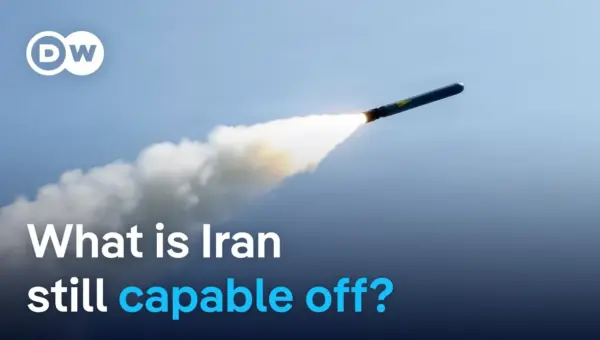
Iran Strikes Target Infrastructure: Gulf States Fear Escalation
Iran's retaliatory strikes on critical infrastructure, including a Kuwaiti desalination plant, have heightened fears across Gulf states. Expert Kaman Matin explains Iran's strategy of targeting civilian and economic assets in response to attacks, while Gulf nations brace for potential escalation. The situation remains tense, with diplomatic efforts struggling to find a path to de-escalation.

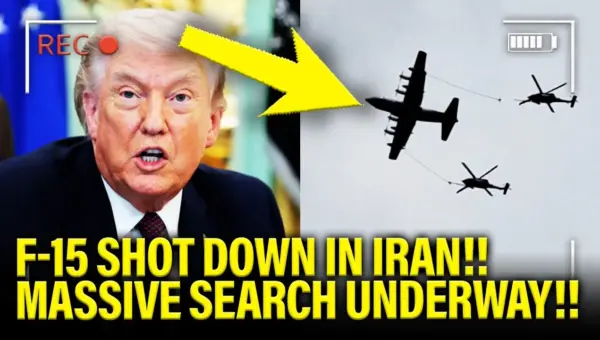
Iran Downs US Jet, Exposing Global Power Shifts
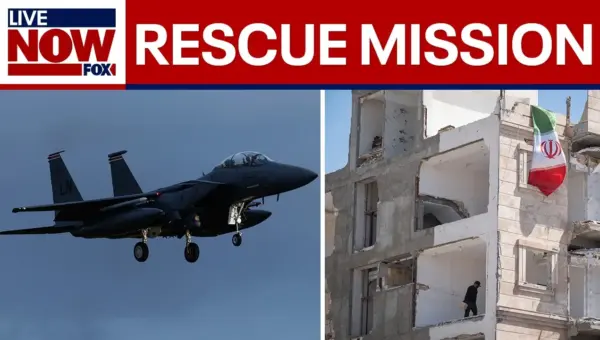
An F-15E jet shot down over Iran sparks a rescue mission and highlights global power shifts. Allies question U.S. predictability while domestic debates rage over military spending. This incident underscores complex regional tensions and evolving international dynamics.
US Jet Downed in Iran: One Pilot Rescued, Search Continues
A US F-15 fighter jet has crashed in Iran, leading to a large-scale rescue operation. One pilot has been rescued, but an intense search continues for a second crew member. The incident occurred in a challenging mountainous region, and the cause of the crash is still under investigation.