Trump Addresses Nation on Iran Conflict
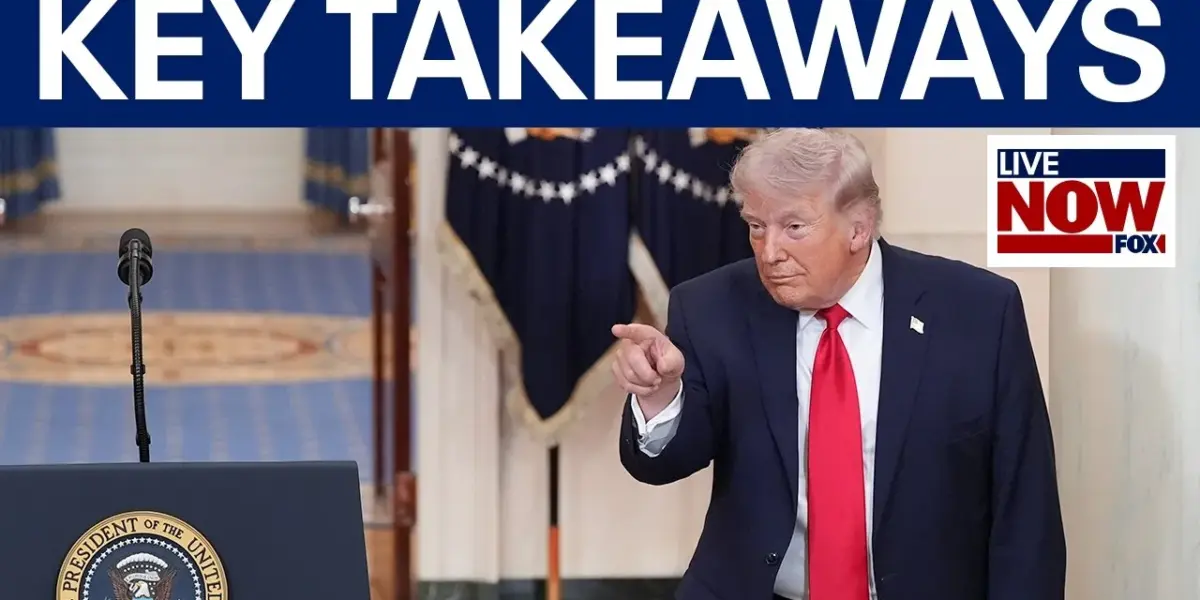
President Donald Trump addressed the nation regarding the military action in Iran, aiming to justify the ongoing operation. The speech offered few new details and notably omitted discussion of negotiations, while also softening rhetoric towards NATO allies. The address comes amidst growing public concern over the conflict and its potential long-term implications.

Trump Addresses Nation on Iran Conflict
President Donald Trump delivered a prime-time address to the nation Wednesday night, outlining his rationale for military action against Iran. The speech, delivered from the White House, aimed to explain the administration’s position but offered few new details as the President amasses executive authority for the ongoing military operation. Notably absent from the address was any mention of ongoing negotiations with Iran, a point that had been previously highlighted by the administration. Trump also appeared to soften his criticisms of NATO allies and did not indicate immediate plans to deploy ground troops, particularly in relation to retrieving enriched uranium.
Framing the Conflict: A Historical Perspective
Political analyst and historian Rich Rubino noted that President Trump drew parallels to past conflicts like Vietnam, Iraq, and Korea during his address. “He talked about how long those wars were,” Rubino explained. The President’s argument, Rubino suggested, was that this conflict would not be a protracted one. This framing comes at a time when public opinion in the United States shows significant opposition to the war, with over 60% of Americans reportedly against the action, according to various polls.
Rubino drew a comparison to Senator George Aiken’s famous statement about the Vietnam War in 1966, where he suggested the plan was to “declare victory and get out.” This sentiment appears to mirror Trump’s attempt to portray the current conflict as a swift operation aimed at achieving specific objectives before a withdrawal.
Public Opinion and Messaging Strategy
The address also touched upon public perception and the President’s efforts to address concerns about the war in Iran. Rubino indicated that Trump attempted to frame the Iranian regime as a potential threat to the United States, a common justification for military action. However, he contrasted this with past conflicts like Korea, Vietnam, Afghanistan, and Iraq, which, despite initial popularity, eventually became unpopular.
Historically, major military actions like the Gulf of Tonkin Resolution for Vietnam and the resolutions for Afghanistan and Iraq received broad, often unanimous, support in Congress at their outset. Rubino pointed out that the current conflict in Iran appears to be relatively unpopular, especially among Independents and Democrats, according to polling data. Trump’s messaging aimed to convince the American people that this action was necessary for their security and would lead to positive outcomes, such as lower gas prices, and would be a minor issue for the U.S. to resolve.
Impact of the Address and Shifting Public Sentiment
Rubino suggested that President Trump’s decision to address the nation directly stems from unfavorable polling numbers and negative news coverage surrounding the conflict. The President sought to justify the war by emphasizing the threat posed by the Iranian regime and the potential benefits of the action. However, Rubino highlighted that as American soldiers face casualties and significant financial resources are spent, public sentiment may continue to shift, especially with reports of civilian deaths and injuries.
The historian also noted that Trump’s stance on foreign conflicts, particularly his past opposition to “forever wars,” contrasts with his current military engagement. This shift is seen by some as contrary to his initial campaign promises, though the administration might argue it aligns with his commitment to “peace through strength” and preventing Iran from developing nuclear weapons.
International Repercussions and NATO’s Future
Beyond domestic concerns, the address and the broader U.S. policy towards Iran have international implications. The statement from Donald Tusk, former Prime Minister of Poland, suggested that events in U.S. domestic politics, including actions related to Iran, could align with Russian President Putin’s strategic goals. This highlights how U.S. foreign policy decisions are closely watched and interpreted by global leaders.
Rubino discussed President Trump’s views on NATO, describing them as antithetical to the long-standing bipartisan support for the alliance held by previous U.S. presidents. While NATO’s Article 5 mandates collective defense, Trump has expressed concerns that U.S. involvement in the alliance could draw the nation into unnecessary conflicts. The existence of a 2023 law requiring a two-thirds majority in the Senate to withdraw from NATO underscores the institutional commitment to the alliance, despite differing presidential perspectives.
Looking Ahead
The coming weeks will be critical in observing the progression of the military operation in Iran and its impact on public opinion both domestically and internationally. The administration’s ability to articulate a clear strategy and achievable objectives will be key to garnering sustained support. Furthermore, the ongoing debate surrounding the U.S. role in international alliances like NATO will likely continue, shaped by both presidential actions and legislative frameworks.
Source: Key Takeaways from Trump's address on Iran (YouTube)

Related Articles
Trump’s NATO Insults Spark Global Outrage, Allies Push Back
Former U.S. President Donald Trump's leaked private remarks, filled with insults aimed at NATO allies, have sparked international outrage and calls for European self-reliance. The comments highlight growing concerns about U.S. reliability and the potential for a long-term split in transatlantic relations. The discussion also touched upon domestic UK issues, including NHS strikes and political shifts, alongside a unique debate on marmalade regulations.
Trump Fires AG Bondi Amidst Barrage of Personnel Changes
Donald Trump has fired Attorney General Pam Bondi, her tenure marked by controversy and a short duration. This move continues a pattern of high turnover in key positions within the Trump administration, raising concerns about legal integrity and future appointments.
Trump’s Own Lawyer Calls for 25th Amendment
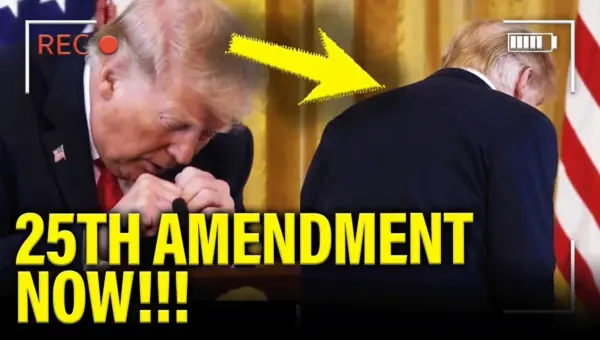
Donald Trump's former lawyer, Tai Cobb, is among those calling for the 25th Amendment to be invoked, citing concerns over Trump's mental and physical state. Cobb believes Trump is "gone" and unfit to serve. This comes amid observations of erratic social media posts and foreign policy decisions that critics argue are driven by narcissism and impulse.