Politicians Clash Over ‘Nazi Streak’ Comments and Leaks
A heated debate erupts over a political appointee's alleged "Nazi streak" comments and the leaking of private messages. Politicians clash over accountability, with accusations of hypocrisy and deflection flying. The incident highlights broader issues of ethical conduct in public office.

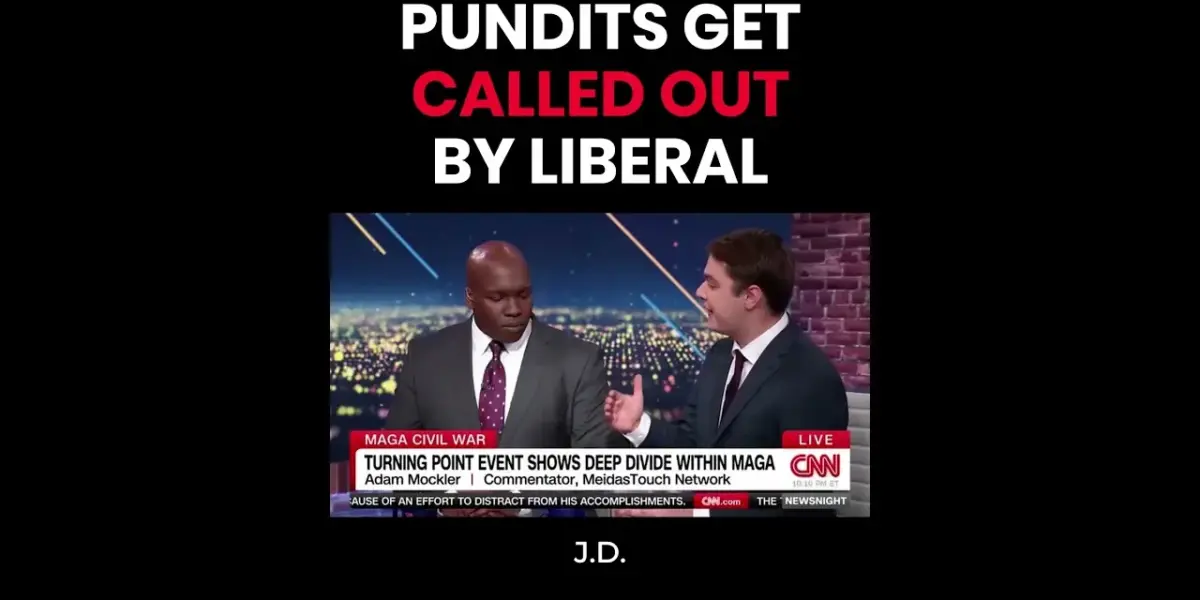
Politicians Clash Over ‘Nazi Streak’ Comments and Leaks
A recent public exchange between political figures has brought to light heated disagreements over controversial statements and the leaking of private conversations. The debate centers on comments made by a political appointee and the reactions, or lack thereof, from prominent politicians. This situation raises important questions about accountability and the standards we expect from those in public office.
The Controversy Unfolds
The core of the dispute involves an individual described as having a “Nazi streak.” According to the discussion, this person made remarks that have drawn significant criticism. The question then becomes whether political leaders will distance themselves from such statements and, by extension, the person who made them. One side of the argument insists that these comments are unacceptable and should be met with swift action, such as firing the individual.
On the other side, there is a defense that attempts to downplay the severity of the remarks or deflect from the responsibility of leaders to condemn them. This approach often involves questioning the accuser’s motives or focusing on other issues. The transcript suggests a heated back-and-forth, with one person accusing the other of “playing coy” and not having “moral clarity.” This implies a deliberate avoidance of taking a clear stance on a problematic issue.
Leaks and Accusations
Adding another layer to the conflict is the issue of leaked group chat messages. One politician, JD Vance, reportedly stated he would “warn his kids” so that some “scumbag” wouldn’t leak their group chats in a similar fashion. This comment was interpreted by some as defending the person who leaked the original group chat, rather than condemning the content of that chat. The implication, according to the transcript, is that Vance was calling the leaker a “scumbag,” which some found to be a mischaracterization of his intent, while others saw it as a deflection from the original controversy.
The exchange highlights a common tactic in political debates: shifting focus. Instead of directly addressing the controversial “Nazi streak” comment, the conversation veers into the ethics of leaking private messages. This can make it difficult for the public to get a clear understanding of where each politician stands on the original, more serious issue.
Accountability and Public Office
The transcript repeatedly brings up the idea of accountability for those in public service. The central question is whether individuals who make deeply offensive remarks, such as those with a “Nazi streak,” should remain in their positions. The argument presented is that if someone holds such views, they should be removed from any role that gives them influence or public platform. The failure to act, or to condemn such remarks, is seen as a sign of weak leadership or complicity.
The discussion implies that public figures have a responsibility to uphold certain standards of behavior and speech. When these standards are violated, the public has a right to expect a clear and decisive response from their leaders. The exchange suggests that this is not always happening, leading to frustration and accusations of hypocrisy.
Why This Matters
This debate is important because it touches on fundamental principles of public service and ethical conduct. When individuals in positions of power or influence express views that are hateful or discriminatory, it can normalize those views and cause harm to targeted groups. The response from political leaders to such incidents sets a tone for the entire country.
Furthermore, the focus on leaks versus the content of the leaks highlights how political discourse can become sidetracked. Instead of discussing the substance of offensive remarks, the conversation can devolve into arguments about process or privacy. This distracts from the real issues and makes it harder to hold people accountable for their words and actions.
Historical Context
The mention of “Nazi streak” immediately brings to mind the historical horrors of Nazism and the Holocaust. Any association with such ideology is considered extremely serious in most modern societies. Throughout history, political figures have faced severe consequences for expressing or tolerating antisemitic or neo-Nazi sentiments. The public generally expects a zero-tolerance policy for such views, especially from those in leadership roles.
The leaking of private communications also has a history in politics, often used to damage opponents. However, the ethical implications of leaking can be complex. While it can expose wrongdoing, it can also be seen as a violation of privacy. In this specific instance, the debate is whether the act of leaking overshadows the potentially more damaging content of the leaked material.
Trends and Future Outlook
This kind of public disagreement is becoming increasingly common in our hyper-connected world. Social media and cable news cycles amplify controversies, often leading to polarized reactions. Politicians are constantly under scrutiny, and their responses to sensitive issues are quickly dissected and debated.
The trend suggests that clarity and decisive action, or the perceived lack thereof, will continue to be major factors in public perception. Voters and observers are looking for leaders who can clearly articulate their values and act on them, especially when faced with difficult ethical choices. The ability to navigate these complex situations with integrity will likely define political success in the coming years.
Moving forward, we can expect similar debates to arise. The challenge for both politicians and the public will be to stay focused on the core issues of accountability and ethical conduct, rather than getting lost in the weeds of political maneuvering or procedural arguments.
Source: They Both Got Embarrassed… (YouTube)

Related Articles


DOJ Declares Key Records Law Unconstitutional
The Justice Department has declared the Presidential Records Act unconstitutional, a law enacted after Watergate to preserve presidential communications. This decision raises concerns about government transparency and the potential destruction of public records. Critics argue it's a move to cover up past actions, especially in light of the ongoing controversy surrounding the Jeffrey Epstein files.

New Evidence Bolsters Trump-Epstein Accuser’s Story
New reporting corroborates key details provided by a Trump-Epstein accuser, Jane Doe number four, about her alleged abuser Jimmy Atkins. This independent investigation lends significant credibility to her broader claims, including those against Donald Trump, and raises questions about past government inaction and potential cover-ups.

Bomb Diplomacy’s Grim Echo: A Surgeon’s Warning
Former combat surgeon Dr. Adam Hamawi warns against the dangerous rhetoric of 'negotiating with bombs.' He shares firsthand accounts of war's true cost, arguing that aggressive tactics and targeting civilian infrastructure are not only ineffective but also morally bankrupt. Hamawi stresses the importance of holding leaders accountable and prioritizing human well-being over endless conflict.