President Trump Addresses Nation on Iran War, Allies Divided
President Trump addressed the nation on the ongoing war in Iran, promising intensified strikes over the next few weeks while offering few details on an end date. The speech comes amid public disapproval of the war and rising gas prices, with global markets reacting negatively to the continued conflict and threats.


President Trump Addresses Nation on Iran War
President Trump delivered a primetime address to the nation Tuesday night, discussing the ongoing war in Iran, now in its second month. The speech, however, offered few specifics on when the conflict might end, with the President stating only that it would conclude “shortly.” Despite polls indicating a majority of Americans oppose the war, President Trump asserted that the actions taken would cripple Iran’s military and its ability to support terrorist groups, while also denying them the path to building a nuclear weapon. He warned that U.S. strikes would continue aggressively over the next two to three weeks, even as he expressed openness to negotiations.
Mixed Messages and Public Opinion
The President’s address comes amid growing public concern. A recent Reuters Ipsos poll revealed that 60% of Americans disapprove of the war, with only 35% expressing approval. The conflict has also impacted the U.S. economy, with gas prices rising 65% since the war began, now averaging $4.06 per gallon. President Trump, however, assured the public that these economic pains would be temporary, predicting a rapid return to lower gas prices and a rebound in the stock market. He also suggested that countries relying on oil from the Strait of Hormuz, currently closed by Iran, should take the lead in reopening the vital trade route.
Global Implications and Divided Allies
The President’s remarks carried significant global weight. Hours before his speech, President Trump reportedly told The Telegraph newspaper that he was seriously considering withdrawing the U.S. from NATO. He also claimed on Truth Social that Iran had requested a ceasefire, a claim later denied by an Iranian presidential spokesperson. Neither of these significant international developments were mentioned in his address. The ongoing strikes in the Middle East continued overnight, with U.S. B-52 bombers now flying over Iran, a capability not possible earlier in the conflict due to Iran’s air defenses, which are now largely destroyed. However, observers note that Iran still possesses the ability to threaten its neighbors, as evidenced by recent missile and drone attacks on Israel and Saudi Arabia, and attacks on oil tankers.
“We are going to hit them extremely hard over the next 2 to 3 weeks.”
President Trump
Economic Fallout and Future Outlook
The threat of continued strikes has already impacted global markets, with oil prices spiking and stocks tumbling. The closure of the Strait of Hormuz has severely reduced the number of ships passing through daily, forcing those that do to navigate through Iranian territorial waters and pay a significant toll. Experts express skepticism about President Trump’s assertion that the Strait will naturally reopen once the war concludes. While the U.S. military has gained significant air superiority over Iran, the path to a clear victory remains uncertain. The administration has outlined some objectives, including regime change and dismantling Iran’s ballistic missile program, but questions linger about Iran’s nuclear capabilities and the feasibility of achieving these goals within the stated two-to-three-week timeline.
Domestic Political Maneuvering
On the domestic front, Republican leaders in Congress are advancing a new plan to address the Department of Homeland Security shutdown. This plan involves a two-track approach: fully funding DHS through the appropriations process, excluding ICE and Customs and Border Protection, which would be handled separately. This move appears to signal a shift after initial resistance to a similar Senate proposal. The disruption caused by the shutdown, particularly at airports nationwide, has reportedly created significant political pressure. Lawmakers are expected to return after their recess to vote on the measure, though the timeline for resolving the funding for ICE and CBP, which Democrats want to include reforms for, remains unclear. The President has set a June 1st deadline for reconciliation, which is expected to become a vehicle for his broader legislative agenda.
Source: LIVE: NBC News NOW – April 2 (YouTube)

Related Articles

Iran Conflict Escalates: Infrastructure Attacks Spark Global Economic Fears
The conflict in Iran has escalated dramatically, with the U.S. targeting critical infrastructure like bridges. Iran is retaliating by attacking energy assets in the Gulf. This "infrastructure warfare" risks severe global economic consequences, including soaring oil prices and increased inflation.

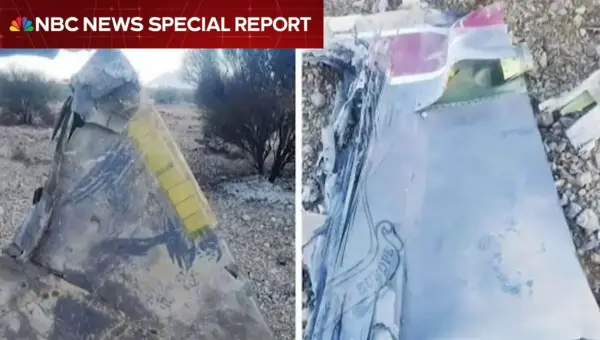
US Fighter Jet Crashes in Iran; Rescue Mission Underway
A U.S. F-15 fighter jet crashed inside Iran on Friday, prompting an urgent search and rescue mission. U.S. officials confirmed the incident, while Iranian state media reported the downed aircraft and offered a reward for the capture of the crew. The White House has been briefed, and the event raises questions about the ongoing U.S. military operations and potential escalation.


Iran Downs US Jet, Escalating Mideast Tensions
Iran has reportedly shot down a U.S. fighter jet, prompting immediate search and rescue operations for the downed airmen. This incident significantly escalates regional tensions and could alter ongoing U.S. military plans against Iran. The event highlights the volatile nature of the Middle East and the potential for miscalculation.