Trump’s Iran War Speech Falters, Experts Question Justification
President Trump's recent address attempting to justify the war in Iran has faced significant criticism from foreign policy experts. Analysts noted a lack of concrete details and questioned the administration's strategy and stated objectives. The speech failed to convincingly make the case for the ongoing conflict, leaving many skeptical about its necessity and potential outcomes.

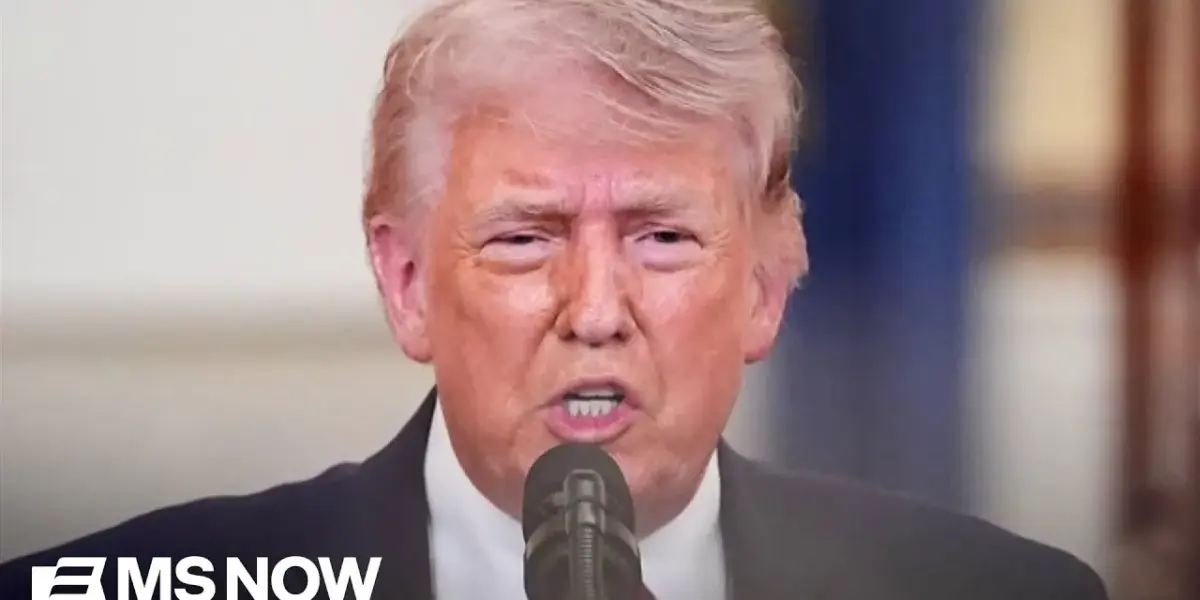
Trump’s Address on Iran War Draws Skepticism from Analysts
President Trump addressed the nation recently, attempting to justify the ongoing conflict with Iran. The roughly 20-minute speech, his first since the war began, aimed to explain why the military action was necessary. However, analysts like Richard Haass noted a lack of specific details and a vague timeline for ending the conflict, suggesting the case for war was not convincingly made.
Key Arguments and Counterpoints
Trump’s speech centered on the threat of a nuclear-armed Iran, stating, “For these terrorists to have nuclear weapons would be an intolerable threat.” He also blamed Iran for recent increases in gas prices, citing their attacks on oil tankers. “This is yet more proof that Iran can never be trusted with nuclear weapons,” Trump declared. He claimed that Iran has been “decimated” and that military objectives are nearly complete, predicting a swift reopening of oil straits and a return to lower gas prices.
However, Haass and other foreign policy experts expressed doubts. While agreeing that a nuclear Iran is an “intolerable” threat, they questioned how this specific military operation has achieved that goal. “It’s unclear in this latest version of the war how that has been debilitated, how the nuclear program has been debilitated,” Haass stated. He also pointed out the repeated, yet unfulfilled, two-to-three-week timelines for military objectives, suggesting these should not be taken seriously.
“I still don’t think last night, if the President was trying to make the case for this war, both what it accomplished and why it had to be launched when it was launched, I don’t think it was a sell. I think it’s an uphill sell for this President.”
Questioning the War’s Genesis and Planning
Some intelligence officers and Iran experts have voiced concerns about how the war began and the apparent lack of planning. Haass acknowledged that while the U.S. might eventually have had to confront Iran, the current approach is being questioned. “I have had several intel officers who did not like how the war began,” he revealed. He also noted the potential for Iran to target islands controlling oil flow through vital straits, a point highlighted by recent reporting.
Economic Impacts and Future Outlook
Trump’s dismissal of the rising gas prices as a “short-term increase” was seen by some as out of touch with the reality faced by many Americans. The ongoing market volatility and rising oil costs suggest a more complex situation than the President portrayed. Haass countered Trump’s claim that the straits would open “naturally,” stating, “No, they’re not going to open up naturally. We’re either going to have to get a deal with the Iranians or we’re going to have to figure out a way to force those straits open.” He emphasized that only the U.S. military possesses the capability to achieve this, either directly or through negotiation.
Shifting Objectives and the Path Forward
There is a sentiment among some analysts that objectives may have shifted as the conflict has unfolded. Haass suggested that the idea of regime change, which he believes Trump has abandoned, was never explicitly stated as a goal. He likened the situation to “defining deviancy” by lowering standards to claim victory. The focus remains on whether the military action has advanced U.S. aims regarding Iran’s nuclear program. Many believe a military solution is unlikely, and negotiations will eventually be necessary, potentially returning the parties to the same point they were at before the war began.
The speech failed to convince many, with Haass concluding it was an “uphill sell.” He pointed out that the President’s personal experiences—not having to pay for gas or serve in the military—and his past criticisms of potential invasions of Iran, further complicate his justification for the current conflict.
Source: 'I don't think it was a sell': Richard Haass on why Trump didn't make the case for war in Iran (YouTube)

Related Articles


Trump’s Impossible Demands Reshape Justice Department
President Trump's demand for loyalty and action outside legal norms has reshaped the Justice Department. Recent departures, like Pam Bondi's, highlight the difficulty of fulfilling the President's "impossible tasks." The search for a new Attorney General continues amidst concerns about the DOJ's independence.

Trump’s Leadership: A Moral Vacuum for Young Learners?
Young people seek moral guidance from leaders, but what lessons does Donald Trump offer? Some argue his approach teaches negative behaviors like bullying and isolation, contrasting with traits like patience and gratitude seen in others. This raises questions about leadership character and its impact on societal values.

Trump’s Transparency: A Press Secretary’s Bold Claim
President Trump's press secretary, Sarah Huckabee Sanders, claims his public persona is identical to his private one. She states his directness eliminates guesswork, making her job easier by providing clear, unspun messages.