Israel Outmaneuvers US on Iran Policy
The conflict with Iran is proving more beneficial for Israel than the United States, highlighting differing national priorities. While Israel focuses on regional security, the U.S. is mired in domestic issues like a government shutdown and debates over military engagement. This analysis questions the U.S. administration's strategy and calls for a return to congressional oversight and a focus on domestic needs.

Israel Outmaneuvers US on Iran Policy
The ongoing conflict with Iran has become a strategic win for Israel, while the United States, under its current leadership, appears to be falling behind. This geopolitical shift highlights differing priorities and strategic approaches between the two nations, particularly concerning the Middle East. The situation is further complicated by domestic political challenges within the United States, including a government shutdown and debates over the use of military force.
Iran’s Leadership and US Miscalculations
Recent events suggest a significant misreading of the situation in Iran by the U.S. administration. A letter from Iran’s new president, Masoud Pezeshkian, was presented as proof of regime change and a willingness to negotiate a ceasefire. However, the letter itself was poorly written and contained no mention of a ceasefire or the reopening of the Strait of Hormuz. It also failed to mention the U.S. president by name, contradicting claims that it was a direct response to U.S. overtures.
Pezeshkian is not a new figure, nor is his position a true presidency in the way the U.S. understands it. His communication appears to be a misdirection, possibly intended to create a false sense of progress. The U.S. administration’s interpretation of this letter as a positive development is questionable. Many observers believe the current approach has worsened the situation, making the Iranian regime more motivated to act against U.S. interests.
Divergent Priorities: Israel vs. America
The war in Iran is working out better for Israel’s leadership than for America’s. Israeli Prime Minister Benjamin Netanyahu, often referred to as Bibi, views confronting Iran, Hezbollah, and Hamas as his nation’s top priority. This focus is understandable given Israel’s immediate security concerns, especially after the events of October 7th. Netanyahu has been able to pass legislation and maintain his political viability, partly by appearing strong against extremist threats.
In contrast, the United States’ priority, according to some analysts, should be internal. The focus should be on addressing domestic issues like economic inequality, corporate power, and healthcare costs. The decision to engage militarily in the region, rather than focusing on domestic problems, is seen as a strategic error. The U.S. appears to be prioritizing Israel’s security over its own, leading to a situation where its own interests are being neglected.
Trump’s Influence and Financial Stakes
There are also suggestions that certain individuals and groups connected to former President Donald Trump are benefiting from the ongoing conflict. Reports indicate significant financial contributions to groups supporting military intervention, with some individuals reportedly raising hundreds of thousands of dollars in the region. This raises questions about whether the conflict is being prolonged for political or financial gain by specific factions, rather than for the broader benefit of the United States.
The U.S. Government Shutdown and Congressional Inaction
Adding to the domestic challenges, the U.S. is grappling with a government shutdown. While Republicans and Democrats have reached a tentative deal to end it, the lack of Democratic support means the shutdown continues. Democrats argue that the shutdown was initiated in a way that would not affect agencies deemed most important. There is a clear need for changes within agencies like ICE, which are seen as embarrassing themselves and law enforcement.
Republicans have been accused of prolonging the shutdown for their perceived advantage, to the U.S.’s disadvantage. The hope is that Congress will use the ongoing war as a catalyst to reclaim its constitutional power. Lawmakers are urged to remember their oath to the Constitution, not to a president or a party. The use of force should be subject to a vote in Congress, which has been largely sidelined.
The Path Forward: Soft Power and Congressional Authority
The effective way to confront a regime like Iran’s is through building consensus and coalitions, using soft power rather than solely military might. This approach helps isolate the target regime and build internal resistance. The current U.S. strategy, which seems to center heavily on Israel’s interests and Trump’s personal involvement, misses this crucial point.
The U.S. president needs to make a compelling case for his administration’s actions, a case that has not yet been convincingly presented. The focus on Iran distracts from more pressing domestic issues that directly affect the lives of most Americans. These include the high cost of healthcare and the power of corporations, which are seen as holding the majority of Americans hostage.
It is hoped that the president’s upcoming address to the nation will convince Congress to fulfill its duty. Congress must prioritize the interests of the American people over partisan politics. The nation needs to address its internal problems, ensuring that the fight Americans believe is worth fighting is focused on fixing America first. The conflict in Iran, while important, should not overshadow the urgent need for domestic reform and a clear, constitutionally sound foreign policy.
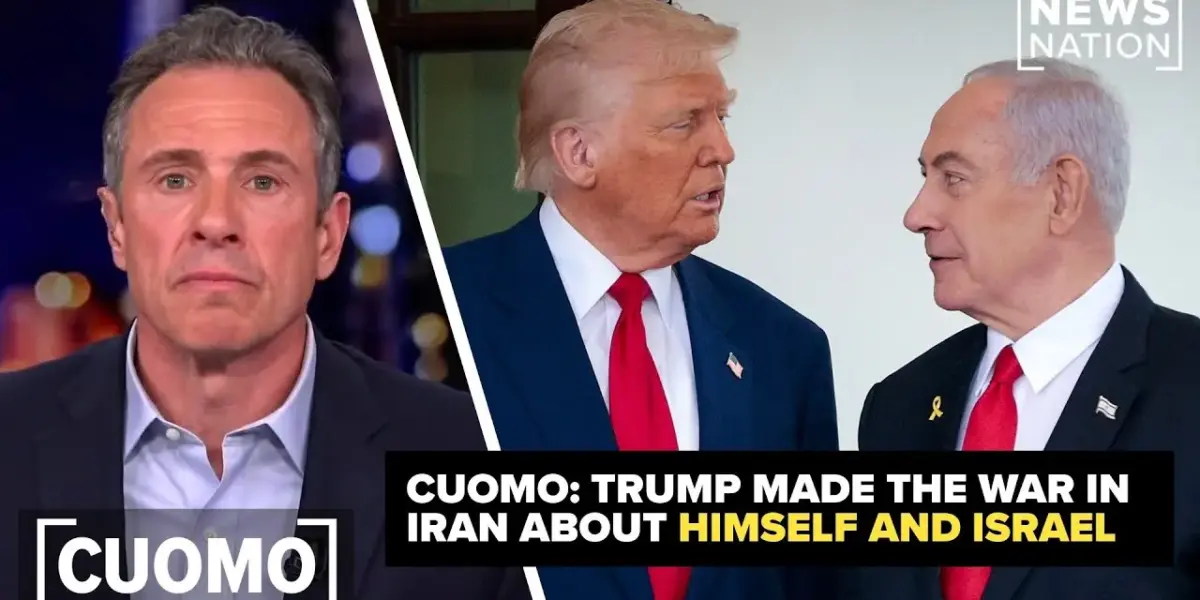
Source: The war is working out better for Israel than Trump, America: Cuomo | CUOMO (YouTube)

Related Articles


Trump Fires AG Bondi, Iran Tensions Rise, Artemis II Heads to Moon
Attorney General Pam Bondi has been fired by President Trump, with Deputy AG Todd Blanche stepping in as acting AG. Amidst rising oil prices and escalating tensions, the U.S. warns Iran as the Artemis II mission successfully heads towards the Moon. Golfer Tiger Woods was arrested for DUI and is stepping away for treatment.


China’s Global Reach Faces Setbacks Amidst Internal Turmoil
China's international influence is facing growing opposition and internal challenges. From strategic island disputes and diplomatic overtures towards Taiwan to domestic unrest and technological failures, Beijing's global ambitions are encountering significant setbacks. These events signal a complex geopolitical landscape where China's power is being tested on multiple fronts.


Iran Downs US Jet, Escalating Mideast Tensions
Iran has reportedly shot down a U.S. fighter jet, prompting immediate search and rescue operations for the downed airmen. This incident significantly escalates regional tensions and could alter ongoing U.S. military plans against Iran. The event highlights the volatile nature of the Middle East and the potential for miscalculation.