Middle East on Edge: Former Ambassador Warns of ‘Increasingly Likely’ Iran War Amidst Escalating Tensions
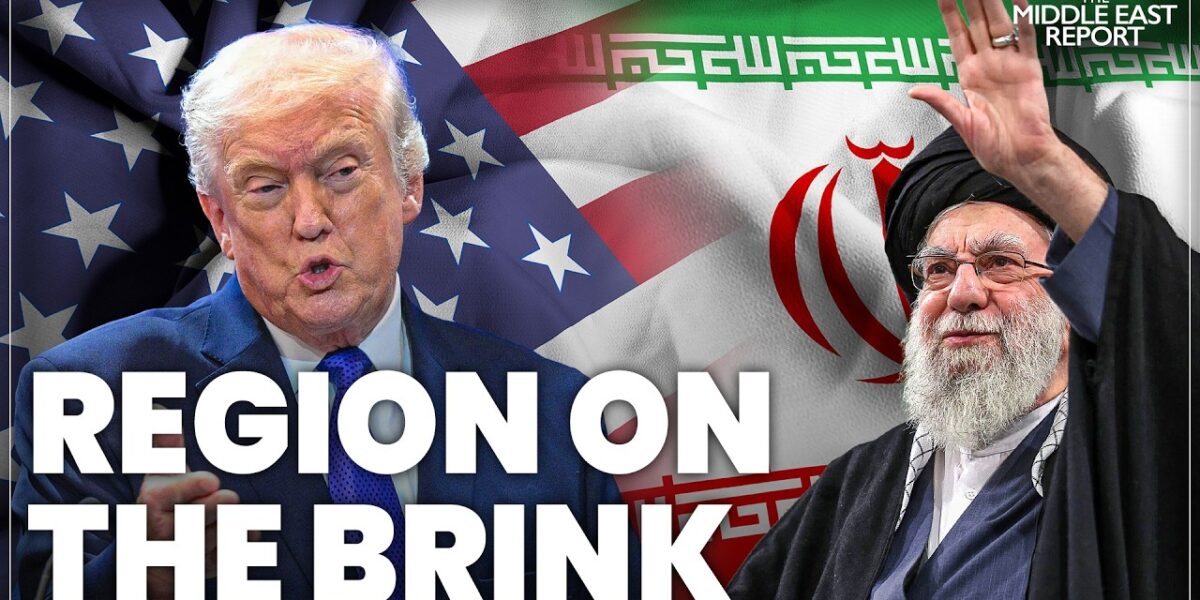
A former British ambassador to Tehran warns that war with Iran is "increasingly likely" amidst a massive US military buildup and President Trump's aggressive rhetoric. Rob Macaire cautioned that any conflict could lead to a catastrophic "Syria-type breakdown" in Iran, with severe regional and international implications, including a potential refugee crisis and increased extremism. While some speculate on domestic political drivers for US action, experts emphasize the complex military realities and the dire consequences of attempting regime change.

Middle East on Edge: Former Ambassador Warns of ‘Increasingly Likely’ Iran War Amidst Escalating Tensions
The Middle East stands at a perilous precipice, with a former British ambassador to Tehran warning that military conflict with Iran is becoming "increasingly likely." This stark assessment comes amidst a significant US military buildup in the region and heightened rhetoric, further fueled by speculation linking President Trump’s foreign policy decisions to domestic political pressures, including a recent Supreme Court ruling on tariffs.
Rob Macaire, who served as British Ambassador to Iran for three years, painted a grim picture of potential regional catastrophe should the situation escalate to a "complete breakdown." Speaking on the "Middle East Report," Macaire emphasized the unique geostrategic importance and scale of Iran, suggesting that any conflict would be far less contained than previous engagements in the region, such as the Iraq War in 2003.
The Looming Threat of Conflict: A Massive Military Buildup
The urgency of Macaire’s warning is underscored by the visible military preparations underway. "It feels increasingly likely, doesn’t it? I mean this military buildup is huge," Macaire stated, acknowledging reports of a second US aircraft carrier entering the region and heightened alert systems in Israel. The US has also reportedly requested the use of RAF Fairford, a significant British air base in Gloucestershire, for potential operations.
Analysts are drawing parallels between the current military posture and the massive deployment that preceded the 2003 invasion of Iraq. While Macaire concurred with the scale of the buildup, he noted a crucial distinction: "no one’s talking about ground invasions of Iran." This suggests a different nature of potential conflict, likely focused on air and naval power, though the destructive potential remains immense.
Trump’s Ultimatum and the Quest for a ‘Better Deal’
At the heart of the current crisis is President Trump’s aggressive stance towards Iran. The President had reportedly issued a 10-day ultimatum, demanding a deal or threatening "really bad things." Macaire believes that while Trump would prefer an agreement perceived as "better than what his predecessor had got," the likelihood of such a deal materializing is slim.
The Iranian regime, deeply entrenched and historically resistant to external pressure, is unlikely to offer the kind of "capitulation" that Trump might seek. "It feels like that deal is unlikely and therefore we are on a trajectory towards fairly imminent military action," Macaire concluded, highlighting the impasse that pushes both sides closer to a military confrontation.
The UK’s Delicate Position: International Law and Strategic Basing
The reported US request for RAF Fairford has placed the United Kingdom in a delicate diplomatic and legal position. The UK Foreign Secretary, while urging a diplomatic resolution, hinted at potential complexities surrounding the use of British bases. Historically, the UK has maintained a clear stance on the primacy of international legality in granting permission for military actions, a principle often invoked by governments of both major parties.
Macaire elaborated on the legal considerations, explaining that justifications for military force under international law primarily revolve around UN Security Council authorization or self-defense. "The UK government if it’s if it’s being asked this will be thinking about whether this action would fall into those categories or not," he noted. Such judgments are not straightforward, particularly concerning self-defense, which depends heavily on intent and specific circumstances, requiring careful legal scrutiny.
Despite the strategic importance of UK bases, Macaire cautioned against overstating the UK’s direct military role in potential US actions. He pointed to previous instances where President Trump has favored unilateral displays of American military strength, such as the strikes on Iran last June, which involved B-52 bombers flying directly from the continental US. However, he also acknowledged that the UK, with assets in the region and a strong alliance with the US, could inevitably be "pulled in" if conflict escalates rapidly.
Domestic Politics and Foreign Policy Intertwined
A significant point of discussion revolved around the potential link between domestic political developments in the US and President Trump’s foreign policy decisions. The interview touched upon a recent US Supreme Court ruling striking down Trump tariffs, with some analysts suggesting it could prompt the President to act more aggressively on the international stage to shift the news agenda or distract from domestic issues.
While acknowledging that such speculation is common, Macaire introduced a crucial caveat. "Even if the president does have an incentive to… change the news agenda and to distract from domestic issues, this is something that’s very bound up with military preparations and there are military timelines involved in this which are complicated and expensive." This suggests that while domestic considerations might influence the timing or rhetoric, the actual execution of military action is constrained by complex logistical and operational realities, limiting the President’s absolute "freedom of maneuver."
The Peril of Regime Change: A Path to Chaos, Not Democracy
One of the most sobering aspects of Macaire’s analysis was his assessment of the feasibility and consequences of "regime change" in Iran. While President Trump had previously hinted at the idea, Macaire was unequivocal: "I think it’s very difficult to bomb any country into democracy."
He conceded that sufficient military force could likely destabilize the Iranian regime, which he described as "troubled and… lacking in legitimacy." However, the objective of collapsing the regime without also collapsing state authority is exceedingly difficult. Such an outcome, Macaire warned, would lead to "chaos and a really dysfunctional situation inside the country, which is not in the interests of the region or the Iranian people."
Catastrophic Regional Implications: A Syria-Type Breakdown
The potential for a "Syria-type breakdown" in Iran carries profoundly alarming implications. Iran, with a population three times the size of Syria, experiencing internal conflict and state collapse, would unleash a torrent of instability across the Middle East and beyond.
Macaire outlined the multifaceted dangers: "The refugee impacts for Europe would be very significant. But I think more significant would be the ungoverned space and the extremism and terrorist risk and the risk of organized crime and… the destabilization that would come out of Iran if it were to be in that sort of internal conflict." Such a scenario, he stressed, is "not definitely in Western interests." The scale and geostrategic positioning of Iran mean that a breakdown there would be "less contained" than the fallout from the Iraq War, with catastrophic implications for the entire region.
Divergent Regional Interests: Israel vs. Gulf States
The potential conflict highlights a divergence of interests among regional players. While Gulf states are reportedly urging the US to exercise restraint and avoid military involvement, Israel’s perspective appears distinct. Macaire noted that an Iran in a state of chaos "may be seen as less threatening to Israel," potentially making it an "outcome to get to" that they would not view as a "worst case." This raises the possibility of Israel joining US military action, potentially "with maybe slightly different objectives."
This complex web of regional dynamics, coupled with the escalating US-Iran tensions, paints a picture of profound uncertainty and high stakes. The warnings from seasoned diplomats like Rob Macaire serve as a stark reminder of the potential for a regional conflagration with far-reaching and devastating consequences, urging all parties to consider the grim realities of military action and the imperative for diplomatic solutions.
Source: Iran war 'increasingly likely' after Supreme Court strikes down Trump tariffs | Fmr Amb. Rob Macaire (YouTube)

Related Articles

China Backs US Blockade, Squeezing Iran’s Oil Lifeline
China's backing of a U.S. naval blockade is effectively cutting off Iran's oil exports. This move aims to pressure Iran into negotiations but carries significant political risks for the U.S. president, especially with high gas prices impacting voters.

US Actions Abroad Questioned: Rogue State Behavior Alleged
Harvard professor Stephen Walt argues the U.S. is acting like a "rogue state" due to impulsive foreign policy, questionable war planning, and a disregard for international norms. The conflict with Iran highlights limitations in American power, leading allies to question U.S. judgment and seek more stable global partners.

US Loses Global Grip as Trump Allies Defy Peace Calls
The U.S. faces a critical juncture as it appears to lose control on the global stage, marked by prolonged international conflicts and domestic economic challenges. Allies seem to defy peace calls, while political figures clash with the Pope over the morality of war.