Trump Sees Hormuz Strait Opening ‘Naturally’ Post-War
President Trump suggested the vital Strait of Hormuz will reopen naturally after the conflict, a claim met with concern by regional allies. This comes as Iran's President offered a diplomatic overture, though decision-making power rests with harder-line officials. Meanwhile, recent attacks on oil tankers highlight Iran's continued ability to threaten shipping.

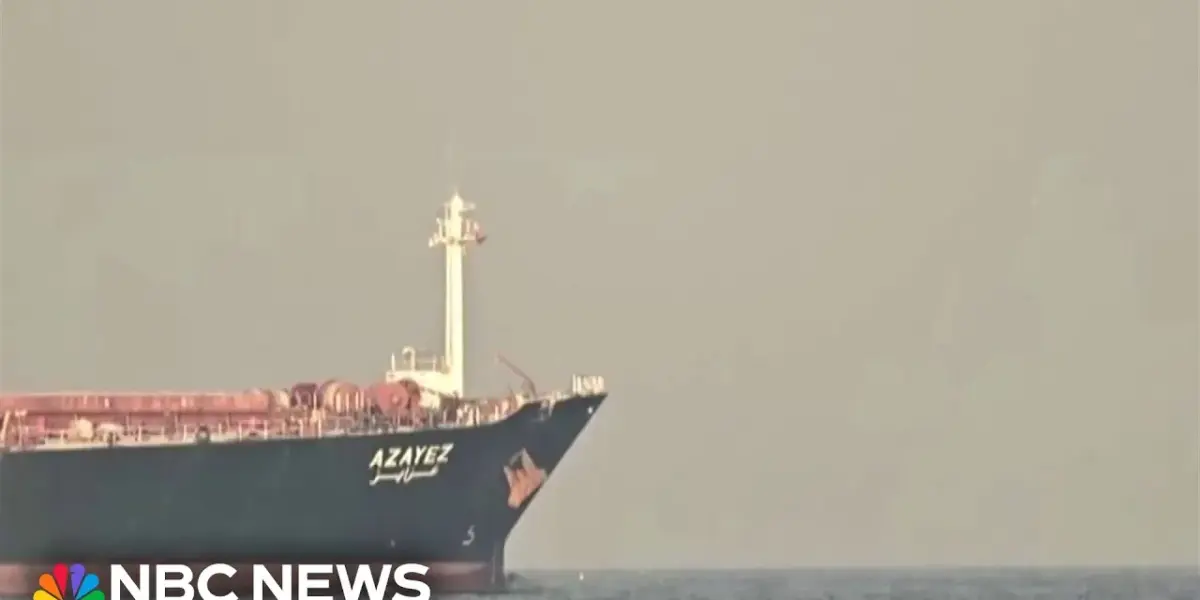
Trump Suggests Hormuz Strait Will Reopen Naturally After Conflict
President Trump has proposed a scenario where the critical Strait of Hormuz will reopen for international shipping without direct U.S. intervention following the current conflict. This suggestion comes amid ongoing tensions with Iran and a significant reduction in maritime traffic through the vital waterway. The President’s remarks point to a potential diplomatic path, though Iranian leadership’s actual willingness to negotiate remains uncertain.
Iran’s President Offers Diplomatic Overture
In a notable move, Iran’s President issued a lengthy letter addressed to the American people in English. The letter suggested Iran holds no ill will towards the United States and presented the world as being at a crossroads between conflict and dialogue. This communication appears to signal an openness to diplomacy from the President’s office. However, analysts point out that the Iranian President holds limited power within the country’s political structure.
Real decision-making authority in Tehran is believed to rest with a combination of senior officials from the Iranian Revolutionary Guard, the Speaker of the Iranian Parliament (a former hardline commander), and the inner circle of the Supreme Leader, Ayatollah Khamenei. The Supreme Leader himself has not publicly commented since his recent installation.
Strait of Hormuz: From Busy Artery to ‘Tehran Tollbooth’
The situation in the Strait of Hormuz, a crucial chokepoint for global oil and gas shipments, has drastically changed. Before the current conflict, an average of 110 ships passed through the strait daily, serving the interests of all nations. Iranian, Iraqi, and Saudi oil, along with Qatari gas, flowed through this recognized passage.
Today, the number of ships transiting the strait has plummeted to just 5 to 10 per day. These vessels are no longer moving freely. They are being forced into Iranian waters, a situation that has been nicknamed the ‘Tehran Tollbooth.’ Iranian forces are inspecting these ships and, in some cases, charging them up to $2 million to pass through. There are indications that Iran intends to maintain this control even after the conflict concludes.
The idea that the United States is going to step away and basically leave the Iranians in control of the Strait of Hormuz in the hope that they are just going to naturally give up this level of control that they have asserted. That is going to be very, very worrying for people here in the Middle East.
Domestic Pressure and Global Oil Prices
President Trump’s comments on the Strait of Hormuz may also be influenced by domestic concerns, particularly rising gasoline prices in the U.S. The national average for gasoline has surpassed $4 per gallon, a significant threshold for American consumers. The disruption in the Strait of Hormuz directly impacts global oil supply and, consequently, prices at the pump for Americans.
While the President has stated that the U.S. does not rely heavily on the Strait of Hormuz, and that it is more critical for European and Asian nations, oil is a global commodity. Scarcity anywhere affects prices everywhere. This dynamic puts pressure on the President to find a resolution that stabilizes energy markets.
Iran’s Military Capability Questioned Amidst Attacks
The President has also asserted that Iran’s ballistic missile and drone production capabilities have been significantly degraded. However, recent events in the region suggest otherwise. Just this morning, an Iranian cruise missile struck a Qatari oil tanker not far from the current reporting location. Yesterday, a Kuwaiti tanker in the port of Dubai was hit by a drone.
Fortunately, neither incident resulted in injuries or major environmental damage. Nevertheless, these attacks clearly demonstrate that Iran retains the ability to threaten its neighbors and international shipping. The assertion that Iran has lost its capacity to launch missiles and drones does not align with these ongoing incidents.
Looking Ahead
The coming days will be crucial in understanding how allies in the Middle East interpret President Trump’s strategy. The assertion that the Strait of Hormuz will reopen naturally is a significant departure from the current reality on the ground and is likely to cause concern. Attention will be focused on whether diplomatic channels can be effectively opened and if Iran’s leadership is truly open to de-escalation, or if recent attacks signal a continued threat to global maritime security.
Source: Trump suggests the Strait of Hormuz could open up 'naturally' (YouTube)

Related Articles


Oil Shock: Hormuz Closure Triggers Global Financial Crisis
A prolonged closure of the Strait of Hormuz could trigger a global financial crisis, leading to soaring energy prices, bond market instability, and a stock market crash. Analysts warn of potential job losses and asset devaluation, with limited safe havens for investors.


Trump’s Impossible Demands Reshape Justice Department
President Trump's demand for loyalty and action outside legal norms has reshaped the Justice Department. Recent departures, like Pam Bondi's, highlight the difficulty of fulfilling the President's "impossible tasks." The search for a new Attorney General continues amidst concerns about the DOJ's independence.


Trump Fires AG Bondi, Iran Tensions Rise, Artemis II Heads to Moon
Attorney General Pam Bondi has been fired by President Trump, with Deputy AG Todd Blanche stepping in as acting AG. Amidst rising oil prices and escalating tensions, the U.S. warns Iran as the Artemis II mission successfully heads towards the Moon. Golfer Tiger Woods was arrested for DUI and is stepping away for treatment.