China’s Elite Face Purges Amidst Growing Fear and Rumors
China's top defense figures face purges amidst alleged scams and mysterious deaths, fueling rumors about political instability. Entrepreneurs also find their wealth a liability as the state tightens its grip, creating an atmosphere of fear and uncertainty.

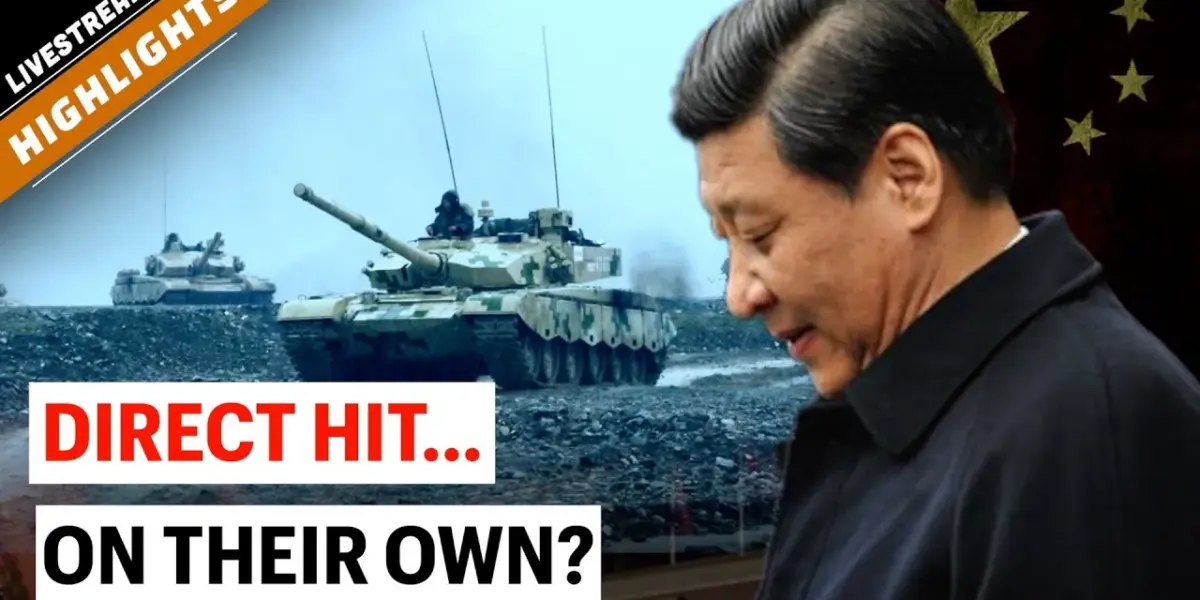
China’s Top Brass Under Fire Amidst Scandals and Silence
A recent incident involving a Chinese military drill has ignited a firestorm of rumors and concerns about the stability within China’s defense sector. The video, initially shared on Douyin (China’s version of TikTok), showed what appeared to be a routine training exercise gone terribly wrong. An infantry fighting vehicle advanced on a dirt mound while dozens of soldiers stood in formation. Suddenly, a smoke grenade fired directly into the crowd, causing panic and scattering the soldiers. The soldier inside the vehicle can be heard exclaiming, “It’s over.” This event, though deleted from its original platform, quickly spread, leaving many to question the cause: miscommunication, operator error, a safety failure, or something more sinister.
Experts suggest that such incidents are rarely the result of a single mistake. Instead, they often stem from a series of failures that occur simultaneously. This complex web of issues might explain why President Xi Jinping has been aggressively restructuring the defense industry, removing numerous executives and scientists. He is reportedly furious about widespread scams within state-owned defense companies.
High-Profile Deaths Raise Alarming Questions
The situation has been further darkened by a series of mysterious deaths and disappearances among prominent figures in China’s defense and technology sectors. Yang Wei, the chief designer of China’s J-20 stealth fighter jet, was reportedly forced to take extreme responsibility for scams. Whispers suggest the J-20 project was a massive scam, built with inferior materials. This alleged poor quality led to the loss of hundreds of pilots during test flights. Some reports claim Xi Jinping himself was enraged after watching videos of the J-20 disintegrating mid-air, ordering Yang Wei to end his own life.
Adding to the unease, Yang Hong, a 57-year-old aviation engine expert, has also reportedly died mysteriously. Earlier, Fu Jing, a top expert in supersonic weapons, died under unclear circumstances, with some speculating he died in Iran rather than South Africa as initially reported, possibly due to corruption allegations.
The Disappearance of a Top General Fuels Speculation
Perhaps the most significant rumor circulating involves Zhang Youxia, the vice chairman of the Central Military Commission. Arrested by Xi Jinping on January 20th, his whereabouts have been unknown for months. Numerous rumors have surfaced, many suggesting his death. One version claims he was executed by injection, with his death already communicated internally. Another suggests he died of a heart attack during an investigation. A third, more dramatic, version alleges assassination by a powerful family’s associate.
While the exact details remain unconfirmed, these varied rumors serve a distinct purpose. They are seen by many as a deliberate tactic by Xi Jinping’s administration to test public reaction before any official announcement. By releasing different versions of events, the government can gauge public sentiment and prepare for the inevitable fallout. Zhang is too prominent a figure to be hidden indefinitely; his status as a powerful ‘princeling’ means people will demand answers.
Rumors as a Tool in Chinese Politics
In the opaque world of Chinese Communist Party (CCP) politics, rumors are not just idle gossip; they are a strategic tool. Different factions often leak both real and fabricated information to shape narratives and gauge reactions. An AI-generated video recently circulated online, supposedly showing Xi Jinping and Zhang Youxia in a physical fight during a meeting. While likely fake and intended for amusement, it highlights the public’s imagination and the widespread use of rumors in the absence of open communication.
Another recent rumor alleged that Xi Jinping suffered another stroke and was rushed to a military hospital. While such claims are often dismissed, the unusual events in Beijing have led some to believe that logic no longer applies. These rumors, whether about Xi’s health or political figures, reflect a deeper societal frustration. They are a way for a society that cannot speak freely to project its hopes and anxieties onto the system of strongman rule.
Entrepreneurs and Billionaires: Money Becomes a Liability
Beyond the military and political elite, China’s wealthy entrepreneurs and billionaires are also facing increased scrutiny and pressure. Their financial success has, ironically, become their biggest liability. Wang Xing, the founder of Meituan, has reportedly been barred from leaving China. Economist Bu Xiaolin, formerly chief economist at the China Banking Association and Hong Kong Exchanges and Clearing, is also missing and rumored to be under investigation. He had recently given a seminar to the Politburo members on the economy, making his disappearance particularly shocking.
Adding to this trend, the two young founders of Manis, a Chinese AI startup recently acquired by Meta, have been blocked from leaving the country. The company had reportedly already moved its operations to Singapore and dissolved its China-based teams, even blocking Chinese IP addresses on its website. Despite these measures, the founders were summoned back to Beijing for a meeting regarding the $2 billion sale. Their decision to return may have cost them their company and their freedom, as China is now reviewing the acquisition.
Why This Matters
The current climate in China, marked by high-profile purges, mysterious deaths, and pervasive rumors, signals a period of significant internal tension and consolidation of power under Xi Jinping. The aggressive restructuring of the defense industry, coupled with the elimination of perceived corrupt officials and experts, suggests a top-down effort to ensure loyalty and efficiency. However, the methods employed—including alleged forced suicides and unexplained deaths—raise serious ethical and human rights concerns.
The widespread circulation of rumors, particularly those concerning the health and fate of top leaders, is a testament to the lack of transparency and the public’s deep-seated anxieties. It also demonstrates how rumors can be weaponized in political struggles. For entrepreneurs and billionaires, the message is clear: wealth and success no longer guarantee safety or freedom. The state’s increasing control over the private sector, as seen with the Manis acquisition review, indicates a growing emphasis on national security and state interests over individual enterprise.
Implications and Future Outlook
This trend suggests a future where political loyalty and state control will be paramount in China. The purges may continue as Xi Jinping seeks to eliminate any potential threats and solidify his authority. The defense industry will likely face further scrutiny, with a focus on ensuring its alignment with the party’s goals. For the business community, this means navigating an increasingly unpredictable environment where sudden government interventions can dramatically alter fortunes.
The international community will be closely watching these developments. The mysterious deaths and the silencing of dissent contribute to concerns about China’s human rights record and its opaque governance system. The uncertainty surrounding key figures like Zhang Youxia also adds a layer of unpredictability to regional and global security dynamics. The state’s actions reflect a broader strategy to tighten control, potentially at the cost of innovation and individual liberty, creating a chilling effect on both domestic and international business confidence.
Source: The PLA Incident That Sparked a Wave of Dangerous Rumors (YouTube)

Related Articles


China Benefits as Iran Conflict Disrupts Global Oil
China is emerging as a potential winner from the ongoing conflict in the Middle East, largely due to its strategic energy reserves and diverse power sources. While global oil prices surge, China's economy remains relatively shielded, allowing it to pursue its geopolitical goals and test the global reach of its currency.


Bomb Diplomacy’s Grim Echo: A Surgeon’s Warning
Former combat surgeon Dr. Adam Hamawi warns against the dangerous rhetoric of 'negotiating with bombs.' He shares firsthand accounts of war's true cost, arguing that aggressive tactics and targeting civilian infrastructure are not only ineffective but also morally bankrupt. Hamawi stresses the importance of holding leaders accountable and prioritizing human well-being over endless conflict.


Troops Can Carry Guns on Bases, Defense Secretary Declares
Defense Secretary Mark Esper announced service members can now carry personal firearms on U.S. military bases, reversing a long-standing ban. Citing the Second Amendment and recent base shootings, Esper stated the move aims to protect personnel by ending 'gun-free zones.' The new policy presumes approval for personal protection firearm requests.