Druski’s Bold Skits Spark Debate, Comedians Defend Artistic Freedom
Comedian Druski's recent skits, particularly those spoofing pastors, have sparked debate about artistic freedom and public sensitivity. Experts defend his work, arguing the humor targets hypocrisy, not faith itself. The discussion also touched on the legacy of comedic actors and the potential of rising stars.

Druski’s Bold Skits Spark Debate, Comedians Defend Artistic Freedom
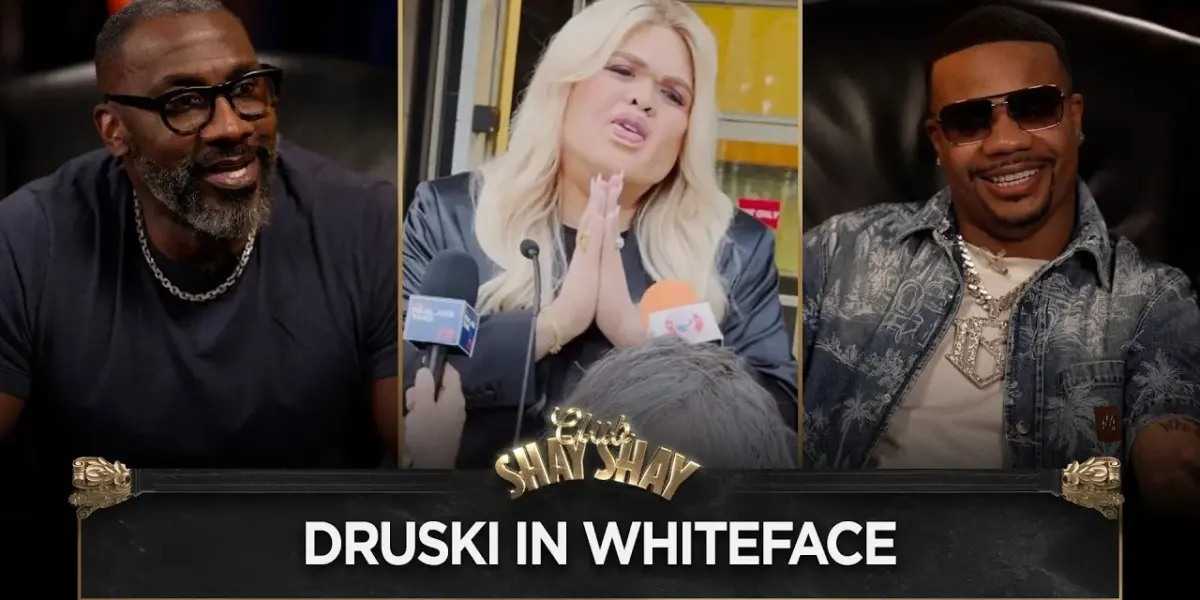
Comedian Druski is making waves, and some waves are causing a splash of controversy. Mojo Brookzz, speaking on Club Shay Shay, highlighted Druski’s recent work, particularly a skit that drew criticism for its portrayal of pastors. “People was like, ‘He’s mocking God,'” Brookzz recalled. “No, no, no, no, we’re mocking these preachers that’s saying that they’re of God. And they not.” This defense comes as Druski himself faced backlash, even a suspension, for his comedic takes.
The core of the discussion revolves around artistic expression and the boundaries comedians push. Brookzz explained the process, noting that comedians often draw from personal experiences or observations. “If you think about a lot of stuff that get created, it gets created because people they see it,” he stated. Druski’s skit, which involved him wearing whiteface and portraying a pastor, took a concept and elevated it. “He got the red bottoms on. I thought I… He took it to a whole another level,” Brookzz praised.
This type of comedy isn’t new, and Druski isn’t the only one who has explored similar themes. Brookzz admitted to doing a skit with a comparable premise. However, he feels Druski’s execution was exceptional. “I did the same skit. But I think what Duski did with it was was phenomenal,” he said. Despite the praise for Druski’s talent, the criticism highlights a growing sensitivity in public discourse. “The world got too sensitive. We can’t talk about nothing. We can’t say nothing,” Brookzz lamented.
The Prosperity Gospel Under Fire
A key target of Druski’s humor, and the subsequent defense, appears to be the disconnect between some religious leaders and their congregations, particularly concerning wealth. “The majority of the pastors are preaching prosperity,” Brookzz observed, contrasting the lavish lifestyles of some preachers with the struggles of their followers. He painted a vivid picture: “Now, my house is leaking, but you got a mansion? I’m driving I I’m getting dropped off or I’m getting Uber to drop me off at the church or I’m driving a bucket and you got a Rolls or Phantom and a Mercedes.” This disparity fuels the comedic critique, aiming to expose hypocrisy rather than attack faith itself.
The conversation also touched on the idea of comedic characters versus personal identity. When Druski’s skit faced accusations of mocking God, the response was clear: the target was the actions of certain individuals claiming to represent God. “This ain’t realize the minister is not God, bro,” one speaker emphasized. They argued that many critics don’t truly understand faith and are quick to police comedic expression. “How you gonna tell me who I could play with? You don’t even know. You don’t know the God made me,” they added, questioning the authority of those making the accusations.
Comedians Push Boundaries, Defend Choices
The discussion broadened to the topic of comedians adopting different personas, including men dressing as women for comedic effect. This has become a point of contention for some. However, Brookzz defended this practice, citing examples like Eddie Murphy in *The Nutty Professor* and *Norbit*, and the cast of *White Chicks*. “I feel like I would be a hypocrite to sit here and be just so against it… when I like Big Mama House,” he admitted, acknowledging the popularity of such roles.
The underlying sentiment is that comedians should have the freedom to explore characters and concepts, as long as it aligns with their artistic vision. “If that’s what you want to do, do what you want to do. Make your money,” the speaker advised. The crucial caveat is authenticity: “But don’t do it. Don’t don’t don’t don’t compromise who you truly are.” The critique is reserved for those who resent others’ success or choices they wouldn’t make themselves. “If you ain’t willing to do it, so why you care?” was the pointed question posed.
Top Comedians and Future Stars
The conversation also included a lively debate about the greatest comedians with TV shows. Names like Martin Lawrence, Jamie Foxx, Steve Harvey, Dave Chappelle, and Mo’Nique were mentioned as favorites. *Martin* was singled out as a classic sitcom that remains endlessly watchable. The group also reminisced about older shows like *Sanford and Son*, highlighting the enduring legacy of comedy legends like Redd Foxx.
Looking ahead, Druski was identified as a standout talent with significant potential. “Those two, I think I think they got the potential to really be like really great comedic actors,” one speaker said about Druski and another comedian, Jack Funny. This generation of comedians, while navigating a landscape where sensitivities are high, are proving their ability to create impactful and thought-provoking humor.
Source: Druski Is The Only Comedian Who Can Wear Whiteface In 2026 Says Mojo Brookzz I CLUB SHAY SHAY (YouTube)

Related Articles


China’s Shadow Looms: Threats Silence Art in Canada
Bomb threats have led to the cancellation of Shen Yun performances in Toronto, with presenters blaming the Chinese Communist Party. The incidents highlight concerns about foreign interference and the safety of artistic expression in Canada.
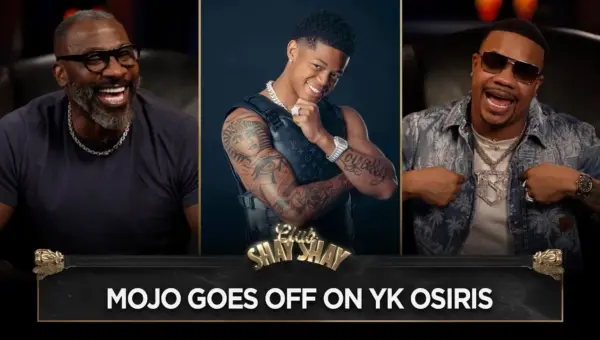
Mojo Brookzz Slams YK Osiris’s ‘Ring’ Take
Mojo Brookzz strongly disagrees with YK Osiris's view that women are not obligated to cook or clean without a ring. Brookzz argues for mutual contribution in relationships. The discussion also touches on comedy, sensitive topics, and a dramatic tour experience.


Keegan-Michael Key’s Voice Roles Shine Bright
Keegan-Michael Key's voice acting talent shines through in a variety of roles, from charismatic leaders to space adventurers. His performances add humor and depth to animated characters, showcasing his impressive vocal range and comedic timing.