Trump Threatens NATO Exit Amid Iran War Fallout
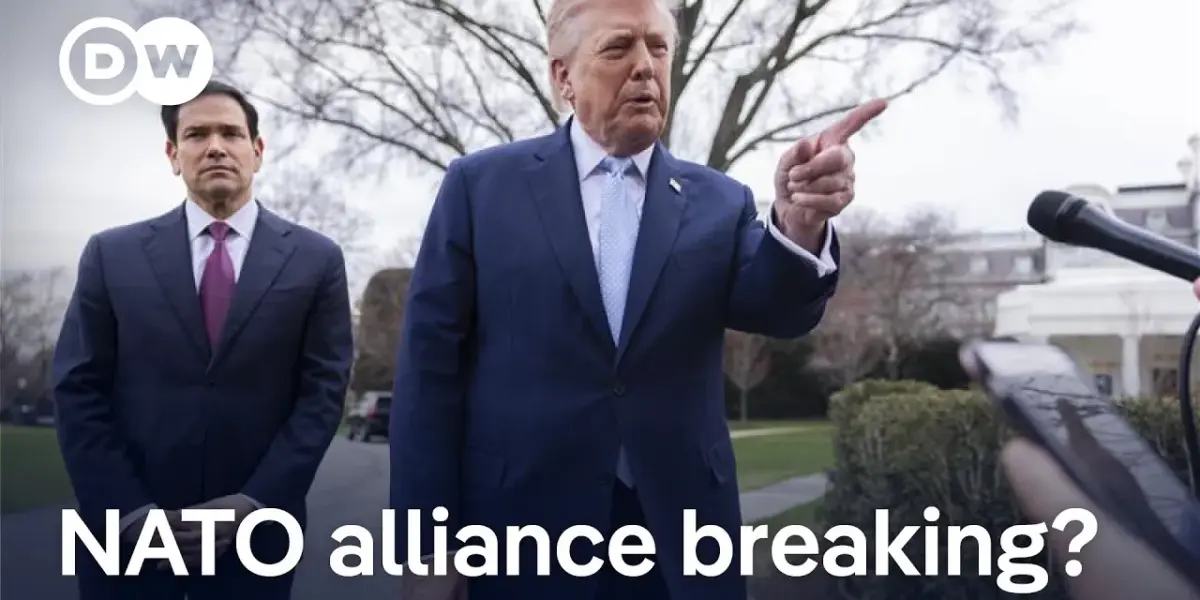
President Donald Trump is threatening to withdraw the U.S. from NATO amid mounting frustration over the ongoing war in Iran and allies' refusal to support the conflict. Experts warn this could be "hegemonic suicide" for the U.S., though others see potential for alliance repair and Europe's growing defense role. The legal path to withdrawal remains complex, with Congress requiring a two-thirds majority vote.

Trump Eyes NATO Exit Amid Iran War Tensions
President Donald Trump is reportedly considering a drastic step: withdrawing the United States from the North Atlantic Treaty Organization (NATO). This threat comes as frustration mounts over the ongoing war in Iran, a conflict that allies have largely refused to support. The President has given Iran a deadline of April 6th to reopen the Strait of Hormuz, warning of harsher military action if they fail to comply. With fuel prices rising and public opinion souring on the war, Trump’s stance on NATO is hardening, raising concerns about the future of the Western alliance.
Allies Shun Iran Conflict, Fueling Trump’s Discontent
The war in Iran has created significant rifts between the United States and its NATO allies. While the U.S. is heavily involved, most European nations have made it clear they want no part in the conflict. French President Emmanuel Macron has openly contrasted Europe’s predictability with the actions of countries that can act without warning. This lack of support has deeply disappointed President Trump, who has publicly stated that NATO has “done absolutely nothing” and called it a “paper tiger” in the past.
“We’re very disappointed with NATO because NATO has done absolutely nothing. I said 25 years ago that NATO is a paper tiger.”
Donald Trump
A Legal Hurdle to Withdrawal
While President Trump has signaled his intent to reconsider the U.S. role in NATO, a legal technicality stands in his way. A law passed in 2023 by the Biden administration requires a two-thirds Senate majority or an act of Congress for the U.S. to withdraw from the alliance. This means that any move to leave NATO would face significant legislative challenges.
Expert Analysis: Blame Shifting and “Hegemonic Suicide”
Analysts suggest that President Trump’s threats are a reaction to the prolonged and unexpectedly difficult war in Iran. “I think what we are hearing is President Trump lashing out because the war in Iran isn’t as quick and successful as he anticipated, and he’s looking to shift the blame from himself onto others,” says Corey Shaki, Director of Foreign and Defense Policy Studies at the American Enterprise Institute. She warns that breaking the alliance would be “hegemonic suicide” for the U.S., diminishing its global influence and making its ability to project power more difficult and costly.
The war’s fallout has already weakened the U.S. position. Allies feel unconsulted and are facing economic problems due to the conflict. Meanwhile, adversaries like Russia are benefiting from actions like the lifting of sanctions on oil exports, creating a situation where allies lose and adversaries gain.
Historical Parallels and the Risk of Decline
Some experts draw parallels between the current situation and the 1956 Suez Crisis, which damaged Britain and France’s global standing and accelerated Britain’s decline as a major power. There is concern that the war in Iran and the resulting tensions with allies could mark a similar inflection point for the U.S., making allies question its trustworthiness as a security partner.
However, not all experts believe this marks the end of U.S. global leadership. They point to the strong incentives for both the U.S. and Europe to repair their relationship and the unpopularity of Trump’s actions among Americans who value alliances. Domestic pushback from Congress and civil society is also seen as a potential check on unilateral action.
NATO’s Resilience and Europe’s Growing Role
Despite the threats, NATO remains a strong military alliance. Experts like Matteo Garavoglia, an international relations expert at Oxford, dismiss Trump’s “paper tiger” comment as political rhetoric. The war in Ukraine, he notes, has actually made NATO more united, with European nations increasing defense spending and commitment.
Europe is taking steps to reduce its dependence on the U.S. for defense. Countries are increasing military spending, and there’s a growing momentum for joint defense projects within the European Union. While the U.S. remains indispensable for high-end military capabilities for the next 5-10 years, a stronger European pillar is emerging.
Uncertainty and Future Outlook
The immediate future remains uncertain. President Trump faces a difficult choice: either admit the current strategy in Iran is failing or escalate the conflict. Both options carry risks for the United States. William Albert, a former NATO official, advises against picking a fight over NATO, urging the administration to make specific, intelligent requests if they have them. The hope is that this current crisis will eventually cool down, much like past controversies, but the damage to trust within the alliance may take a generation to repair.
Source: Trump threatens to quit NATO amid Iran war fallout: an historic breaking point? | DW News (YouTube)

Related Articles

Trump’s Impossible Demands Reshape Justice Department
President Trump's demand for loyalty and action outside legal norms has reshaped the Justice Department. Recent departures, like Pam Bondi's, highlight the difficulty of fulfilling the President's "impossible tasks." The search for a new Attorney General continues amidst concerns about the DOJ's independence.

Trump’s Leadership: A Moral Vacuum for Young Learners?
Young people seek moral guidance from leaders, but what lessons does Donald Trump offer? Some argue his approach teaches negative behaviors like bullying and isolation, contrasting with traits like patience and gratitude seen in others. This raises questions about leadership character and its impact on societal values.

Trump’s Transparency: A Press Secretary’s Bold Claim
President Trump's press secretary, Sarah Huckabee Sanders, claims his public persona is identical to his private one. She states his directness eliminates guesswork, making her job easier by providing clear, unspun messages.