Ugly Art, Broken Society: A Spiritual Crisis Unfolds
Author Justin Lee argues that a deliberate push towards ugliness in art and architecture signals a spiritual crisis, leading people to seek meaning in faith and beauty. He discusses the return to religion, the influence of Marxist ideas in culture, and the calculated nature of societal "uglification."

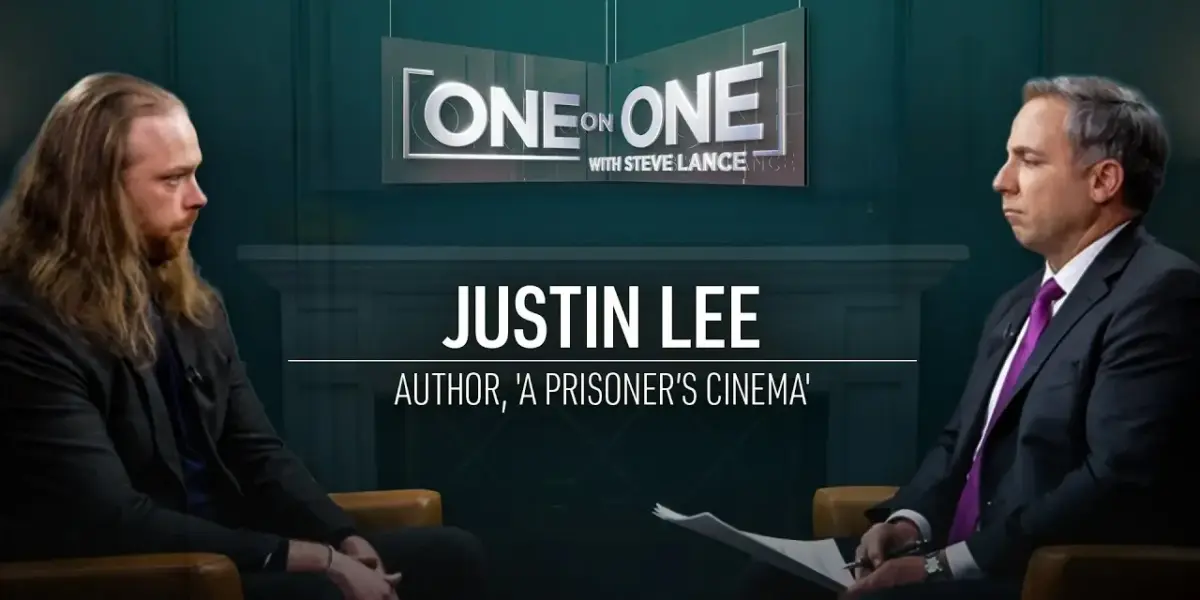
Ugly Art, Broken Society: A Spiritual Crisis Unfolds
In a world that often feels chaotic and meaningless, many are searching for something more. Author Justin Lee believes this search is leading people back to faith and a renewed appreciation for beauty. He argues that a deliberate push towards ugliness in art and architecture isn’t just a passing trend, but a symptom of a deeper spiritual crisis.
Finding Meaning in the Absurd
Lee’s book, “A Prisoner’s Cinema,” explores this idea through a collection of stories that mix genres like horror and magical realism with theological themes. He calls it “Christian existentialism.” This means acknowledging that life can feel absurd, like there’s no clear purpose. Yet, Lee suggests that even in the darkest moments, a sense of meaning, a capital ‘S’ Sense, is still there. He uses the famous quote, “If you stare too long into the abyss, the abyss stares into you,” but adds a hopeful twist: if you can look through the darkness, you might find God at the bottom.
Lee describes his work as “spiritual horror.” He uses classic horror elements to draw readers in, but the goal isn’t just to scare them. The title story, for example, is about a child murderer on death row who is tormented by a demon. While it sounds grim, Lee explains it’s ultimately a hopeful story. The character must face his inner darkness and understand how he allowed evil into his life before he can find redemption. This journey through hell, Lee suggests, is necessary to reach hope.
The Crisis That Turns Us to God
Lee wants his readers to experience an “existential crisis” – to see themselves in characters they might not want to, like the child murderer. He believes that facing uncomfortable truths about the human condition can be a powerful catalyst for turning towards faith. “Nothing like a good crisis to actually turn us toward God,” he states. When we’re at our lowest, feeling despair or anxiety, that’s often when we feel God’s presence most strongly.
A Cultural Shift Towards Faith
Lee sees a significant shift happening in society. The ideas that once seemed certain in progressive circles are now falling apart. People are looking for identity and a stable place to stand. He points to a rise in people returning to church, not just in the Catholic Church, but also in evangelical and Orthodox communities. This search for meaning is also showing up in art, particularly in horror films. Studios like A24 are producing movies that ask deep philosophical questions, unsettling viewers and making them crave meaning.
The Influence of Marxist Ideas
When discussing literature, Lee touches on the influence of Marxist ideas. He notes a shift in publishing, where decision-makers are often women from similar academic backgrounds who have been taught certain ideologies for years. He describes this as a form of neo-Marxism or post-Marxism, where concerns about the working class are replaced by a focus on marginalized groups, excluding Jews and Christians.
This, Lee argues, leads to a superficial idea of diversity. True diversity of thought is not welcomed, and even someone from a favored minority group can be rejected if they express the “wrong” opinion. He recalls the “walk away” campaign on Facebook, where people from various backgrounds shared why they were leaving the Democratic party, only for it to be removed.
The Pandemic’s Lingering Shadow
Lee also reflects on the pandemic, noting how people seem eager to forget the experience. He mentions the film “Edington,” set during the pandemic, which brought back a sense of unease. This collective desire to move on means the pandemic is largely absent from movies and cultural conversations. Americans, he suggests, are good at compartmentalizing and forgetting.
The Illusion of Freedom
Lee critiques the idea that increased personal liberty always leads to greater overall freedom. He uses the example of birth control and abortion. While seemingly giving women more control, he argues they have actually disempowered them in the long run. By removing the risk of pregnancy, the sexual marketplace has changed, giving men more power. This, he believes, is a counterintuitive consequence of seeking narrow freedoms at the expense of broader ones.
He contrasts “little freedoms” – the ability to choose what we want in the moment – with “true freedom.” True freedom, in his view, means flourishing as a human being, which often involves family, community, and a sense of purpose. The pursuit of fleeting pleasures, he argues, can lead to long-term enslavement to addiction, loneliness, and instability.
The Calculated Uglification of Society
One of Lee’s most striking points is his critique of brutalist architecture. He calls the placement of such buildings in prominent locations a “crime against humanity” and “calculated.” He refers to an executive order during the Trump administration that aimed to make federal buildings beautiful again, favoring neoclassical styles. While acknowledging that the Nazis also favored neoclassical architecture, Lee highlights a different argument: that ugly, soulless buildings reflect the harsh reality of capitalism.
He believes this embrace of ugliness is intentional. It’s a way to make people suffer, to reflect a perceived evil in our economic system. He also points to the design of universities like UC Irvine, with its brutalist architecture. This design, he argues, was deliberately created to be anti-symmetrical and inhospitable, making it difficult for large groups to gather and preventing protests. The architecture itself becomes a tool of control and social division.
A Return to Beauty?
Lee was heartened when the Biden administration rescinded and then reinstated the executive order promoting beautiful federal buildings. He sees this as part of a “vibe shift” towards beauty, evident even in subtle changes in celebrity appearances and cultural trends. This return to aesthetics, he suggests, reflects a shift in power and a growing desire for meaning.
Challenges in New York City
Lee also shares his concerns about New York City’s current direction under Mayor Eric Adams. He criticizes policies that he believes are “stupid and morally insane,” particularly those related to homeless encampments. He observes that these encampments are returning, creating unhealthy living conditions and not motivating people towards a better life. Lee believes that many individuals in these situations need institutionalization and proper help, which he doubts the current administration will provide.
Concerns About Foreign Influence
Furthermore, Lee expresses alarm over reports of Democratic Socialists of America members cultivating ties with officials from the Chinese Communist Party. He believes such connections, along with financial ties between China and members of Congress, are deeply troubling and undermine American democracy. He cites investigative work that suggests Chinese money and influence have distorted American politics.
Lee argues that there is no fundamental distinction between democratic socialism and communism. While not fearing hard communism in America, he warns against those who advocate for it and conduct dangerous experiments in cities like New York. He believes these policies often fail and make life harder for the very people they claim to help. He suggests that some leaders may intentionally push these failing policies to create chaos, which they can then blame on capitalism, justifying further power grabs and the confiscation of private property.
The Price of Lies
Lee concludes that leaders who promote these failed systems are often well-versed in deception. They compartmentalize knowledge, able to speak as if failed ideologies are not even in their consciousness. This ability to lie and manipulate, he warns, is a significant threat to a healthy society.
Why This Matters
Justin Lee’s analysis offers a critical look at the state of art, culture, and society. He argues that a perceived turn towards ugliness and a rejection of traditional values are not random occurrences but symptoms of a deeper spiritual and existential vacuum. His work suggests that when people lose their connection to meaning and beauty, they become susceptible to ideologies that promise simple solutions but often lead to greater suffering. The resurgence of interest in faith and the pushback against certain cultural trends, as Lee sees it, represent a search for genuine meaning and a desire to reclaim a sense of order and purpose in a confusing world.
Implications and Future Outlook
Lee’s perspective suggests that the current cultural moment is one of significant transition. The collapse of certain progressive narratives is creating an opening for alternative worldviews, with faith and a renewed appreciation for beauty potentially playing larger roles. The challenges he outlines – from the influence of certain ideologies in cultural institutions to the complex issues of urban decay and foreign influence – point to a future where these debates will likely intensify. The willingness of people to seek meaning, whether through art, faith, or community, will be crucial in shaping the direction of society.
Historical Context
Lee’s critique of brutalist architecture and its potential use as a tool for social control echoes historical concerns about how urban planning and aesthetics can reflect and reinforce power structures. His discussion of ideological shifts in publishing and politics also draws on broader historical trends of intellectual movements shaping cultural output. The idea that societal problems can lead to a search for meaning, sometimes through spiritual or philosophical avenues, is a recurring theme throughout history, from ancient philosophies to modern existentialism.
Source: The Calculated Uglification of Art and Culture | Justin Lee One-on-One With Steve Lance (YouTube)

Related Articles

Reframing Reality: Beyond Good, Evil, and Human Perspective
This analysis explores a philosophical perspective that challenges the traditional understanding of evil. It argues that our human-centric definitions of good and bad are subjective and limited, proposing that accepting reality as it is, and reframing wrongdoing as misguidance rather than inherent evil, can lead to greater understanding and peace.


Trump Escalates Iran Tensions, Targets Infrastructure
President Trump has warned of intensified strikes against Iran, targeting infrastructure like bridges and power plants. This strategy aims to pressure the regime into peace talks, though Iranian officials condemn it as an attack on civilian life. U.S. officials state the strikes target military supply routes to undermine Iran's capabilities.

China Air Bag Parts Spark U.S. Ban Over Deadly Defects
U.S. regulators are considering a ban on Chinese-made air bag inflators linked to 10 deaths. These replacement parts allegedly explode, ejecting metal shrapnel. The proposed ban highlights concerns over illegal imports and substandard automotive safety components.