Trump’s Jab at Vance Hints at 2028 GOP Race Dynamics
Donald Trump's public comments about JD Vance's weight loss at a White House lunch have fueled speculation about Trump's true support for Vance's political future. Observers suggest Trump may favor Marco Rubio, while also revealing Trump's views on government spending and making controversial remarks about immigrants.

Trump’s Jab at Vance Hints at 2028 GOP Race Dynamics
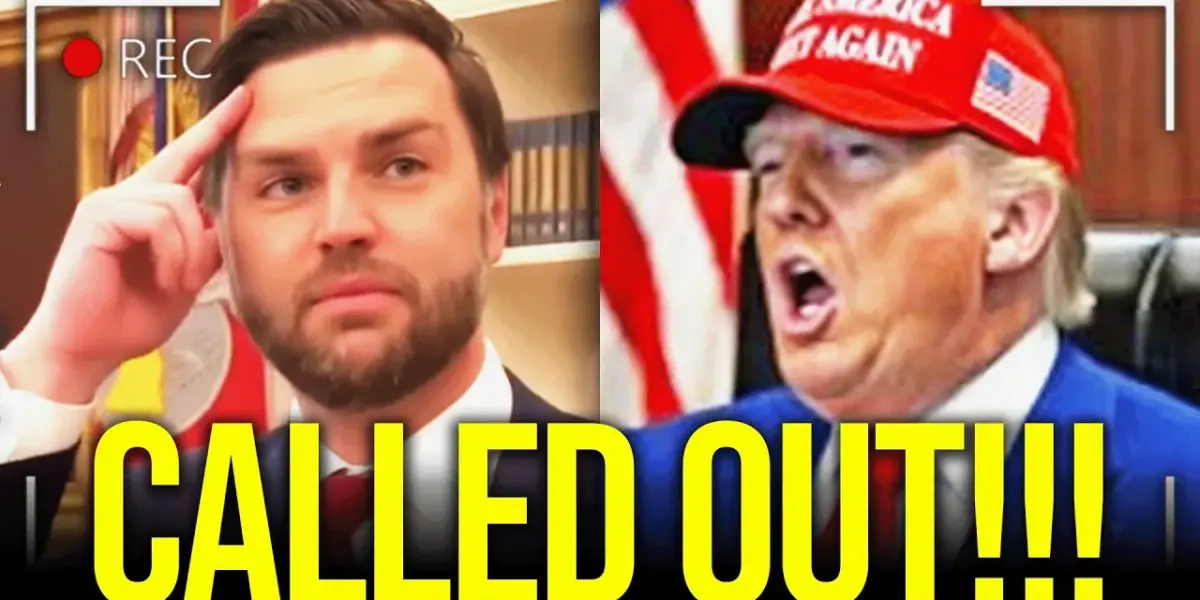
During a White House Easter lunch, Donald Trump made a public comment about Senator JD Vance’s weight loss. This seemingly small moment has sparked wider speculation about Trump’s true feelings toward Vance and the future of the Republican party’s leadership in 2028.
Questions About Trump’s Support
The incident has fueled a theory that Donald Trump is not fully committed to JD Vance as a potential successor. Observers point to several indicators suggesting Trump may favor other figures, like Senator Marco Rubio, for key roles and future influence.
For instance, Trump has reportedly leaned heavily on Marco Rubio for foreign policy advice. This is a significant area, especially as Trump has sometimes seemed to sideline JD Vance from these important discussions. The transcript suggests that Trump has been asked multiple times about endorsing Vance for future elections but has avoided giving a direct commitment. This hesitation is notable, especially after Trump publicly praised a speech by Marco Rubio in Munich for days, without mentioning Vance in comparison.
JD Vance currently holds an advantage in name recognition, which could help him secure the Republican nomination in 2028. However, the analysis suggests Vance might lack the charisma needed to excite voters. If Trump were to withhold his endorsement, it’s possible that a figure like Marco Rubio, seen as more polished, could emerge as a stronger contender for the party’s future.
Trump’s Views on Government Spending
Beyond political maneuvering, the leaked remarks also shed light on Trump’s policy priorities. He appeared to suggest that federal funding for programs like daycare, Medicaid, and Medicare might need to be reduced. Trump argued that these areas are less important than military funding and should be handled at the state level.
He stated, “We can’t take care of daycare. That has to be up to a state.” Trump believes the federal government’s main job is military protection, implying that other social programs are not its responsibility. This approach prioritizes national defense above all else, a stance that could be a key talking point for Republicans leading up to elections.
The comments were made in a setting that was supposedly closed to the press, leading to questions about why these recordings became public. It’s possible Trump felt comfortable speaking more freely, labeling some federal programs as “little scams” and suggesting states should manage them entirely. This perspective contrasts with traditional Republican platforms that often include support for certain social safety nets.
Controversial Remarks on Immigrants
The lunch also included deeply troubling comments from Trump regarding Somali Americans living in Minnesota. He described the country of Somalia as “terrible” and “the worst country anywhere in the world.” He went on to characterize Somali immigrants in Minnesota as “low IQ people” and “bad people” who don’t want to work, citing high unemployment rates.
These remarks have been widely criticized as racist. Trump’s generalization about an entire group of people based on their origin and perceived intelligence is a pattern that has drawn similar accusations in the past. The comments were made despite one of the individuals involved in an alleged incident mentioned being white, a detail Trump seemed to overlook or dismiss.
The analysis suggests these statements provide clear examples for those seeking evidence of racism in Trump’s rhetoric. His language paints a picture of immigrants as unintelligent and problematic, a narrative that fuels division and fear.
Vance’s Weight and Trump’s Memory
Returning to the initial incident, Trump’s comments about JD Vance’s weight loss were particularly odd. He expressed surprise at how much weight Vance had lost, looking around as if he hadn’t seen Vance in a long time. This reaction led to speculation about the actual frequency of their interactions.
The observer suggested that Trump might not have seen Vance in months, implying that Vance is not a regular presence in Trump’s inner circle. Instead, Trump seems to be spending more time with figures like Marco Rubio and Stephen Miller. This perceived distance between Trump and Vance further supports the idea that Trump’s backing for Vance might be weaker than assumed.
Trump’s ability to judge who performs well on television is considered one of his key strengths. The assessment is that JD Vance does not come across as a captivating performer on screen. This could be a critical factor in Trump’s decision-making regarding future endorsements and party leadership.
A Strange Closing Remark
The event concluded with Trump briefly mentioning Charlie Kirk and his wife, Erica. Trump spoke about how people can turn on you, but then he made a peculiar comment to Erica Kirk, winking and saying, “I love that whole group and the kids are good.” This was interpreted by some as a veiled warning or a way to ensure loyalty.
The wink could be seen as either a friendly gesture or a subtle threat, implying that Erica Kirk and her group should remain loyal to Trump and his movement. It highlights Trump’s tendency to command loyalty and potentially use psychological tactics to maintain control over his allies.
Why This Matters
This analysis of Donald Trump’s remarks at the Easter lunch reveals several important dynamics within the Republican party. Firstly, it raises serious questions about JD Vance’s position as a potential heir apparent, suggesting that figures like Marco Rubio might be preferred by Trump. This internal competition for Trump’s favor could shape the Republican field for the 2028 presidential election.
Secondly, Trump’s candid discussion about cutting social programs and prioritizing the military offers a clear vision of his policy focus, which may or may not resonate with a broad base of voters. His emphasis on state-level responsibility for services like daycare and healthcare signals a potential shift or redefinition of federal government roles.
Finally, the inclusion of overtly racist remarks, particularly targeting Somali immigrants, underscores a persistent and deeply concerning aspect of Trump’s communication style. These comments not only alienate minority groups but also reinforce negative stereotypes, posing significant challenges for the Republican party in appealing to a diverse electorate.
Implications and Future Outlook
The political implications are substantial. If Trump indeed favors Rubio over Vance, it could lead to a fierce primary battle for the Republican nomination in 2028. Vance’s current lead in name recognition is significant, but Trump’s personal endorsement can be a powerful force. The absence of that endorsement could open the door for other candidates.
Trump’s stance on social programs also sets a tone for future Republican policy debates. A focus on cutting federal spending in these areas could become a defining characteristic of the party’s platform, potentially alienating moderate voters who rely on these services.
The continued use of inflammatory and, in this case, racist rhetoric by a leading political figure poses a challenge to civil discourse and national unity. It forces opponents to address these issues directly, while supporters may become desensitized or even emboldened by such language. The long-term impact on race relations and political tolerance remains a critical concern.
Historical Context
Donald Trump’s career has been marked by controversial statements and a unique brand of political maneuvering. His ability to command media attention, often through provocative language, has been a hallmark of his success. Comments about individuals’ appearances, as seen with JD Vance’s weight, are not new; Trump has a history of making personal remarks about political opponents and allies alike.
His policy discussions, particularly regarding the role of the federal government versus states, echo long-standing debates in American politics. The tension between federal power and states’ rights is a recurring theme, and Trump’s approach often leans towards decentralization for social issues while favoring strong federal action on national security.
Furthermore, accusations of racism have followed Trump throughout his public life. From his early business dealings to his presidency, his remarks about minority groups, immigrants, and people from certain countries have consistently drawn criticism. This latest instance is part of a pattern that critics argue defines his approach to diversity and inclusion.
The dynamics surrounding potential presidential successors, like JD Vance and Marco Rubio, are also common in politics. Leaders often groom or subtly support potential heirs, and the perceived favor of a party’s dominant figure can significantly influence who gains traction. The perceived slight or lack of enthusiastic endorsement from Trump towards Vance, contrasted with his praise for Rubio, is a significant development in this ongoing narrative.
Source: Trump Drops BAD NEWS on JD Vance… (YouTube)

Related Articles

Trump Ousts AG Bondi, Eyes Zeldin as Successor
Pam Bondi is out as Attorney General after one year, with Deputy AG Todd Blanche serving as Acting AG. President Trump confirmed the departure, praising Bondi and hinting at a new private sector role. Lee Zeldin is reportedly being considered as Bondi's permanent replacement, amid ongoing speculation about other cabinet changes.

Trump’s NATO Insults Spark Global Outrage, Allies Push Back
Former U.S. President Donald Trump's leaked private remarks, filled with insults aimed at NATO allies, have sparked international outrage and calls for European self-reliance. The comments highlight growing concerns about U.S. reliability and the potential for a long-term split in transatlantic relations. The discussion also touched upon domestic UK issues, including NHS strikes and political shifts, alongside a unique debate on marmalade regulations.
Trump Fires AG Bondi Amidst Barrage of Personnel Changes
Donald Trump has fired Attorney General Pam Bondi, her tenure marked by controversy and a short duration. This move continues a pattern of high turnover in key positions within the Trump administration, raising concerns about legal integrity and future appointments.