Trump’s War Crime Threat Over Oil: A Dangerous Gamble
Donald Trump has threatened to destroy Iran's electrical, oil, and water infrastructure if a deal on the Strait of Hormuz isn't reached. This extreme threat, widely considered a war crime, highlights America's oil dependence and Trump's political motivations ahead of midterm elections.


Trump’s War Crime Threat Over Oil: A Dangerous Gamble
Donald Trump recently made a shocking statement on his social media platform, Truth Social. He threatened to destroy Iran’s electrical plants, oil wells, and possibly even their water desalination plants. This threat comes if a deal regarding the Strait of Hormuz is not reached quickly. The Strait of Hormuz is a critical waterway for oil transport. Trump claims this action would be in retaliation for Iranian actions against American soldiers over the years.
An Unclear Victory and a Clear Threat
This statement follows repeated claims from Trump and his administration that the U.S. had already achieved its goals in Iran. They have stated that Iran’s military has been wiped out and that the U.S. has already won. However, the specific goals have never been clearly defined. Reports even indicated news outlets were running headlines about a victory just days after initial strikes.
Despite these claims of victory, Trump is now threatening to commit acts that are widely considered war crimes under international law. Intentionally targeting civilian infrastructure, such as power plants and water facilities, is a violation of these laws. This raises serious questions about the administration’s strategy and its respect for international norms.
The Oil Connection and Political Motives
A key part of Trump’s threat involves the Strait of Hormuz and oil. He wants the strait to be open for business so that crude oil can flow. This highlights America’s continued reliance on fossil fuels. Trump appears to be motivated by the rising gas prices Americans are facing. He understands that high prices at the pump hurt his approval ratings and could negatively impact Republicans in upcoming elections.
Trump’s exact words were: “Great progress has been made in discussions with Iran, but if for any reason a deal is not shortly reached, which it probably will be, and if the Hormuz Strait is not immediately open for business, we will conclude our lovely stay in Iran by blowing up and completely obliterating all of their electric generating plants, oil wells, and Car Island, and possibly all desalinization plants, which we have purposefully not yet touched.” He added that this would be “in retribution for our many soldiers and others that Iran has butchered and killed over the regime’s 47-year reign of terror.”
International Law and Civilian Impact
The U.S. has previously signed international agreements that prohibit the destruction of civilian infrastructure. Attacking electric generating plants and desalination plants directly harms civilian populations. These facilities are essential for providing basic necessities like power and clean drinking water. Destroying them would create a humanitarian crisis.
International law, such as the Geneva Conventions, clearly defines what constitutes a war crime. Targeting infrastructure that is vital for civilian survival is a grave violation. The threat to destroy these facilities is therefore a direct threat to commit war crimes.
Why This Matters
This situation is critical for several reasons. Firstly, it demonstrates a willingness by a former U.S. president to consider actions that violate international law. Such threats can destabilize global relations and undermine efforts to maintain peace. Secondly, it exposes the deep-seated reliance on fossil fuels, even as the world faces climate change. The pursuit of oil continues to drive foreign policy decisions, sometimes with dangerous consequences.
Implications and Future Outlook
Trump’s rhetoric, if acted upon, could lead to severe international backlash and further conflict. It could also embolden other nations to disregard international law. The ongoing dependence on oil means that conflicts over resources are likely to continue. This also means that political leaders may resort to extreme measures to ensure energy supplies, especially when facing domestic pressure.
The future outlook suggests a continued tension between national interests, global stability, and international legal obligations. The U.S. itself has previously condemned similar actions by other countries. The credibility of U.S. foreign policy and its commitment to human rights could be seriously damaged if such threats are taken seriously or acted upon.
Historical Context
The U.S. has a long history of involvement in the Middle East, particularly concerning oil. The Strait of Hormuz has been a focal point for tensions for decades. Previous administrations have also faced challenges in balancing energy needs with geopolitical stability. However, the explicit threat to destroy civilian infrastructure, including water supplies, represents a particularly aggressive stance.
Past conflicts and interventions in the region have often been justified by the need to protect U.S. interests, including access to oil. However, the methods threatened by Trump go beyond traditional military actions and enter the realm of potentially criminal behavior under international law. This raises the stakes considerably for future diplomatic and military engagements.
Source: Trump threatens to commit WAR CRIMES (YouTube)

Related Articles


Oil Shock: Hormuz Closure Triggers Global Financial Crisis
A prolonged closure of the Strait of Hormuz could trigger a global financial crisis, leading to soaring energy prices, bond market instability, and a stock market crash. Analysts warn of potential job losses and asset devaluation, with limited safe havens for investors.


Trump’s Impossible Demands Reshape Justice Department
President Trump's demand for loyalty and action outside legal norms has reshaped the Justice Department. Recent departures, like Pam Bondi's, highlight the difficulty of fulfilling the President's "impossible tasks." The search for a new Attorney General continues amidst concerns about the DOJ's independence.

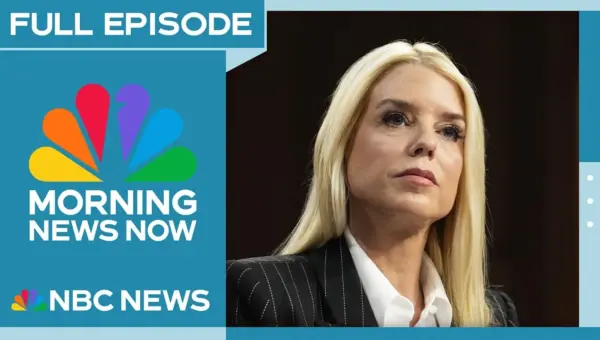
Trump Fires AG Bondi, Iran Tensions Rise, Artemis II Heads to Moon
Attorney General Pam Bondi has been fired by President Trump, with Deputy AG Todd Blanche stepping in as acting AG. Amidst rising oil prices and escalating tensions, the U.S. warns Iran as the Artemis II mission successfully heads towards the Moon. Golfer Tiger Woods was arrested for DUI and is stepping away for treatment.