US Launches Moon Mission, Eyes Mars Future
The US Artemis II mission, carrying astronauts around the Moon, marks a significant step towards a permanent lunar presence and future Mars exploration. The mission tests vital life support systems, building on previous uncrewed flights and aiming to gather knowledge for long-duration space living.


US Launches Moon Mission, Eyes Mars Future
The United States has taken a significant step in its ambitious space exploration plans with the successful launch of Artemis II. This mission, carrying astronauts around the Moon, is seen as a crucial stepping stone towards establishing a permanent presence on the lunar surface and eventually sending humans to Mars.
A New Era of Lunar Exploration
The Artemis II mission builds on the success of Artemis I, an uncrewed test flight in 2022 that proved the Orion spacecraft’s ability to withstand re-entry into Earth’s atmosphere. With astronauts now on board, the focus shifts to testing the life support systems that will be vital for longer space journeys. The crew’s primary task is to survive and perform under the harsh conditions of deep space. This involves rigorously testing the environmental control systems, ensuring the air conditioning and oxygen supply function correctly. They will also evaluate the exercise equipment, which is essential for maintaining astronaut health during extended missions.
Motivations and Goals
NASA’s long-term vision, as explained by retired astronaut Clayton Anderson, is to transform the space station concept from Earth’s orbit to the Moon. The goal is to establish regular crew rotations to the lunar surface, much like the International Space Station has done for over 25 years. This experience will be invaluable for learning how to live and work on another celestial body. Ultimately, this knowledge will pave the way for sending humans to Mars, a monumental undertaking that requires extensive preparation and technological advancement. The current mission represents a “great start and a great first step” toward these ambitious objectives.
The Human Experience in Space
For the astronauts aboard the Orion spacecraft, the experience is a mix of intense professionalism and profound emotion. Mike Fossum, who witnessed the launch from Kennedy Space Center, described the lift-off as a moment that fulfills childhood dreams. He noted the palpable excitement and the dedication of the crew, who are trained to respond to any situation. While mission control reported smooth operations, the astronauts themselves were focused on their tasks, acknowledging that their mission had officially begun. The physical and emotional toll of such a launch is immense, yet the training prepares them to manage these challenges.
Historical Context and Future Prospects
The Artemis program echoes the spirit of the Apollo missions, which first landed humans on the Moon. However, Artemis aims for a more sustained presence, not just a series of visits. The successful launch of Artemis II signifies America’s continued leadership in space exploration. It also highlights the growing interest from younger generations, who see this as a new frontier. The stakes are high, as this mission is critical for establishing a permanent lunar base and gathering the data needed for future Mars missions. The lessons learned from living and working on the Moon will be directly applicable to the challenges of interplanetary travel.
Global Impact and the Future of Space Exploration
While the Artemis program is a U.S.-led initiative, it has implications for international cooperation in space. The success of such missions can inspire global collaboration and set new standards for space exploration. The development of new technologies for lunar and Martian habitats could have spin-off benefits for life on Earth. The long-term vision of establishing human outposts beyond our planet represents a significant shift in humanity’s place in the cosmos. It is a testament to human ingenuity and the enduring desire to explore the unknown.
Why This Reshapes the World Order
The Artemis II mission is more than just a space flight; it’s a powerful statement about national capability and future ambitions. By successfully launching humans on a lunar trajectory, the United States reaffirms its position as a leader in advanced technology and space exploration. This demonstration of capability can influence international relations, potentially spurring new collaborations or even rivalries in the race to explore and utilize space resources. The establishment of a permanent lunar presence, a stated goal of the Artemis program, could reshape geopolitical dynamics, much like the strategic importance of territories on Earth. Furthermore, the technological advancements driven by these missions have the potential to yield significant economic benefits and drive innovation across various sectors, impacting global trade and development for decades to come.
Source: Artemis II launch a ‘great start and great first step,’ ex-astronaut says | Elizabeth Vargas Reports (YouTube)

Related Articles


Trump Fires AG Bondi, Iran Tensions Rise, Artemis II Heads to Moon
Attorney General Pam Bondi has been fired by President Trump, with Deputy AG Todd Blanche stepping in as acting AG. Amidst rising oil prices and escalating tensions, the U.S. warns Iran as the Artemis II mission successfully heads towards the Moon. Golfer Tiger Woods was arrested for DUI and is stepping away for treatment.

Astronauts Head to Moon Amidst Divided Nation
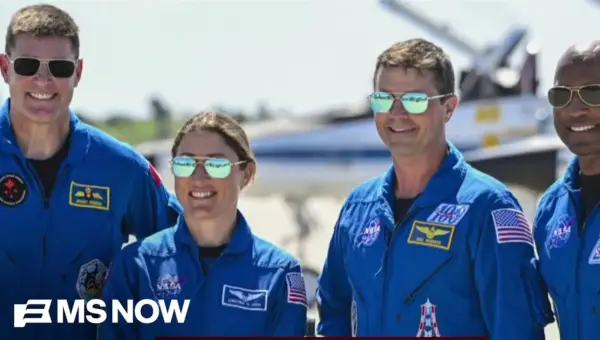
The Artemis II mission has launched, sending four astronauts towards the Moon in a journey that highlights both humanity's drive for exploration and the current divisions within society. While the launch captured global attention, it also sparked conversations about how fragmented media impacts shared national experiences.


Moon Missions Spark New Space Race: Fuel & Power
Renewed moon missions are fueling a new space race, driven by the potential for rocket fuel production and strategic control. However, concerns about space weaponization and the lack of clear property rights in this lawless frontier add a complex geopolitical layer to lunar ambitions.