Trump’s NATO Threat Rocks Global Alliances
Former President Donald Trump's suggestion that the U.S. might leave NATO has sparked significant debate about global alliances and security. This, coupled with concerns over U.S. policy towards Iran and domestic economic issues, signals a potential shift in international relations and raises alarms about future global stability.

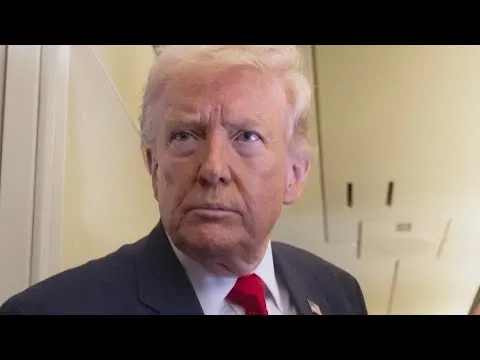
Trump’s NATO Threat Rocks Global Alliances
Comments from former President Donald Trump suggesting the U.S. might leave NATO have sent shockwaves through international relations. This idea, if acted upon, could dramatically change how countries work together for security. It raises questions about America’s commitment to its long-standing allies and the future of global stability.
Trump’s NATO Doubts Raise Alarms
Geraldo Rivera, a veteran journalist, recently discussed Trump’s remarks about NATO. He expressed surprise and concern over the idea of the U.S. withdrawing from the alliance. Rivera noted that NATO is a cornerstone of Western security, especially in deterring Russian aggression. Leaving NATO, he argued, would be a huge blow to the alliance’s strength and unity.
Focus on Iran and Shifting Priorities
Rivera also touched upon concerns regarding U.S. policy towards Iran and its nuclear program. He questioned the effectiveness of recent actions, suggesting that the goal of preventing Iran from obtaining nuclear weapons seems unclear. Rivera recalled past efforts, including military actions and assassinations of Iranian leaders, aimed at stopping Iran’s nuclear ambitions. He expressed confusion over the current strategy, especially after hearing that the U.S. might not be as concerned about Iran’s nuclear material as previously thought. This shift in focus, he implied, could lead to major global energy shocks, impacting oil prices worldwide.
Domestic Politics and Economic Woes
The discussion also highlighted the political challenges facing the current administration. Rivera pointed to President Trump’s low approval ratings, particularly his handling of the economy. With gas prices high, many Americans feel the economic policies have made things worse. This economic dissatisfaction, he suggested, is a significant political problem. He recalled a time when Trump was seen as a strong leader, but suggested that recent foreign policy decisions, like getting entangled in wars with unclear outcomes, have damaged that image.
Historical Context of Alliances
The idea of a U.S. withdrawal from NATO brings to mind historical precedents. NATO was formed in 1949 as a mutual defense pact among North American and European countries. Its primary goal was to counter the threat posed by the Soviet Union during the Cold War. The alliance has been credited with maintaining peace in Europe for decades. Trump’s suggestion to question or leave NATO challenges this decades-long commitment to collective security. It forces a re-evaluation of the benefits and costs of such alliances for all member nations.
Economic Leverage and Global Impact
The potential for major oil shocks suggests that global energy markets are highly sensitive to geopolitical events. Iran, as a significant oil producer, plays a role in global energy supply. Any instability in the region or changes in policy towards Iran can affect oil prices. This, in turn, impacts economies worldwide, from transportation costs to manufacturing. High gas prices at home can also fuel political discontent, as seen in the U.S.
Future Scenarios
Several outcomes are possible. One scenario is that Trump’s comments remain just that – comments – and the U.S. maintains its commitment to NATO. Another is that the alliance faces increased pressure and internal debate over burden-sharing and strategic goals. A more drastic scenario involves the U.S. reducing its commitments or even withdrawing, which would fundamentally alter the global security architecture. This could lead to a less stable world, where regional powers might rise to fill the void, potentially increasing conflicts.
Why This Reshapes the World Order
The strength of alliances like NATO has been a bedrock of international stability since World War II. If the U.S. were to significantly weaken or abandon these alliances, it would create a vacuum. Other major powers might seek to expand their influence, leading to new rivalries and potential conflicts. The economic consequences could also be severe, with global trade and energy supplies disrupted. This would mark a significant shift away from the post-war international order, towards a more fragmented and uncertain global landscape.
Source: 'Can you imagine dropping out of NATO?' asks Geraldo Rivera after Trump comments | NewsNation Live (YouTube)

Related Articles


Trump’s Impossible Demands Reshape Justice Department
President Trump's demand for loyalty and action outside legal norms has reshaped the Justice Department. Recent departures, like Pam Bondi's, highlight the difficulty of fulfilling the President's "impossible tasks." The search for a new Attorney General continues amidst concerns about the DOJ's independence.

Trump’s Leadership: A Moral Vacuum for Young Learners?
Young people seek moral guidance from leaders, but what lessons does Donald Trump offer? Some argue his approach teaches negative behaviors like bullying and isolation, contrasting with traits like patience and gratitude seen in others. This raises questions about leadership character and its impact on societal values.

Trump’s Transparency: A Press Secretary’s Bold Claim
President Trump's press secretary, Sarah Huckabee Sanders, claims his public persona is identical to his private one. She states his directness eliminates guesswork, making her job easier by providing clear, unspun messages.