Phillies Manager Ejected After Replay Controversy
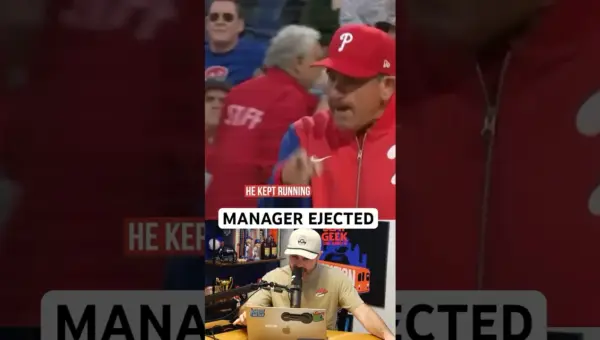
Phillies manager Rob Thomson was ejected after a controversial replay review overturned a third out in the first inning, leading to bases loaded and his furious protest. The incident highlighted a complex MLB rule regarding overturned outs.

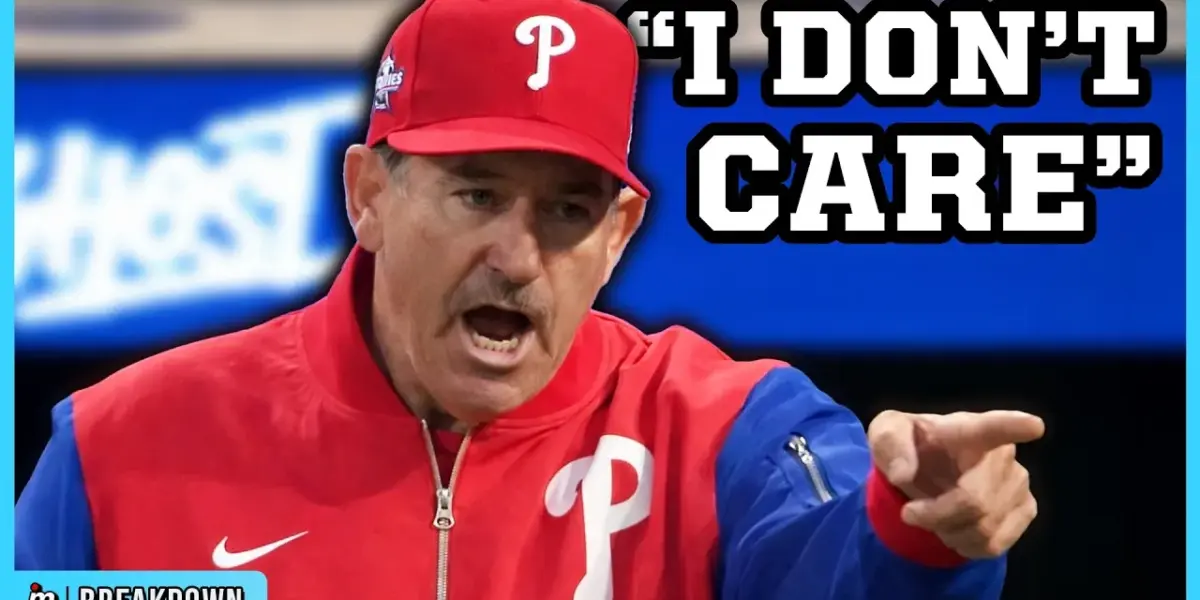
Phillies Manager Ejected After Replay Controversy
In a chaotic first inning that saw the Philadelphia Phillies fall behind 4-0, manager Rob Thomson found himself ejected after a replay review overturned a crucial out, leaving him furious with the ruling.
The Play Unfolds
The situation began with runners on base and the Nationals’ Joey Wemer at the plate. The Phillies appeared to be on the verge of escaping the inning when a ball was hit to first base. The fielder made the catch, gathered the ball, and tossed it to secure what seemed like the third out.
However, the Phillies, following the baseball adage to “play until it’s dead,” continued to play. This is a common practice known as the “phantom fourth out.” It’s a safeguard in case a potential third out is later overturned by replay. In this instance, a runner on second base rounded third, heading for home, while the play was being made at first. The umpire initially called the runner out at first.
Replay Review Sparks Outrage
Nationals manager Davey Martinez decided to challenge the call at first base. Joey Wemer, whose streak was on the line, seemingly encouraged the challenge. The replay review showed that the runner was, in fact, safe at first base. The call on the field was overturned.
This is where the confusion and anger set in. With the third out overturned, the runner who had already rounded third and was heading home was now in a precarious position. According to MLB rules, when a third out is overturned, any runner who had already advanced past the base they were advancing to returns to the base they legally touched before the play.
In this specific scenario, the runner who was initially called out at first was ruled safe. The runner from second, who had rounded third and was heading home, was sent back to third base. This resulted in bases loaded with two outs, a situation far worse for the Phillies than if the initial out had stood.
Thompson’s Fiery Reaction
Rob Thomson, anticipating this exact outcome and the rule’s application, emerged from the dugout seemingly fuming before the official announcement. He knew what was coming and was already upset about the impending situation.
“I know what these guys are going to do. I know exactly what they’re going to do. I’m going to sit here and I’m going to get mad about it before it even happens. I’m going to think about what I’m going to say because I know what you are about to do.”
Upon the announcement that the runner would return to third base, Thomson continued his argument with home plate umpire Marv Hudson. Even though the rule dictates runners return to their last legally touched base, Thomson was incensed. He kept running towards the umpires, clearly unwilling to accept the ruling.
His protests were intense, with audible frustration captured on the broadcast. He argued that the runner who scored on an errant throw later in the play should have counted, especially since the initial out was overturned. Thomson felt the play at the plate should have been a factor, and the runner’s decision to round third was based on the initial call.
Ultimately, Thomson’s persistent arguing led to his ejection from the game. He was visibly upset, questioning the replay officials and the logic behind the rule’s application in this specific instance.
Understanding the Rule
The rule in question is designed to prevent confusion and further controversy. When the third out of an inning is overturned, any runners on base revert to the last base they legally touched. The rationale is to avoid a scenario where a runner scores on a botched play after the umpire had already called the third out, potentially distracting fielders.
If the ball had been thrown home and missed, and the runner from second scored, the Nationals manager would likely argue that the runner scored legitimately. However, MLB’s rule prevents this. It states that if the phantom fourth out is involved and the third out is overturned, runners simply return to their last base. This ensures consistency, even if it leads to manager frustration and ejections.
The broadcast highlighted that this rule exists precisely because of situations like this, where a runner committed to advancing based on a call that was later reversed. While Thomson clearly disagreed, the rule aims to provide a clear, albeit sometimes unpopular, resolution.
Looking Ahead
The ejection of Rob Thomson leaves the Phillies shorthanded for the remainder of the game. The incident sets a tense tone for the series and highlights the critical impact of replay reviews and the complex rules governing them. The Phillies now face the challenge of overcoming the deficit and the loss of their manager, while the Nationals aim to capitalize on the bases-loaded situation.
Source: Rob Thomson doesn't care that replay overturned this call, a breakdown (YouTube)

Related Articles
Skenes OUT Early! Cruz’s Errors Spark Mets Rally
Top prospect Paul Skenes was forced out of the game in the first inning after costly errors by Oneil Cruz. Cruz's defensive misplays and a bizarre bat flip added to a frustrating day for the Pirates.
Manager Ejected After Replay Review Blunder
Phillies manager Rob Thomson was ejected in the first inning after a controversial replay review overturned an out at first base. The decision loaded the bases and sparked a fiery argument from Thomson.


UConn’s Miracle Comeback Stuns Duke, Fuels Title Hopes
UConn staged an epic 19-point comeback to stun Duke and reach the Final Four. Meanwhile, new Mets star Bo Bichette is facing early boos due to a slow start. The NBA playoff picture is also heating up with several teams vying for spots.