Artemis II Ignites ‘Team Human’ Spirit for Space Race
Singer Anne Wilson's performance before the Artemis II launch highlighted a growing 'Team Human' spirit. The mission embodies a shared aspiration for exploration, reminding us of our common humanity amidst global divisions. This collective endeavor offers a powerful vision for future international cooperation.


Artemis II Ignites ‘Team Human’ Spirit for Space Race
The recent Artemis II launch, a significant step in humanity’s return to the Moon, has sparked a powerful sense of unity, a feeling that we are all part of ‘Team Human.’ This sentiment was beautifully captured when Grammy-nominated singer Anne Wilson performed the national anthem just before the crew’s send-off. Her performance wasn’t just a musical moment; it was a personal fulfillment of a lifelong dream, connecting her childhood aspirations with the cutting edge of space exploration.
A Dream of the Stars
Wilson shared that growing up, she dreamed of becoming an astronaut and working for NASA. This aspiration shifted after a personal tragedy, but the allure of space never faded. Being at NASA, singing the anthem for the Artemis II crew, represented a full circle moment, bridging her past dreams with present reality. This personal connection highlights the deep human fascination with the cosmos.
Why Space Captivates Us
The appeal of space, Wilson explained, lies in its ability to offer perspective. It shows us the vastness of the universe and our own small place within it. This humbling view, experienced by only a few who travel beyond Earth, inspires wonder and a desire to explore. The idea of seeing Earth from space, a blue marble suspended in darkness, is a profound experience that shapes one’s understanding of our planet and humanity.
The ‘Team Human’ Perspective
Astronaut Nicole Mann echoed this sentiment, describing how the human instinct is always to look up and wonder what else is out there. She emphasized that missions like Artemis are not just for one country but are endeavors for all of humanity. This concept of ‘Team Human’ is particularly resonant today. In a world often divided by conflicts and disagreements, space exploration offers a rare opportunity for global cooperation and shared purpose. It reminds us that despite our differences on Earth, we are all inhabitants of the same planet, facing the future together.
Bridging Divides Through Exploration
The Artemis II mission, and the spirit it has fostered, comes at a time when international cooperation is crucial. While nations compete in space, there’s also a growing recognition that major challenges, like climate change and future space exploration, require collaboration. The shared goal of reaching the Moon and eventually Mars can serve as a unifying force, encouraging nations to work together on scientific and technological advancements.
The Future of Space Exploration
With private companies like SpaceX and Blue Origin also making strides, the future of space travel is becoming more accessible. This increased activity suggests that more people may have the chance to experience space firsthand in the coming years. As more individuals travel to space, the ‘Team Human’ perspective could become even more widespread, fostering a greater appreciation for our planet and our shared future.
Global Impact
The Artemis II mission and the unifying ‘Team Human’ message it carries have a significant global impact. In an era marked by geopolitical tensions and nationalistic narratives, the shared endeavor of space exploration offers a powerful counterpoint. It reminds us of our common humanity and the potential for collective achievement. This shared sense of purpose can inspire broader cooperation on Earth, encouraging dialogue and collaboration on global challenges. The success of such missions can foster goodwill and a sense of shared destiny, potentially easing tensions between nations.
Historical Context
The desire to explore space has a long history, dating back to the Cold War Space Race between the United States and the Soviet Union. While that era was marked by intense competition, it also led to incredible technological advancements. Today, space exploration involves a wider range of actors, including private companies and international partnerships. The Artemis program itself is a multinational effort, building on the legacy of Apollo while aiming for a more sustainable and inclusive presence in space.
Economic Considerations
Space exploration is a massive economic undertaking, requiring significant investment from governments and private sectors. The development of new technologies for space travel often has spin-off benefits for industries on Earth, creating jobs and driving innovation. International cooperation can also help share the costs and risks associated with these ambitious projects. Conversely, competition in space can also spur economic growth through technological development and the creation of new markets, such as space tourism.
Future Scenarios
One future scenario sees increased international collaboration, with nations pooling resources and expertise for ambitious projects like lunar bases or Mars missions, solidifying the ‘Team Human’ ethos. Another scenario involves intensified competition, with nations and private companies racing for dominance in space, potentially leading to new geopolitical rivalries. A third possibility is a mixed approach, where cooperation exists in some areas while competition continues in others, reflecting the complex nature of international relations.
Source: Anne Wilson says it was 'an honor' to perform ahead of Artemis II launch | NewsNation Live (YouTube)

Related Articles


Trump Fires AG Bondi, Iran Tensions Rise, Artemis II Heads to Moon
Attorney General Pam Bondi has been fired by President Trump, with Deputy AG Todd Blanche stepping in as acting AG. Amidst rising oil prices and escalating tensions, the U.S. warns Iran as the Artemis II mission successfully heads towards the Moon. Golfer Tiger Woods was arrested for DUI and is stepping away for treatment.

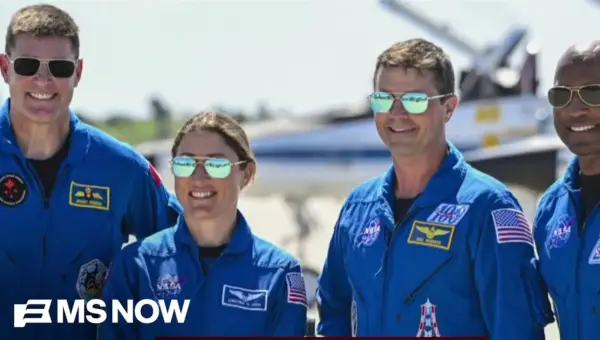
Astronauts Head to Moon Amidst Divided Nation
The Artemis II mission has launched, sending four astronauts towards the Moon in a journey that highlights both humanity's drive for exploration and the current divisions within society. While the launch captured global attention, it also sparked conversations about how fragmented media impacts shared national experiences.


Moon Missions Spark New Space Race: Fuel & Power
Renewed moon missions are fueling a new space race, driven by the potential for rocket fuel production and strategic control. However, concerns about space weaponization and the lack of clear property rights in this lawless frontier add a complex geopolitical layer to lunar ambitions.