SCOTUS Weighs Birthright Citizenship, Iran Seeks Truce
The Supreme Court is hearing arguments on birthright citizenship, a policy granting citizenship to those born in the U.S. Meanwhile, President Trump announced Iran has requested a ceasefire, with the U.S. conditioning its consideration on the reopening of the Strait of Hormuz.

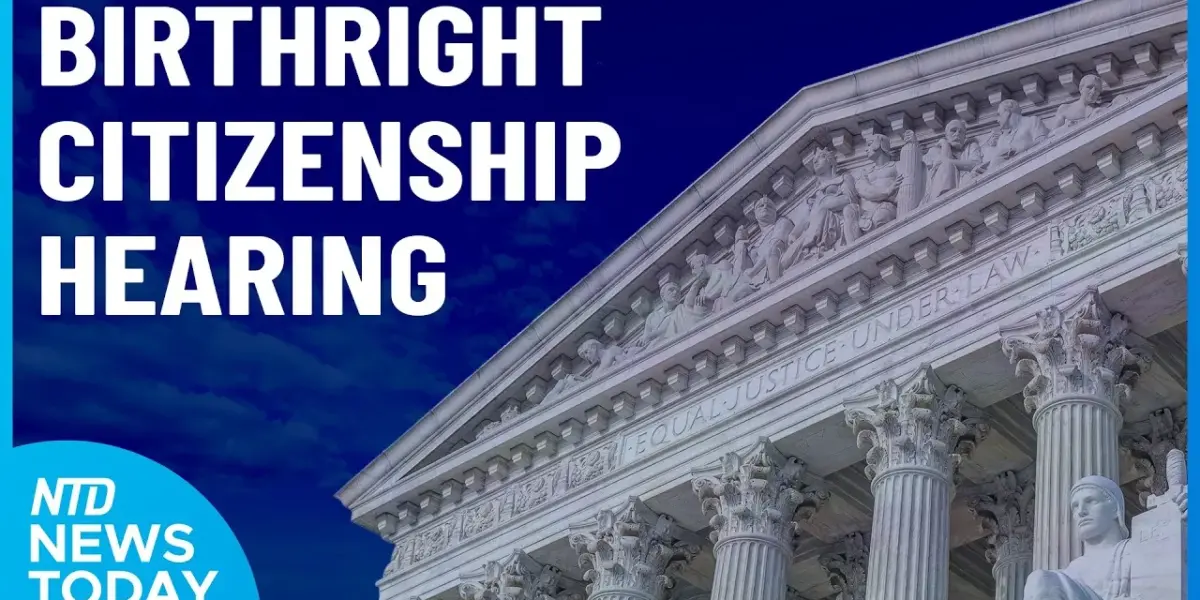
Supreme Court Takes On Birthright Citizenship Debate
The U.S. Supreme Court recently heard arguments about birthright citizenship. President Donald Trump attended the court session. This was a significant moment because it concerned a directive signed by Trump on his first day in office. The directive aimed to change how birthright citizenship is applied.
Understanding Birthright Citizenship
Birthright citizenship is the idea that anyone born in a country is automatically a citizen of that country. In the United States, this is generally based on the 14th Amendment to the Constitution. This amendment says that all persons born or naturalized in the U.S. and subject to its jurisdiction are citizens.
For a long time, this has meant that children born to parents who are not U.S. citizens, but are living in the U.S., are still granted citizenship. This is similar to how it works in many other countries around the world.
The Trump Administration’s Directive
The directive from the Trump administration sought to challenge this long-standing practice. It questioned whether children born in the U.S. to parents who are not legally present or are visiting the country should automatically receive citizenship. The administration argued that the 14th Amendment might not apply in all these cases.
This move sparked a major debate. Supporters of the directive argued it was necessary to enforce immigration laws. They believed it would discourage people from coming to the U.S. solely to have children who would then be citizens. Critics, however, warned that changing birthright citizenship could have far-reaching consequences. They pointed out that it could create a permanent underclass of people without citizenship.
Arguments Before the Court
The Supreme Court’s hearing was a critical step in this legal battle. The justices listened to arguments from both sides. They will now consider the historical context of the 14th Amendment and how it has been interpreted over time. The court’s decision will have a major impact on immigration policy and the definition of citizenship in the United States.
Iran’s Request for a Ceasefire
In other news, President Donald Trump announced that Iran has asked the United States for a ceasefire. Trump shared this information on his social media platform. He stated that the U.S. would consider the request, but only after the Strait of Hormuz is reopened.
The Strait of Hormuz is a very important waterway. It is a narrow passage between the Persian Gulf and the Gulf of Oman. Many oil tankers use this route to transport oil. Control of this strait is often a point of tension in the region.
Geopolitical Implications
Trump described the new Iranian president as more intelligent than his predecessors. He suggested that this new leadership was behind the request for a ceasefire. This development comes at a time of ongoing tensions between the U.S. and Iran.
The U.S. response, linking the ceasefire to the opening of the Strait of Hormuz, highlights the strategic importance of the region. It suggests that any de-escalation would be tied to Iran’s actions regarding international shipping lanes. President Trump was expected to address the nation later that evening to discuss the path forward regarding these issues.
Why This Matters
The Supreme Court’s consideration of birthright citizenship touches upon fundamental questions about who belongs in America. It impacts families, communities, and the very fabric of the nation. A change in this policy could affect millions and redefine what it means to be an American.
Simultaneously, the news from Iran signals a potential shift in international relations. The U.S. response shows the delicate balance of power and economic interests at play in the Middle East. These events, one domestic and one international, highlight the complex challenges facing the United States.
Future Outlook
The Supreme Court’s ruling on birthright citizenship will likely set a precedent for years to come. It could lead to further legal challenges or policy changes. On the international front, Iran’s request and the U.S. response will shape future diplomatic efforts and regional stability.
Source: SCOTUS Hears Birthright Citizenship Case; Trump: Iran Asked for Ceasefire | NTD News Today April 1 (YouTube)

Related Articles


Trump’s Iran Standoff: Allies Refuse U.S. Access
Several European allies have denied the U.S. access to their facilities and airspace amid rising tensions with Iran over the Strait of Hormuz. This refusal complicates President Trump's strategy and highlights a divergence in foreign policy. The situation raises questions about the effectiveness of the current U.S. approach and its impact on international relations.


Trump Fires Pam Bondi Over ‘Not Corrupt Enough’ Allegations
Pam Bondi has been fired as U.S. Attorney, reportedly due to President Trump's dissatisfaction with her inability to prosecute his perceived enemies. This move highlights concerns about political influence and personal vendettas within the Department of Justice. Analysts question the future of the DOJ's impartiality.

US Strikes Dismantle Iran’s Military; Allies Rally Support
The U.S. has launched over 12,000 precision strikes against Iran, dismantling its military infrastructure. While Iran bets on U.S. wavering, regional allies are rallying. These actions aim to re-establish American credibility and deter future adversaries.