Trump’s Iran Claims Spark Doubt Amidst Global Security Concerns
Donald Trump's claims of an Iran ceasefire request are met with skepticism due to conflicting statements and wide diplomatic gaps. Experts question the feasibility of a ceasefire and highlight the shifting US objectives regarding Iran's nuclear program and regional influence. The situation underscores global security concerns and the potential economic impact of the ongoing conflict.

Trump’s Iran Claims Spark Doubt Amidst Global Security Concerns
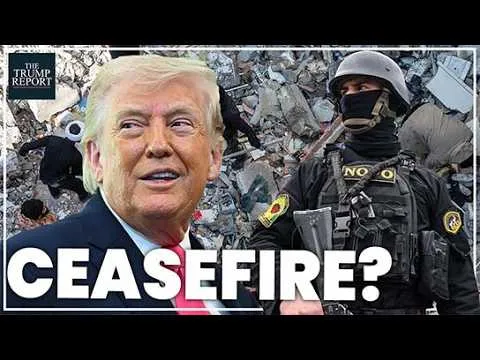
Recent statements from Donald Trump about Iran seeking a ceasefire have raised questions and skepticism, especially as the conflict in the region reaches a critical point. Trump claimed on his social media platform, Truth Social, that Iran’s president had requested a ceasefire. However, he added a condition: the Strait of Hormuz must be “open, free, and clear.” Until then, he vowed to “blast Iran into oblivion, or as they say, back to the stone ages.” This statement, made without naming the Iranian official, has been met with considerable doubt.
A Wide Gap in Demands
Dr. Ha Helia, a senior fellow at the Royal United Services Institute and the Center for American Progress, expressed strong reservations about the likelihood of a ceasefire. “I don’t think we should take this seriously at all,” she stated, highlighting the vast difference between what Tehran and Washington DC want. “The demands of Tehran and the demands of DC have virtually no overlap.” Currently, negotiations are not directly between the two nations, but rather mediators trying to arrange for direct talks to even begin. Dr. Helia believes this situation is unlikely to change soon.
The idea that Iran would allow the Strait of Hormuz to be freely open without gaining significant advantages is considered fanciful by experts. The ability to influence or control passage through this vital waterway is Iran’s strongest bargaining chip. Giving that up without substantial benefit seems highly improbable.
Shifting Goals and Nuclear Ambitions
Adding to the confusion, Trump has made conflicting statements about US goals regarding Iran. He recently stated that regime change was never a goal, and that the objective of preventing Iran from developing nuclear weapons had been achieved. However, Dr. Helia pointed out that Trump’s administration has presented different objectives at various times. “We saw stuff about regime change being very clearly indicated over the course of the last month,” she noted, also mentioning concerns about Iran’s nuclear and missile capabilities, and its regional influence through militias. She called the claim that regime change was never a goal “quite simply untrue,” stating that different messages were sent at different times.
Regarding Iran’s nuclear program, Dr. Helia believes it’s impossible to force Iran to abandon its ambitions. “It can only stop as the result of a political settlement and negotiation,” she explained. While military actions can degrade Iran’s ability to produce a nuclear weapon, completely eliminating that capacity would require extreme measures, like leveling the country. She also noted that there was no immediate threat of Iran possessing a nuclear weapon, and the idea that the current conflict began as a preemptive strike is widely rejected internationally.
Analyzing Military Options and Policy Processes
The discussion touched upon a Wall Street Journal report suggesting Trump considered a high-risk military operation inside Iran to remove enriched uranium. The question arose whether Trump’s recent comments meant this operation was no longer necessary. Dr. Helia advised against reading too much into the statement, suggesting it might have been intended to calm energy markets. She also criticized the current policy-making process in Washington D.C., describing it as highly centralized around a very small group of people, including the president. This contrasts with past administrations, where broader discussions within government institutions helped prevent dangerous, ad-hoc decisions.
If the US had attempted to seize enriched uranium, Dr. Helia predicted significant resistance within Iran. She believes Iran would anticipate such moves and aim to make any operation as difficult as possible for American forces. Escalation is already happening methodically, with Iran increasing its actions step-by-step. A potential next step involves escalating actions in the Red Sea through the Houthis, further impacting global energy prices.
The War’s End Game and Shifting Alliances
Trump has suggested the US involvement in the conflict could end within two to three weeks, while Iran claims it’s prepared to fight for at least six months. Dr. Helia offered a nuanced view on the US potentially withdrawing. “Yes and no,” she responded. While the US could withdraw anytime, she believes they could easily craft a narrative to claim their objectives were met, regardless of the actual situation on the ground. This is especially true given the shifting goals previously stated by the administration. Such a withdrawal would likely require US influence over Israel’s actions, as Israel heavily relies on American support.
However, Dr. Helia cautioned that Iran would likely not cease its actions simply because the US withdrew. Iran would see a US departure as an invitation for future attacks, similar to how a past ceasefire only preceded further conflict. The speaker also raised concerns about Trump’s serious consideration of withdrawing the US from NATO, a move that would significantly benefit Russia. While some US politicians, like Marco Rubio, have questioned the value of NATO membership due to financial contributions and access to bases, Dr. Helia views these discussions as posturing. She believes NATO members were hesitant to automatically support the US in a war of choice, which many in the international community consider illegal. NATO’s role is generally limited to defensive operations, not offensive ones, even against adversaries they oppose.
Global Leaders Address Security Concerns
The fact that Trump, along with leaders from the UK and Australia, scheduled national addresses on the same day was noted. While not reading too much into the timing, Dr. Helia emphasized the significance of all three leaders feeling the need to address their populations. This indicates the global nature of the conflict and its potential impact on energy prices and economies worldwide. She expressed concern that the US seemed surprised by the predictable escalation, such as the potential closure of the Strait of Hormuz, which she described as a natural consequence in the conflict’s progression.
Why This Matters
The statements and counter-statements surrounding the Iran conflict highlight the precarious nature of international relations and the potential for miscalculation. The shifting objectives and rhetoric from key players create uncertainty, making it difficult to ascertain the true goals and potential outcomes of the conflict. This instability has real-world consequences, particularly on global energy markets and overall security. Understanding the different perspectives, the historical context of US-Iran relations, and the strategic importance of regions like the Strait of Hormuz is crucial for assessing the situation accurately. The lack of clear policy processes and the reliance on ad-hoc decision-making further complicate matters, increasing the risk of unintended escalation.
Implications and Future Outlook
The conflict’s duration and intensity remain uncertain. Iran’s ability to sustain a prolonged fight and its willingness to escalate through proxies like the Houthis pose significant challenges. The US, while capable of withdrawing, faces the dilemma of managing regional stability and its alliances. The potential withdrawal from NATO also signals a broader shift in US foreign policy, with implications for global security architecture. The interconnectedness of global energy markets means that regional conflicts can have far-reaching economic effects. The international community’s role in mediating and enforcing international law will be critical in navigating this complex geopolitical landscape. The future outlook suggests continued volatility, with the potential for both de-escalation through negotiation and further escalation depending on the decisions made by key global actors.
Historical Context and Background
The current tensions are rooted in decades of complex US-Iran relations, including the 1979 Iranian Revolution, the Iran nuclear deal (JCPOA), and the subsequent US withdrawal from the deal under the Trump administration. Iran’s strategic position, its nuclear program, and its regional influence through various groups have been constant sources of concern for the US and its allies, particularly Israel. The Strait of Hormuz, a narrow waterway through which a significant portion of the world’s oil passes, has historically been a focal point of tensions, with Iran often using it as leverage. Understanding these historical dynamics provides essential context for interpreting current events and the motivations of the involved parties.
Source: Trump claims Iran wants a ceasefire — as war hits critical point (YouTube)

Related Articles

Trump Ousts AG Bondi, Eyes Zeldin as Successor
Pam Bondi is out as Attorney General after one year, with Deputy AG Todd Blanche serving as Acting AG. President Trump confirmed the departure, praising Bondi and hinting at a new private sector role. Lee Zeldin is reportedly being considered as Bondi's permanent replacement, amid ongoing speculation about other cabinet changes.

US Policy Shift Stuns Allies, Weakens Global Security
US policy shifts regarding Ukraine, the Strait of Hormuz, and NATO are raising concerns among allies and creating global instability. Critics point to a lack of strategic planning and diplomatic consultation, potentially emboldening adversaries and undermining international security.
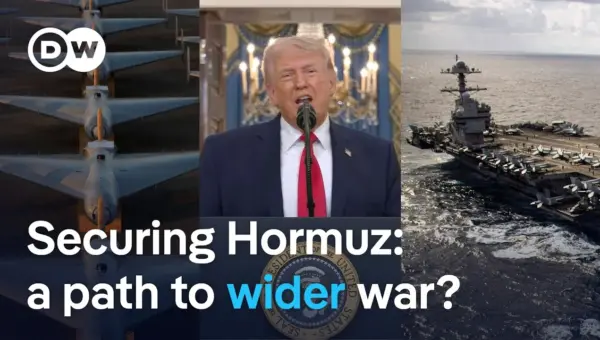
Strait of Hormuz Tensions Risk Wider Middle East War
Efforts to secure the vital Strait of Hormuz risk triggering a wider Middle East war, according to UN warnings and security analysts. The narrow waterway is crucial for global trade, and forcing it open against Iran's objections could escalate regional tensions dramatically. Experts highlight the complex geography, Iran's remaining military capabilities, and the involvement of regional players as key factors in the volatile situation.