ACLU Lawyer Battles Trump on Birthright Citizenship
An ACLU lawyer argued against the Trump administration's attempt to limit birthright citizenship. The defense centered on the 14th Amendment's "closed set of exceptions" and the concept of local allegiance. The case questions the long-standing understanding of who is a U.S. citizen by birth.

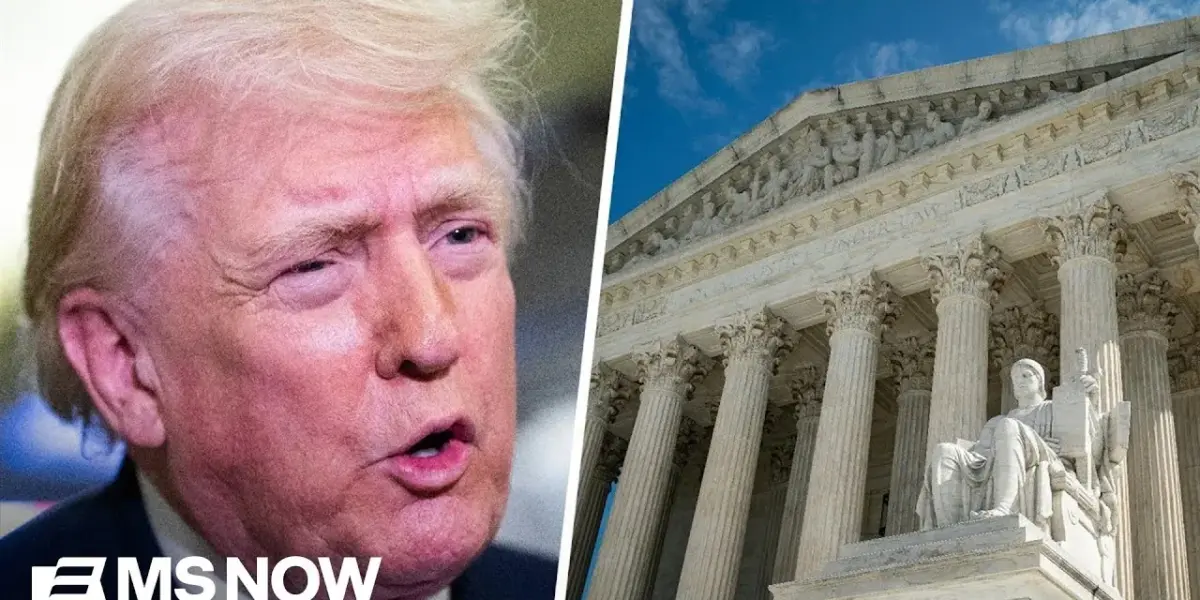
ACLU Lawyer Argues Against Limiting Birthright Citizenship
A legal battle is underway regarding the interpretation of the 14th Amendment and its impact on birthright citizenship. An ACLU lawyer recently presented arguments against the Trump administration’s efforts to limit this fundamental right. The core of the debate centers on whether the exceptions to birthright citizenship, as understood for over a century, can be expanded or altered.
Understanding the 14th Amendment and Birthright Citizenship
The 14th Amendment states that all persons born or naturalized in the United States and subject to its jurisdiction are citizens. For years, this has been understood to grant citizenship to nearly everyone born on U.S. soil, regardless of their parents’ immigration status. This principle is known as birthright citizenship.
The government, however, has sought to interpret this clause more narrowly. Their argument suggests that children of non-citizens, particularly those unlawfully present in the country, might not automatically be granted citizenship. This interpretation would challenge the long-standing understanding of the amendment.
The “Closed Set of Exceptions” Argument
The ACLU lawyer emphasized that the 14th Amendment’s citizenship clause establishes a universal rule with a “closed set of exceptions.” This means that the exceptions understood at the time of the amendment’s ratification are fixed and cannot be easily added to. The lawyer pointed to historical debates and Supreme Court rulings, like Wong Kim Ark, to support this view.
“The framers were not trying to introduce any new exceptions,” the lawyer argued. “To the contrary, they were trying to foreclose any caste-creating exceptions.” The aim, according to this argument, was to prevent future attempts to divide or exclude citizens based on arbitrary categories. The citizenship clause was intended to create a solid foundation for citizenship, not a flexible one that could be easily changed.
Analogy and Modern Circumstances
Questions arose during the proceedings about whether new exceptions could be created by analogy to existing ones, especially considering modern circumstances. Justices explored hypotheticals, such as how to treat individuals in unique jurisdictional situations.
However, the ACLU lawyer maintained that the government’s position wasn’t about applying existing exceptions in new ways. Instead, it was seen as a direct challenge to the rule itself. The lawyer stressed that the historical context and the explicit language of the amendment support a fixed set of exceptions. This includes situations like those involving ambassadors or individuals within occupied territories, which were understood at the time.
The Role of Congress and Separation of Powers
The discussion also touched upon Congress’s authority. While Congress has the power to grant citizenship through naturalization, it cannot diminish the citizenship rights established by the 14th Amendment. The lawyer argued that even a unanimous vote in Congress could not create new exceptions to birthright citizenship, as this power is constitutionally foreclosed.
The argument is that Congress can expand citizenship beyond the 14th Amendment’s floor, but it cannot chip away at that floor. This separation of powers point is crucial, as it limits the executive and legislative branches from unilaterally altering constitutional rights.
Jurisdiction and Allegiance
A key point of contention is the phrase “subject to its jurisdiction.” The government has suggested that this implies a need for full allegiance, which they argue temporary visitors or undocumented immigrants cannot provide to the U.S. while owing allegiance to another country.
The ACLU lawyer countered this by explaining the concept of “local allegiance.” This refers to the obligation to obey the laws of a sovereign while physically present within its territory. Even temporary visitors owe this local allegiance. The lawyer used an analogy of a U.S. citizen visiting Japan: while in Japan, they are subject to Japanese law and owe a form of allegiance to that country’s legal system.
This understanding of allegiance suggests that individuals present in the U.S., regardless of their immigration status, are subject to U.S. jurisdiction in a way that satisfies the 14th Amendment’s requirements. It means they can be controlled by U.S. law and can also seek protection under it.
Looking Ahead
The court’s decision on this matter will have significant implications for the definition of U.S. citizenship. The arguments presented highlight the deep legal and historical questions surrounding birthright citizenship. The outcome will clarify whether the 14th Amendment’s guarantee of citizenship remains a steadfast principle or if its interpretation can be narrowed based on evolving policies and perspectives.
Source: ACLU Lawyer makes argument against Trump's effort to limit birthright citizenship (YouTube)

Related Articles


Trump Replaces Pam Bondi, Taps Todd Blanch as Acting AG
Pam Bondi has stepped down as Attorney General, with Todd Blanch named as the acting replacement. The departure is linked to the Epstein case and political pressures. Bondi is still expected to testify before a House committee.

GOP Lawmaker Demands ‘Aggressive’ AG Replacement
GOP lawmakers are divided over border security funding as one representative calls for a more "aggressive" Attorney General. The debate over funding and the upcoming replacement for AG Pam Bondi highlight internal party struggles. Meanwhile, concerns about birthright citizenship and FEMA's low disaster fund add to the political landscape.

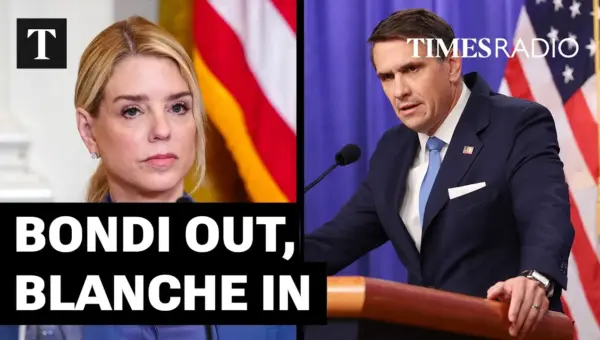
Trump Replaces Attorney General Bondi Amid Epstein Files Controversy
President Trump has replaced Attorney General Pam Bondi, with her personal lawyer Todd Blanche stepping in. The move comes amid public concerns over the handling of the Jeffrey Epstein files and Bondi's own adversarial public testimony. This follows other recent departures, including Homeland Security Secretary Christy Gnome and Army Chief of Staff General Randy George.