2026: Moon Missions, New Hubble Successor Launch
In 2026, NASA's Artemis II mission will send astronauts to orbit the Moon, marking a return to lunar exploration. The Nancy Grace Roman Space Telescope, Hubble's successor, is set to launch in October. Additionally, the BepiColombo mission will reach Mercury, and Voyager 1 will achieve a light-day distance from Earth.


2026: A Year of Cosmic Milestones and Lunar Return
Get ready for an incredible year in space exploration! The year 2026 is shaping up to be packed with landmark events, from astronauts returning to lunar orbit to the launch of a powerful new space telescope and a historic probe reaching a distant milestone. These upcoming missions promise to expand our understanding of the solar system and our place within it.
Artemis II: Humans Orbit the Moon Again
The year kicks off with a bang in April 2026. NASA’s Artemis II mission is slated to launch, carrying a crew of astronauts on a journey around the Moon. This mission is a crucial step in NASA’s plan to eventually land humans back on the lunar surface. It follows the successful uncrewed Artemis I mission, which tested the Orion spacecraft and the powerful Space Launch System rocket. Artemis II will mark the first time humans have traveled to the Moon since the Apollo program ended in 1972. The insights gained from this lunar flyby will pave the way for future landings, including the Artemis IV mission planned for a few years later.
Nancy Grace Roman Telescope: Hubble’s Successor Arrives
October 2026 holds another major event: the launch of the Nancy Grace Roman Space Telescope. This observatory is NASA’s next great eye in the sky, designed to answer some of the biggest questions in astronomy. It’s often called the successor to the Hubble Space Telescope, which has amazed us with stunning images and groundbreaking discoveries for over three decades. The Roman telescope is named after Nancy Grace Roman, a pioneering astronomer who was known as the “mother of Hubble.” She led NASA’s astronomy program in the 1960s and 70s and was instrumental in the early planning stages for Hubble. The Roman telescope will have a much wider field of view than Hubble, allowing it to survey vast areas of the sky much faster. Scientists expect it to shed light on dark energy, dark matter, and the formation of planets and stars.
BepiColombo Reaches Mercury
As the year winds down, November 2026 will see the BepiColombo mission spacecraft finally arrive at Mercury. This is a joint mission between the European Space Agency (ESA) and the Japan Aerospace Exploration Agency (JAXA). It will be only the third spacecraft ever to visit the innermost planet of our solar system. Mercury is a challenging world to study, being so close to the Sun. BepiColombo will orbit Mercury to investigate its evolution, its unusual magnetic field, and the possibility of water ice hidden in permanently shadowed craters near the poles. Scientists believe that even though Mercury is extremely hot on its sunlit side, temperatures can drop dramatically in these deep craters, potentially allowing ice to survive. Studying Mercury helps us understand how rocky planets form and evolve in different environments.
Voyager 1 Reaches a Light-Day Distance
Also in November 2026, a venerable explorer, Voyager 1, will achieve a remarkable distance milestone. The spacecraft will officially be one light-day away from Earth. This means any signal sent from Voyager 1 will take a full 24 hours to reach us. Launched in 1977, Voyager 1 and its twin, Voyager 2, were designed to explore the outer planets. They provided humanity’s first close-up views of Jupiter, Saturn, Uranus, and Neptune, sending back incredible data and images. Now, Voyager 1 is the most distant human-made object, continuing its journey into interstellar space. Its ongoing mission is to study the environment beyond our solar system, offering us a glimpse into the vastness of the cosmos. The Voyager probes have far outlasted their original mission timelines, becoming true ambassadors of humanity among the stars.
Looking Ahead
These 2026 events highlight humanity’s persistent drive to explore. From returning humans to lunar orbit to peering into the distant universe and venturing into interstellar space, the coming year promises to be one of profound scientific discovery. Each mission builds upon the knowledge gained from those that came before, pushing the boundaries of what we know and inspiring future generations of scientists and explorers.
Source: Big space events coming up in 2026 #shorts (YouTube)

Related Articles

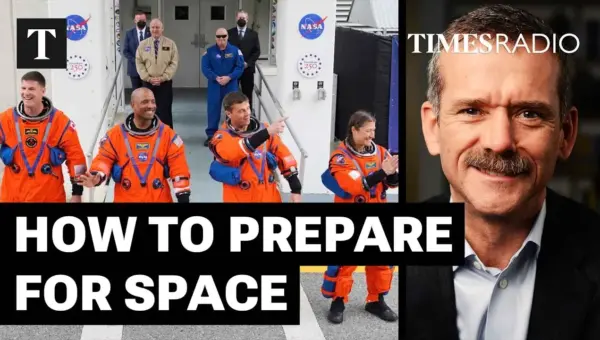
Astronaut Chris Hadfield on Artemis Prep & Space’s Human Heart
Former astronaut Chris Hadfield emphasizes that space exploration's greatest challenge is mental, not physical. He discusses the intense preparation required for missions like Artemis and reflects on the deeply human emotions involved in spaceflight, comparing it to our innate drive to explore.


Humans Return to Moon Orbit After 52 Years
Humans are heading back to the moon for the first time in over 50 years with the Artemis II mission. The four-astronaut crew will orbit the moon, marking a historic return to deep space exploration. Meanwhile, political developments include President Trump's warnings of further strikes against Iran and a leadership change at the Justice Department.

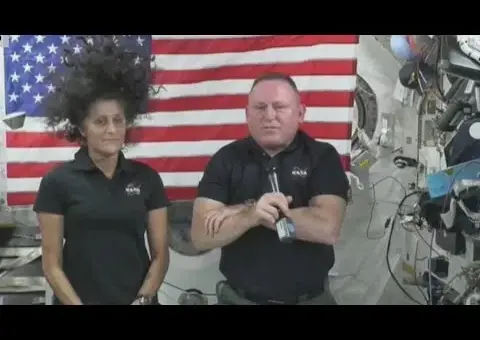
Artemis II Fuels New Space Race Era
NASA's Artemis II mission, sending astronauts beyond the Moon for the first time in 50 years, signals a new era of space exploration. Astronaut Butch Wilmore's insights from past challenges and the mission's pristine progress highlight renewed ambition amidst global space competition. This journey is poised to reshape international relations and technological leadership.