German Workers Face Rising Violence on the Job
Germany is grappling with a disturbing rise in violence against public service workers, including train conductors and city hall employees. Factors like societal dissatisfaction, economic pressures, and perceived government failures are contributing to increased aggression and attacks. Experts and workers are calling for a multi-faceted approach involving stricter enforcement, prevention, and a societal shift towards greater respect and support for frontline staff.

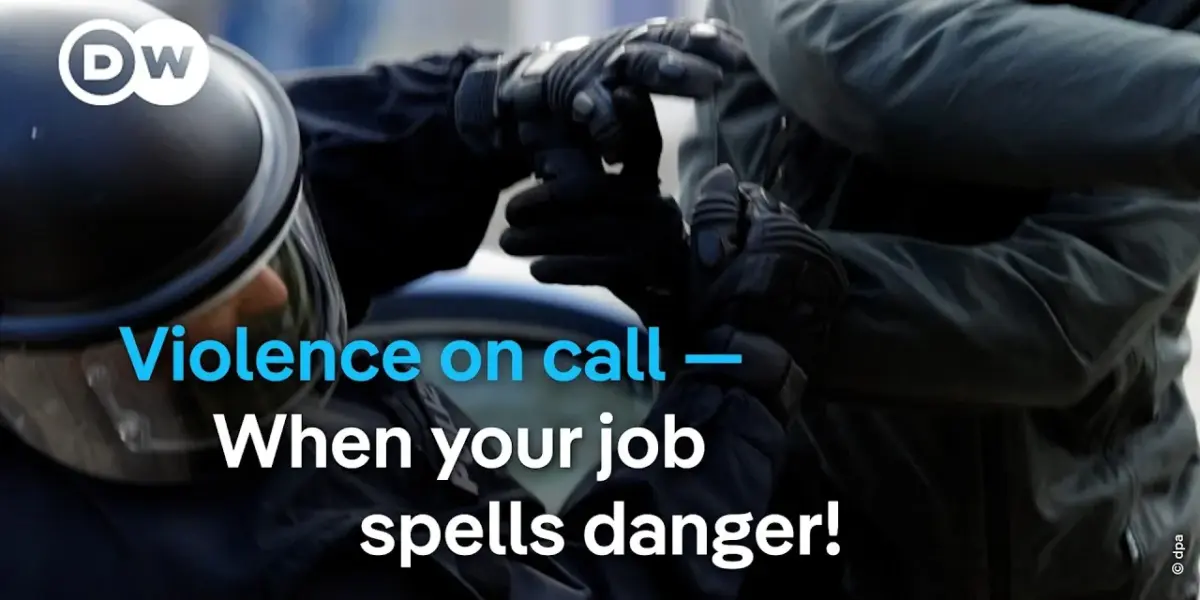
German Public Service Workers Under Attack Amid Societal Brutality
Germany, a nation often seen as safe, is facing a disturbing trend: an increase in violence against its public service workers. From train conductors to city hall employees, those on the front lines are increasingly becoming targets of aggression, sparking concern about the state of society. This rise in attacks highlights a growing problem that affects many who serve the public.
A Conductor’s Story: Facing Fear on the Job
Jük Norris, a train conductor with four years of experience, shared his harrowing encounter. What started as a routine ticket check turned violent when a fare dodger attacked him. The incident left Norris with torn shoulder tendons, requiring ten months to recover and resulting in a permanent disability. “If I hadn’t grabbed the handrail, I would have fallen head first down the stairs,” Norris recounted, describing the moment he was attacked. The attack has left him with lasting fear, especially during night shifts on the same railway line where the incident occurred.
Norris’s experience is not isolated. Statistics from National Express reveal a significant surge in attacks on rail staff. Verbal assaults have quadrupled, and physical attacks have nearly doubled since 2020. The company estimates the actual numbers could be much higher, as many incidents go unreported. This violence takes a toll, with a survey by Deutsche Bahn showing one in three employees considering leaving their jobs due to safety concerns.
Frustration Boils Over: The Causes of Aggression
Sociologists point to a complex mix of factors fueling this aggression. Dr. Yorusik, a sociologist at the University of Vupatal, explains that widespread dissatisfaction and anger toward the government play a significant role. “There’s a lot of dissatisfaction and anger toward the government,” she stated. This discontent can be amplified by issues within public services themselves, such as train delays and a general decline in reputation.
The confined spaces on public transport also contribute to tension. Passengers, often in a hurry, can become frustrated and direct their anger at staff. Norris described how passengers, focused on their own needs, often lash out. “They don’t care. They just want to get where they are going,” he said, illustrating the disconnect. This frustration is often misdirected, with frontline workers becoming the scapegoats for broader societal issues.
City Halls Tighten Security Amidst Escalating Threats
The problem extends beyond public transport. City hall employees are also facing increased threats and aggression. In Roselim, city officials were forced to restrict public access to the building for security reasons. “We used to have two other entrances to the building that were always open, but we didn’t always know who was inside the building,” explained one official. The rise in aggressive behavior led to the implementation of a stricter entry system.
Incidents at city halls have included verbal abuse, death threats, and even vandalism, with buildings being smeared with oil and sprayed with waste. Nearly half of all public sector employees report experiencing verbal abuse or physical assault at work. Mayors are implementing security measures like checks and panic buttons, but many feel the situation is worsening. “I actually think things are getting worse again. The uncertainty across the world is growing,” one mayor commented.
Societal Pressures: Crises Fueling Public Anger
Experts believe several major crises have contributed to the heightened public anger directed at government officials and public servants. The “refugee crisis” is cited, with some believing the state failed to protect its citizens and lost control. The COVID-19 pandemic also had a profound impact, shaking people’s trust in the state’s ability to protect them.
Adding to this is the ongoing economic crisis, marked by rising inflation, gas prices, and housing costs. Many feel the state is not fulfilling its promise of material and social security. This widespread discontent is heavily impacting the police, with official figures showing a more than 38% rise in violence against officers over the last decade. “Anyone who attacks a paramedic, firefighter or train conductor should be punished no matter what the circumstances are,” stated Ingo Masman, emphasizing the need for accountability.
Seeking Solutions: Prevention, Punishment, and Public Support
Authorities and unions are exploring various solutions to combat this violence. Harsher sentences are being considered, but the focus is also on prevention. The German firefighters’ union offers training sessions to help staff react to threats and attacks, including practicing escape strategies. Emergency service workers are now equipped with body cameras for their safety.
While some advocate for tougher penalties, others believe existing laws are sufficient but need faster application. There’s also a call for more support systems for vulnerable populations, such as the homeless and those with mental health issues, who are often involved in incidents. “It’s not just the staff themselves that should be called on. Society as a whole needs to step up,” urged sociologist Dr. Yorusik, advocating for greater public courage and intervention.
A Call for State Action and Societal Change
Ultimately, many believe that restoring public trust and reducing violence requires a broader societal shift and a more responsive state. Rail operators are implementing security measures, but the government’s role is seen as crucial. “When the state starts working again… when the trains run on time, when the garbage collection arrives on time… then this could help the state regain respect and trust,” suggested one expert.
The current climate of fear and aggression towards frontline workers cannot continue. Addressing the root causes of public anger, strengthening support systems, and fostering a sense of collective responsibility are vital steps. Without these changes, the safety and well-being of those who serve the public will remain at risk, and the fabric of a safe society will continue to fray.
Source: Violence on Duty: Attacks on people working in Germany’s public spaces DW News (YouTube)

Related Articles


German Grocery Stores Shock Americans: Are We Living in the Past?
An American's visit to a German grocery store reveals surprising innovations like automated pineapple cutters, ripeness scanners, and non-refrigerated milk, leading to questions about U.S. grocery store efficiency and technological adoption.


Germany Debates Syrian Refugee Returns Amidst Conflicting Statements
German Interior Minister Horst Seehofer's comments about Syrian President Bashar al-Sharaa wishing for 80% of Syrian refugees in Germany to return home have sparked controversy. The Chancellor's office later clarified that the 80% figure was a hypothetical scenario from a report, not a direct demand from al-Sharaa.


Germany Reverses Refugee Policy, Shifting Political Landscape
Germany is reversing its decade-old open-door refugee policy, aiming to send hundreds of thousands of Syrian refugees home. This decision by the ruling Christian Democrats aims to recapture anti-immigrant votes and reshape the country's fractured political landscape.