US Reclaims Lunar Frontier, Eyes Mars Mission
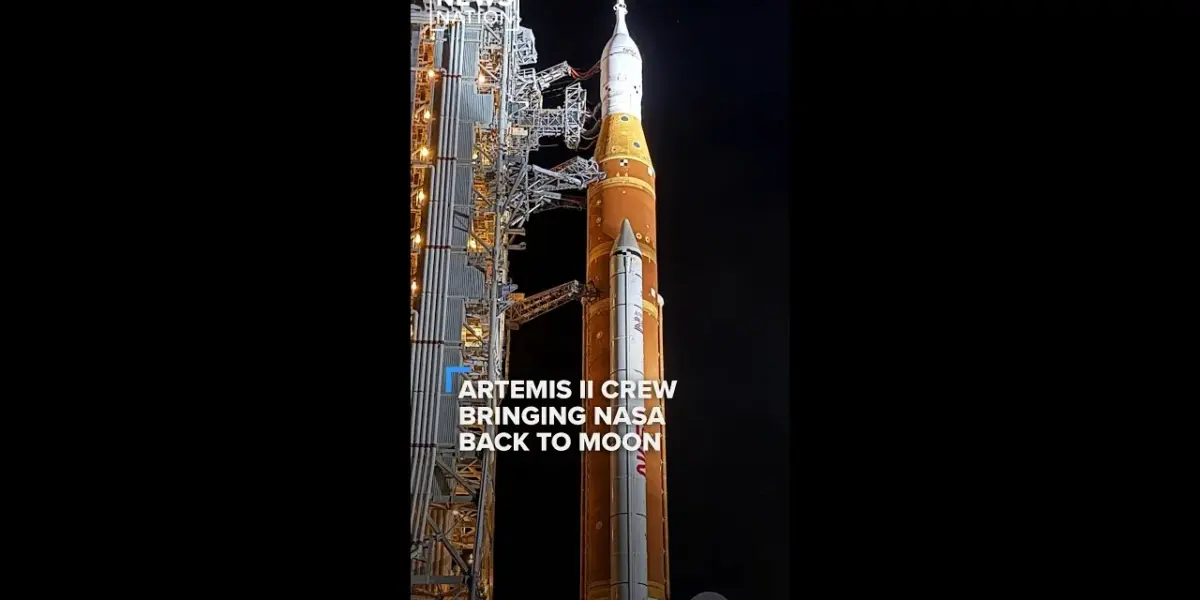
NASA's Artemis II mission is set to send astronauts around the Moon, marking humanity's return to deep space for the first time since 1972. This mission is a crucial step toward establishing a lunar base and eventually reaching Mars.

US Reclaims Lunar Frontier, Eyes Mars Mission
America is once again aiming for the Moon. NASA’s Artemis II mission is set to send humans on a journey around the Moon for the first time since 1972. This mission is not just a flyby; it’s a critical step in a much larger plan. The goal is to establish a permanent base on the Moon and then use it as a stepping stone for human travel to Mars.
Artemis II: A Giant Leap Back to the Moon
The Artemis II mission will carry a crew of four astronauts: Reed Wiseman, Victor Glover, Christina Koch, and Canada’s Jeremy Hansen. They will travel further into space than any human has before, reaching about 250,000 miles from Earth. The journey is expected to last for 10 days. The crew will use the Moon’s gravity to swing back home. This trip is the first time humans will be aboard the Orion Space Capsule and the powerful Space Launch System rocket. These are key pieces of technology for NASA’s future space exploration goals.
The Bigger Picture: Moon Base to Mars
The Artemis program has a long-term vision. NASA wants to build a lasting research station on the Moon. This base would allow for continuous scientific study and testing of new technologies. It would also serve as a launchpad for missions to Mars. Traveling to Mars is a major challenge. It takes about six to nine months to reach the Red Planet. Having a lunar base could make the journey to Mars more manageable and safer. It could provide a place to refuel, rest, and prepare for the long voyage. Scientists are particularly interested in Mars because it might hold clues about life beyond Earth.
Historical Context: A Return to Lunar Ambition
The last time humans walked on the Moon was during the Apollo 17 mission in 1972. For decades after, human space exploration focused more on low-Earth orbit, like the International Space Station. The Artemis program marks a significant return to deep space exploration. It revives the ambition of reaching celestial bodies beyond our immediate orbit. This renewed focus on lunar missions is also happening in a competitive international space environment. Other nations are also developing their own lunar programs, signaling a new era of space exploration driven by national interests and scientific curiosity.
Global Impact: A New Space Race?
While the Artemis II mission is primarily a NASA endeavor, it has global implications. International cooperation is a key part of the Artemis Accords, which outline principles for space exploration. Canada’s participation in Artemis II is a prime example of this collaboration. However, the renewed focus on the Moon also occurs as countries like China are also pursuing ambitious lunar goals. This could lead to increased competition in space, similar to the original Space Race. The development of new space technologies and infrastructure could also spur economic growth and create new industries. Control over potential lunar resources and strategic locations could also become future points of interest.
Future Scenarios: Pathways to Mars
The success of Artemis II is crucial for the future of space exploration. If the mission goes well, it will pave the way for Artemis III, which aims to land astronauts on the Moon. Following that, the focus will shift to building the lunar base and preparing for Mars. One scenario is steady progress, with each Artemis mission building upon the last, leading to a Mars landing in the 2030s. Another possibility is that funding challenges or technical setbacks could slow down the timeline. International relations could also play a role. Greater cooperation could accelerate progress, while increased competition might lead to duplication of efforts or even friction. The ultimate goal of finding life on Mars remains a powerful motivator for these endeavors.
Source: Artemis II crew headed back to the moon | NewsNation (YouTube)

Related Articles


Artemis II Blasts Off: Humans Return to Lunar Orbit After 50 Years
Humans have returned to lunar orbit for the first time in over 50 years as NASA's Artemis II mission successfully executed its Trans Lunar Injection burn. The four-person crew is now en route to the Moon, marking a significant milestone in space exploration. This mission serves as a critical test flight, pushing spacecraft systems and gathering vital data for future lunar landings.


Artemis II Crew Heads to Moon After Flawless Burn
NASA's Artemis II mission has successfully propelled its four-person crew toward the Moon following a flawless translunar injection burn. The Orion spacecraft is now on its planned trajectory, marking a significant step in humanity's return to lunar exploration. This test flight continues to gather crucial data on the spacecraft's performance in deep space.

Artemis II Astronauts Begin Moon Journey, Face Water Glitch
The Artemis II astronauts have begun their historic journey to the Moon aboard the Orion spacecraft. The crew successfully executed a critical engine burn to leave Earth's orbit, traveling at 24,000 mph. A minor issue with the spacecraft's water system prompted precautionary measures, but NASA believes it is resolved.