Trump Seeks to End Birthright Citizenship
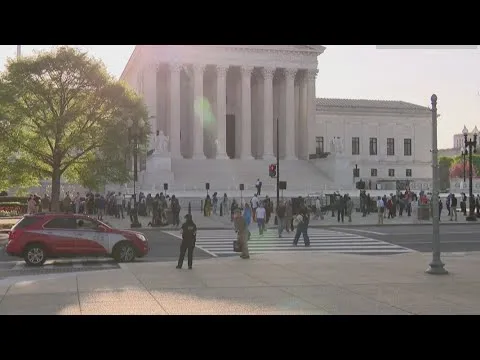
President Trump is attending a Supreme Court hearing on his executive order to end birthright citizenship. This move highlights immigration as a key part of his agenda. The case challenges the 14th Amendment's citizenship clause, sparking debate about its interpretation and potential global impact.

Trump Challenges Birthright Citizenship at Supreme Court
President Trump is making a bold move to change a long-standing rule about who becomes an American citizen. He plans to attend the Supreme Court hearing for a case challenging his executive order. This order aims to end birthright citizenship, a right granted to nearly everyone born in the United States. This is a significant moment, as it’s rare for a sitting president to personally attend arguments for a case involving his own policy.
Immigration: A Key Promise for Trump
Immigration has always been a central part of Trump’s political platform. He has made many decisions regarding immigration policies, including those related to ICE. Ending birthright citizenship was a promise he made during his campaign. He sees this executive order as a way to follow through on that promise. Some might view his attendance at the Supreme Court as a show of strength. However, others question why he is focusing on this issue now, especially during times of international conflict and when people are looking for answers on other pressing matters.
Justices to Rule Based on Law, Not Presence
While Trump’s presence at the hearing is unusual, legal experts believe it won’t directly influence the Supreme Court justices. The justices are expected to focus on the Constitution, specifically the 14th Amendment, and how it applies to the case. The key debate centers on the phrase “subject to the jurisdiction thereof.” This phrase raises questions about whether it applies to people living in the U.S. without legal status. Many observers believe the Trump administration faces an uphill battle in convincing the court to change the current interpretation.
Party Divisions and Shifting Focus
Trump’s renewed focus on immigration comes at a time when his party faces internal disagreements. There have been different opinions among conservatives regarding the country’s involvement in foreign conflicts, particularly in Iran. Some polls suggest that most Americans do not want more troops sent to the Middle East. This situation, combined with rising gas prices and other economic concerns, has left many people confused about the direction of the “America First” policy.
Birthright Citizenship: Complexities and Costs
Ending birthright citizenship raises many practical questions. For example, what would be the process for verifying citizenship for everyone born in the U.S.? Would new birth certificates be needed for all citizens? Would parents need to prove their own documentation at the time of birth? These are complex issues with potential costs and administrative challenges. The Supreme Court will have to consider these practicalities along with the legal arguments.
Global Impact: Rethinking Citizenship
This case could have far-reaching consequences, not just for the United States but for other countries as well. Birthright citizenship, or *jus soli*, is a principle followed by many nations. If the U.S. were to change this policy, it could set a precedent and influence discussions about citizenship in other parts of the world. The outcome could redefine what it means to be an American citizen and how national identity is established for future generations.
Historical Context: The 14th Amendment
The 14th Amendment, ratified after the Civil War in 1868, was designed to grant citizenship to formerly enslaved people. Its citizenship clause states: “All persons born or naturalized in the United States, and to which the jurisdiction thereof, are citizens of the United States and of the State wherein they reside.” For over 150 years, this has been understood to include children born to parents who are not U.S. citizens, as long as they are physically present in the U.S. The current legal challenge seeks to re-interpret this clause, arguing it was not intended to apply to children of undocumented immigrants.
Economic Considerations
While the transcript doesn’t detail specific economic figures, the discussion touches on economic factors influencing public opinion. High gas prices and rising costs for everyday goods can affect how people view the government’s priorities. The potential costs associated with implementing a new system for verifying citizenship could also be a significant economic factor that the court might consider, or that the public will weigh when forming opinions.
Future Scenarios
Several outcomes are possible. The Supreme Court could uphold the current interpretation of the 14th Amendment, leaving birthright citizenship intact. Alternatively, they could agree with the Trump administration’s interpretation, potentially allowing for an executive order to end birthright citizenship for children of undocumented immigrants. A third possibility is a narrower ruling that addresses specific circumstances without broadly overturning the principle of birthright citizenship. The timing of a decision is expected to be later in the summer, not immediately following the arguments.
Source: Why is Trump attending Supreme Court arguments over birthright citizenship? | Morning in America (YouTube)

Related Articles

Trump’s Impossible Demands Reshape Justice Department
President Trump's demand for loyalty and action outside legal norms has reshaped the Justice Department. Recent departures, like Pam Bondi's, highlight the difficulty of fulfilling the President's "impossible tasks." The search for a new Attorney General continues amidst concerns about the DOJ's independence.


Trump’s Leadership: A Moral Vacuum for Young Learners?
Young people seek moral guidance from leaders, but what lessons does Donald Trump offer? Some argue his approach teaches negative behaviors like bullying and isolation, contrasting with traits like patience and gratitude seen in others. This raises questions about leadership character and its impact on societal values.

Trump’s Transparency: A Press Secretary’s Bold Claim
President Trump's press secretary, Sarah Huckabee Sanders, claims his public persona is identical to his private one. She states his directness eliminates guesswork, making her job easier by providing clear, unspun messages.