Apple at 50: AI Partnership Fuels New Era
Apple, celebrating 50 years, is betting on a major AI push through a strategic partnership with Google's Gemini. After an early stumble with Siri, the tech giant aims to leverage its privacy focus and vast ecosystem to compete in the AI era. This move highlights both opportunity and risk as Apple navigates a new technological frontier.

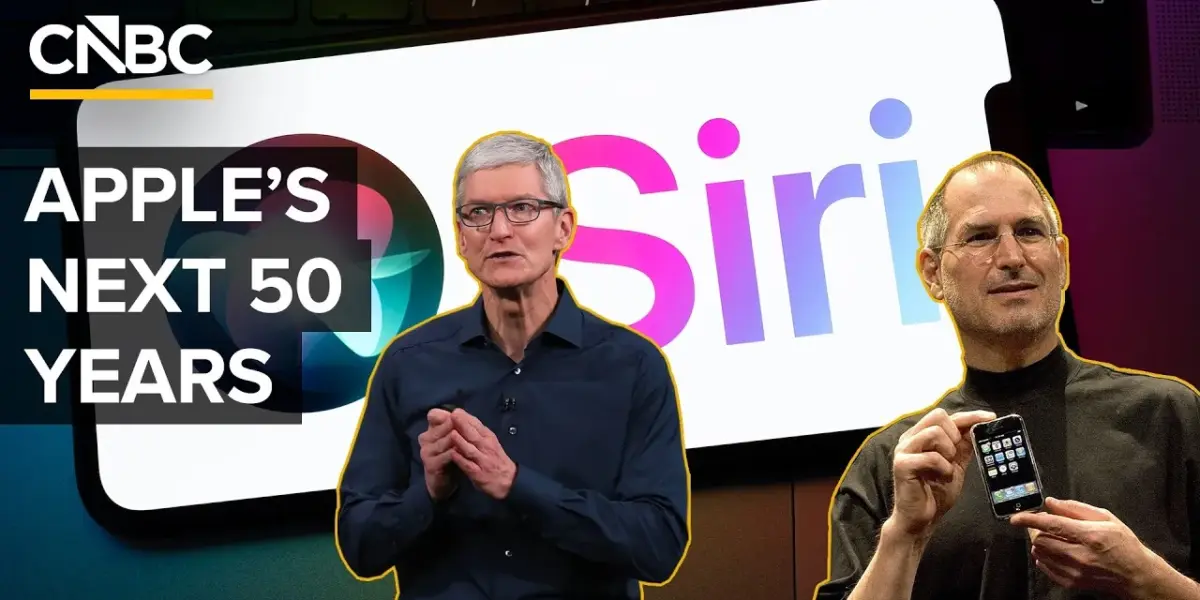
Apple at 50: AI Partnership Fuels New Era
Apple, a company that has shaped technology for half a century, is now navigating a crucial turning point. Its first 50 years were defined by groundbreaking hardware, from personal computers to the iPhone. Now, in the age of artificial intelligence (AI), the tech giant faces the challenge of maintaining its dominance. Can Apple adapt to an AI-driven future, or will rivals claim the lead?
Siri’s Stumble: An Early Lead Lost
Apple’s journey into AI began early. In 2011, it launched Siri, the first mainstream voice assistant, years before competitors like Google Assistant and Amazon Alexa. However, Apple failed to build on this initial advantage. The technology was not yet ready for the full vision, and the company effectively lost a five-year lead as AI evolved rapidly. While Siri reached over a billion users, it never became the advanced platform envisioned.
This delay has been significant. For over 20 years, the company has not faced such a prolonged lag in a key technology. Now, Apple is making a major strategic shift, turning to a long-time rival to power its AI advancements.
A Strategic Alliance: Partnering for AI Power
Apple has acknowledged the need for partners in the AI space, choosing not to build its own AI “brain” but to “leverage” existing ones. The company has reportedly struck a multi-year deal with Alphabet (Google) to use its Gemini AI technology. This partnership is expected to cost Apple around $1 billion per year and will power future AI features, including a revamped Siri.
This alliance highlights a complex relationship between the two tech giants. Google already pays Apple over $20 billion annually to be the default search engine on iPhones. While they have been legal adversaries in the past, the current dynamic is one of “co-opetition” – competing and cooperating simultaneously. This flexibility shows Apple’s adaptability in the evolving tech landscape.
Market Impact: The Gamble of Being Late
Apple’s strategy of entering the AI race later than some competitors, like OpenAI with ChatGPT, could be a calculated risk. By observing others invest heavily in AI infrastructure, Apple has gained valuable insights and three years of hindsight. This approach, similar to its past successes with the iPod and iPhone, allows Apple to refine and perfect technologies rather than being the first to market.
However, relying on Google for core AI functions presents a significant dependency. If Siri, powered by Gemini, becomes widely used, Apple could be at Google’s mercy. A robust plan to eventually reduce this reliance will be crucial for long-term strategy and engineering.
Apple’s AI Advantage: Privacy and Ecosystem
Despite its late entry, Apple possesses unique strengths. Its vast user base, with Siri already on over a billion devices, provides a ready platform. Furthermore, Apple’s long-standing commitment to user privacy, a core brand promise, could become its key AI differentiator. Unlike rivals, Apple aims to offer a customized and trusted AI assistant that works seamlessly within its secure “walled garden” ecosystem.
This privacy-focused approach aligns with Apple’s successful services business, which generated over $109 billion in revenue in 2025, a 14% increase. By offering more accessible products like the MacBook Neo, Apple aims to expand its user base and encourage greater use of its services.
The Future: AI-Powered Experiences
Apple’s long-term vision is for every app and function across its devices to be AI-powered. While the company is known for its hardware, its future success hinges on adapting its culture to an AI era that demands rapid iteration and the release of improving, sometimes imperfect, products. This contrasts with its traditional focus on polished, finished hardware.
The next few years are critical. The company is exploring new hardware possibilities, potentially including foldable phones and innovative AI-native devices. However, the smartphone is expected to remain central, with AI assistants taking on more complex tasks, automating mundane activities, and integrating across various applications. Apple’s ability to combine its privacy focus with powerful AI capabilities will determine its leadership in this new technological age.
What Investors Should Know
Apple’s strategic partnership with Google for AI is a significant move, reflecting the immense investment and rapid evolution in the AI sector. While this deal addresses Apple’s immediate need to catch up, it also creates a dependency that investors will watch closely. The company’s ability to leverage its existing ecosystem and strong services revenue, combined with its privacy-centric approach, could provide a unique advantage in the AI race. However, failure to adapt culturally and technically could lead to a decline in market share, similar to historical examples like Yahoo.
Source: Apple Turns 50 — Here's What's Next In The Age Of AI (YouTube)

Related Articles


Nvidia’s Self-Driving Tech Powers LA Test Drive
Nvidia's L2++ autonomous driving platform was tested in a real-world LA drive, showcasing its sensor fusion and decision-making capabilities. The company plans a nationwide rollout and Level 4 robo-taxi services, signaling strong progress in the autonomous vehicle market.

SpaceX, OpenAI IPOs Set to Ignite Markets Amid AI Boom
SpaceX and OpenAI are gearing up for major IPOs, potentially bringing record valuations to the market. While exciting for investors, these tech giants also face growing cybersecurity concerns, including AI risks and the looming threat of quantum computing breaking current encryption by 2029.

Apple’s Best Product Ever Revealed
The Vergecast reveals the results of a 1.6 million-vote poll to crown Apple's best product ever, amidst a deep dive into AI's pivot to enterprise and OpenAI's massive funding round. The discussion highlights the disconnect between AI's grand promises and consumer reality.