Trump’s Iran Gambit: Miscalculation Fuels NATO Doubts
President Trump's strategy in Iran is under intense scrutiny, with experts suggesting a miscalculation of the situation. Shifting objectives, potential economic fallout, and a strain on NATO alliances are key concerns. The conflict's impact on global oil markets and geopolitical rivals like China is also a major point of discussion.

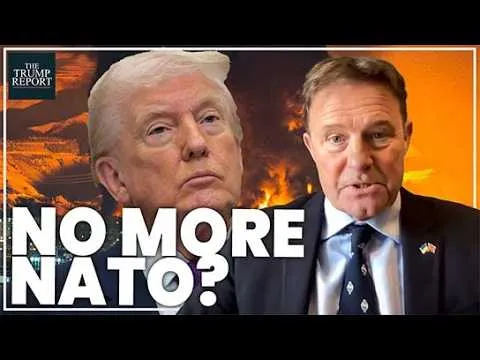
Trump’s Iran Strategy Faces Scrutiny Amid Shifting Goals and NATO Concerns
President Trump’s approach to the Iran conflict and his stance on NATO are raising serious questions, with experts suggesting a significant underestimation of the situation and a scramble for a way out. This complex geopolitical situation involves shifting objectives, potential economic fallout, and a strain on international alliances.
NATO Alliance Under Pressure
The future of the NATO alliance is a growing concern, particularly as President Trump expresses frustration over allies not fully supporting U.S. interests in critical regions like the Strait of Hormuz. Senator Marco Rubio echoed this sentiment, arguing that if NATO cannot be used to defend American interests, it becomes a “one-way street.” Trump has openly considered withdrawing from the alliance, leading to speculation about whether these are mere “fighting words” or a genuine threat to NATO’s existence.
While Trump’s criticism of NATO is not new, his current rhetoric is described as “extraordinary.” Some suggest his statements might be a way to deflect from the difficulties encountered in Iran. Despite the U.S. military’s significant presence and utilization of bases in allied nations like the UK, Trump seems to be channeling anger and frustration towards NATO, possibly seeking an “off-ramp” from the Iran conflict by blaming others.
The idea of NATO involvement in a conflict primarily involving the U.S. and Israel in Iran is questioned. The North Atlantic Treaty Organization, by its very name, suggests a focus on North Atlantic security, making its role in the Middle East unclear. This disconnect highlights a potential strategic miscalculation and a desire to shift blame.
Iran Conflict: Objectives in Flux
The goals for the Iran operation appear to be in constant motion, creating confusion and raising doubts about the initial strategy. President Trump has stated that regime change was never a primary objective, with the main goal being Iran’s inability to possess nuclear weapons. He has also suggested that this objective has been met and that the conflict could be concluded within a few weeks.
However, this narrative contradicts earlier discussions and analyses. Some experts believe that regime change was indeed an implicit or explicit goal, and that removing the current clerical leadership could be beneficial for the Iranian people and regional peace. The idea that Iran’s nuclear capability is now neutralized is also debated, with some suggesting this was already the case before the intervention.
The notion of special forces operations to seize enriched uranium or specific locations, initially floated, is now reportedly being abandoned. This shift is seen as a positive development, as such operations were considered ill-conceived and poorly planned. The evolving objectives suggest a reactive strategy rather than a well-defined plan.
Underestimation and Economic Impacts
A key theme emerging is the belief that President Trump underestimated the complexities of Iran and the potential consequences of his actions. Brilliant advisors in the Pentagon may be providing accurate assessments, but it’s suggested that Trump often only hears what aligns with his existing views. This tendency could lead to decisions based on incomplete or selectively heard information.
The conflict’s duration, initially expected to be short, has extended, impacting not only the global economy but also the U.S. economy. With oil prices rising significantly, the economic pain is becoming more apparent even to those in the U.S. This economic pressure may be a driving factor behind the search for an “off-ramp” and a desire to conclude the operation.
The Strait of Hormuz remains a critical point. Its control is vital for global oil markets. The strategy to secure it seems to have been overlooked initially, leading to the current predicament. A failure to secure this vital waterway, even after military action, could leave the situation unresolved and volatile.
Regime Change: A Complex Reality
President Trump’s assertion that regime change has already occurred in Iran is met with skepticism. He suggests that by eliminating key figures, a new, different leadership is now in place. However, this view is considered overly simplistic and potentially misunderstands the structure of Iranian power.
The argument is that eliminating clerics might empower the Islamic Revolutionary Guard Corps (IRGC), a more extreme and militarily focused entity. The IRGC is deeply integrated into Iranian society and economy, controlling various militias and proxy groups like Hamas, Hezbollah, and the Houthis. This shift, rather than leading to a better outcome, could result in a more hardened and dangerous regime.
The idea of a “binary” regime change, where one leadership is simply replaced by another, fails to grasp the hydra-like nature of power in Iran. Removing one head might only allow others to emerge, potentially leading to a worse situation, not a better one.
Shifting Timelines and Strategic Ambiguity
The constantly changing timelines for the conflict’s conclusion are a cause for concern. Initial estimates of a few weeks have stretched, with new deadlines being set and then extended. This ambiguity leads analysts to believe that President Trump may be improvising his strategy, “making it up as he goes along.” This impression is amplified by his communication style, which often seems tailored to his domestic audience and upcoming political events like midterm elections.
While the U.S. military remains powerful, the perception of an unfocused strategy raises questions about long-term stability. The economic consequences, such as high oil prices, are beginning to affect everyday Americans, making the conflict’s impact more tangible at home. This pressure might be forcing a desire for a swift resolution, even if it means compromising on initial objectives.
Broader Strategic Objectives and Implications
Beyond nuclear ambitions, stated objectives have included degrading Iran’s air force, navy, missile capabilities, and factories. While targeting missile launchers and potentially chemical weapon facilities might have merit, the broader military degradation is questioned in terms of direct threats to America. The Iranian navy’s control of the Strait of Hormuz is a significant concern, and its neutralization is seen as a logical step.
However, even if Iran’s conventional military is weakened, its threat through militias and proxies, coordinated by the IRGC, remains potent. This suggests that a purely military solution might be insufficient, and diplomatic engagement with whoever leads Iran will be crucial for long-term stability.
The U.S. willingness to potentially end the war even if the Strait of Hormuz remains closed is particularly striking. This implies a strategy of damaging Iran’s military first and then leaving the complex task of reopening the strait to diplomacy or allies. This approach shifts the burden of ensuring global oil flow away from the U.S., a move that could have significant geopolitical consequences, particularly for nations heavily reliant on Middle Eastern oil, such as China.
Handing Control to Rivals?
By potentially withdrawing from securing the Strait of Hormuz, the U.S. might be inadvertently handing control of a global choke point to Iran and, by extension, to China. China, being heavily dependent on oil imports through the strait, could benefit immensely. This outcome seems counterintuitive if China is considered a primary strategic threat to U.S. interests.
The decision to potentially leave the strait contested or closed could also embolden Russia. The conflict in Iran might be diverting attention and resources away from crucial issues like the war in Ukraine, potentially providing an advantage to Putin and the Russians. This could leave European and NATO countries to shoulder more responsibility for securing peace in Ukraine.
A World Left More Fragile?
The overall assessment suggests that President Trump’s actions may have left the world in a more fragile state. While some successes might include weakening groups like Hezbollah and Hamas, the broader geopolitical landscape appears more unstable. The volatility of oil prices could accelerate the transition away from hydrocarbons, but the immediate impact is economic uncertainty.
The possibility of ground operations in Iran is debated. Given Trump’s fluctuating stance and the potential for significant U.S. military losses, a large-scale ground invasion seems unlikely, despite troop deployments. The focus might remain on air and naval power, with a hope that diplomacy can resolve the remaining issues.
Ultimately, the strategy appears to be one of calculated risk and a search for an exit, driven by evolving circumstances and perhaps a misjudgment of the initial situation. The long-term consequences of this approach, especially concerning alliances and global stability, remain to be seen.
Source: Trump ‘underestimated’ Iran — now scrambling for off-ramp | Hamish de Bretton-Gordon (YouTube)

Related Articles

Trump Ousts AG Bondi, Eyes Zeldin as Successor
Pam Bondi is out as Attorney General after one year, with Deputy AG Todd Blanche serving as Acting AG. President Trump confirmed the departure, praising Bondi and hinting at a new private sector role. Lee Zeldin is reportedly being considered as Bondi's permanent replacement, amid ongoing speculation about other cabinet changes.

US Pilot Feared Lost in Iran; Search Underway
The U.S. military is conducting a search operation inside Iran for an American pilot whose fighter jet may have been downed. Details are limited, with uncertainty over whether the plane was shot down or suffered mechanical failure. The operation highlights the complexities of rescue missions in hostile territory and occurs amid heightened regional tensions.

US Policy Shift Stuns Allies, Weakens Global Security
US policy shifts regarding Ukraine, the Strait of Hormuz, and NATO are raising concerns among allies and creating global instability. Critics point to a lack of strategic planning and diplomatic consultation, potentially emboldening adversaries and undermining international security.