Starship Booster Fails Test, Blue Origin Unveils Monster Rocket
SpaceX's Starship program faced a setback as Booster 18 catastrophically failed during a static fire test. Meanwhile, Blue Origin unveiled plans for a colossal New Glenn 9x4 rocket, building on recent successes with its New Glenn test flight.


Starship Booster Suffers Catastrophic Failure During Static Fire Test
SpaceX’s ambitious Starship program experienced a significant setback this week as its first next-generation Super Heavy booster, Booster 18 (B18), suffered a catastrophic failure during a static fire test at the Masseys Test Site. The incident occurred early Friday morning during gas system pressure testing, designed to identify structural weak points before the vehicle is loaded with propellants. While the exact cause is still under investigation, initial reports suggest an overpressure event led to a dramatic rupture of a large section of the lower liquid oxygen tank, causing the booster to visibly peel open. Fortunately, the test site itself sustained no damage, and SpaceX’s rigorous testing protocol appears to have succeeded in finding a critical weakness before a more hazardous propellant load.
Infrastructure Upgrades and New Hardware Emerge Amidst Setback
Despite the Super Heavy failure, progress continues on multiple fronts at SpaceX’s Starbase facility. The demolition of the old launch pad infrastructure at Pad 1 is nearing completion, with all launch mount legs and supporting structures being systematically dismantled to make way for a new, upgraded flame trench design. This aggressive site repurposing signals SpaceX’s commitment to accelerating the Starship program.
Meanwhile, the new launch tower is seeing rapid installation of critical hardware. The liquid oxygen and liquid methane quick disconnect hoods have been installed, giving the pad a cleaner appearance. The complex double quick disconnect system, separating methane and oxygen connections, is a key feature of the new Version 3 Super Heavy. Adjustments were made to the liquid oxygen hood to ensure proper alignment. Furthermore, the sophisticated ship quick disconnect arm, featuring three swivel joints and extensive pipework, has been moved to the launch site. Its final end piece, designed to mate with the Starship vehicle, has also been spotted and is expected to be outfitted before installation.
Starship Production Continues: Ship 39 Nears Completion
In the Starfactory, production of the Starship upper stage is also advancing. The final section for Ship 39, the aft section housing the Raptor engines, has been rolled out and integrated with the rest of the vehicle. Ship 39 is now believed to be the first fully stacked Version 3 Starship. Following integration of transfer tubes and other mission-critical components, Ship 39 is slated to begin cryogenic testing in December, with static fire tests at the upgraded Masseys site to follow. This will be the first upper stage static fire test since the fiery conclusion of Ship 36’s test on June 18th.
Elsewhere, the S39.1 test article has been moved to Megabay 2 for further testing, and Booster 17 (B17), an older, obsolete booster, is being systematically dismantled, marking the end of an era for previous-generation hardware.
Blue Origin Unveils Plans for Monstrous New Glenn Variant
In parallel with SpaceX’s developments, Blue Origin has generated significant excitement by revealing plans for a dramatically scaled-up version of its New Glenn rocket: the New Glenn 9×4. This proposed configuration would feature a staggering 5.7 million pounds of liftoff thrust, achieved by adding two more engines to the booster and four engines to the second stage. Such a behemoth is designed to deliver an astounding 70 metric tons to orbit on a single launch.
New Glenn Achieves Milestone Landing, Engine Tech Pushes Boundaries
This announcement follows the successful second test flight of Blue Origin’s New Glenn rocket, which culminated in a spectacular landing of the first stage, dubbed “Never Tell Me The Odds,” onto the recovery ship “Jacklyn.” The ability of New Glenn to hover before landing, unlike SpaceX’s Falcon 9 which requires precise zero-velocity touchdown, allows for a more controlled descent. The rocket’s massive 7-meter (23-foot) diameter fuel tanks dwarf the Falcon 9’s 3.7-meter tanks, highlighting the scale of these new generation launch vehicles.
Blue Origin also shared details of a recent hotfire test of its BE-3U engine, used on the second stage of New Glenn. This engine, powered by liquid hydrogen and oxygen, achieved over 211,500 pounds (96 metric tons) of thrust, boasting a thrust-to-weight ratio exceeding 90. This makes it the highest thrust-to-weight hydrogen engine in history. The company is also developing advanced technologies like a full-scale deployable aerobrake for atmospheric deceleration.
Other Launch Activity and Deep Space Missions
The week also saw continued activity with SpaceX’s Falcon 9. The Sentinel-6B mission, aimed at measuring global sea surface height, was successfully launched from Vandenberg Space Force Base. This marked the 500th reflight of a Falcon 9 first stage, a testament to the reusability technology. Additionally, two Starlink missions were launched, deploying more satellites into orbit.
Further afield, NASA’s Sentinel-6B satellite is now orbiting Earth at an altitude of approximately 1,300 kilometers (820 miles). Meanwhile, Rocket Lab’s ‘CAPSTONE’ mission, en route to Mars, has traveled over 2 light-seconds from Earth and is preparing for its first propulsion maneuver towards its orbit around Lagrange Point 2. Rocket Lab also conducted a successful HASTE suborbital mission from Wallops Island and a surprise ‘Follow My Speed’ mission from New Zealand, marking their 18th launch of 2025.
Looking Ahead: The Future of Heavy Lift and Space Exploration
While the Super Heavy failure is a temporary setback, SpaceX continues its rapid iterative development. The focus now shifts to learning from B18’s test and accelerating the production of subsequent boosters. The ongoing infrastructure upgrades at Starbase are crucial for supporting the high launch cadence envisioned for Starship. The successful test of Ship 39 and subsequent cryogenic testing and static fires will be critical milestones.
Blue Origin’s ambitious New Glenn roadmap, including the proposed 9×4 variant, signals a significant push in heavy-lift capabilities. The successful landing of the first stage and advancements in engine technology demonstrate their progress towards frequent and reliable access to space. The evolving landscape of space exploration, with multiple players developing super heavy-lift vehicles, promises an exciting future for human endeavors beyond Earth.
Source: Starship Super Heavy Just Blew Itself Apart! What Happened Here!? (YouTube)

Related Articles


SpaceX IPO Could Reach $2 Trillion Valuation
SpaceX is reportedly preparing for an IPO that could value the company at $2 trillion, driven by its advancements in AI and satellite internet. The company's innovative approach to space travel and its vision for orbital data centers position it as a major player in the tech landscape.
NASA Aims for Moon Base, Eyes Mars After Artemis 2 Success
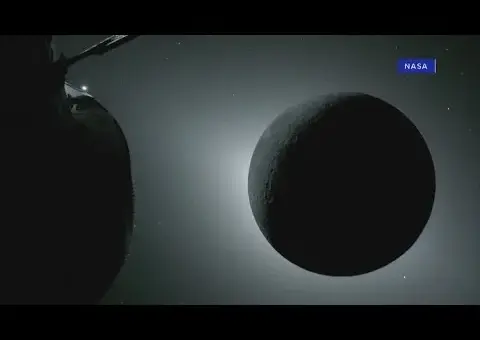
NASA's Artemis 2 mission successfully returned astronauts to Earth, paving the way for a permanent Moon base and future Mars missions. The program faces challenges like meteoroid impacts and radiation, requiring innovative habitat designs. International collaboration is key to this ambitious lunar future.

US Aims for Lunar Dominance with New Artemis Missions
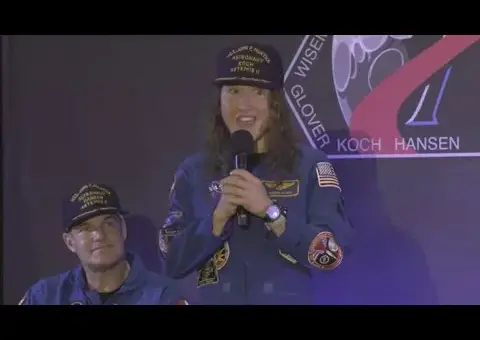
NASA's Artemis program is charting a course for the Moon with upcoming missions III, IV, and V. These missions aim to test new lunar landers, return humans to the surface for the first time since 1972, and establish a foundation for sustained exploration.